 Colouring Nest
Behavior Chart for Kids (Positive Behaviour Chart)
- Ages 3–9
- Easy
- 1 page
- Template
- PDF: Letter & A4

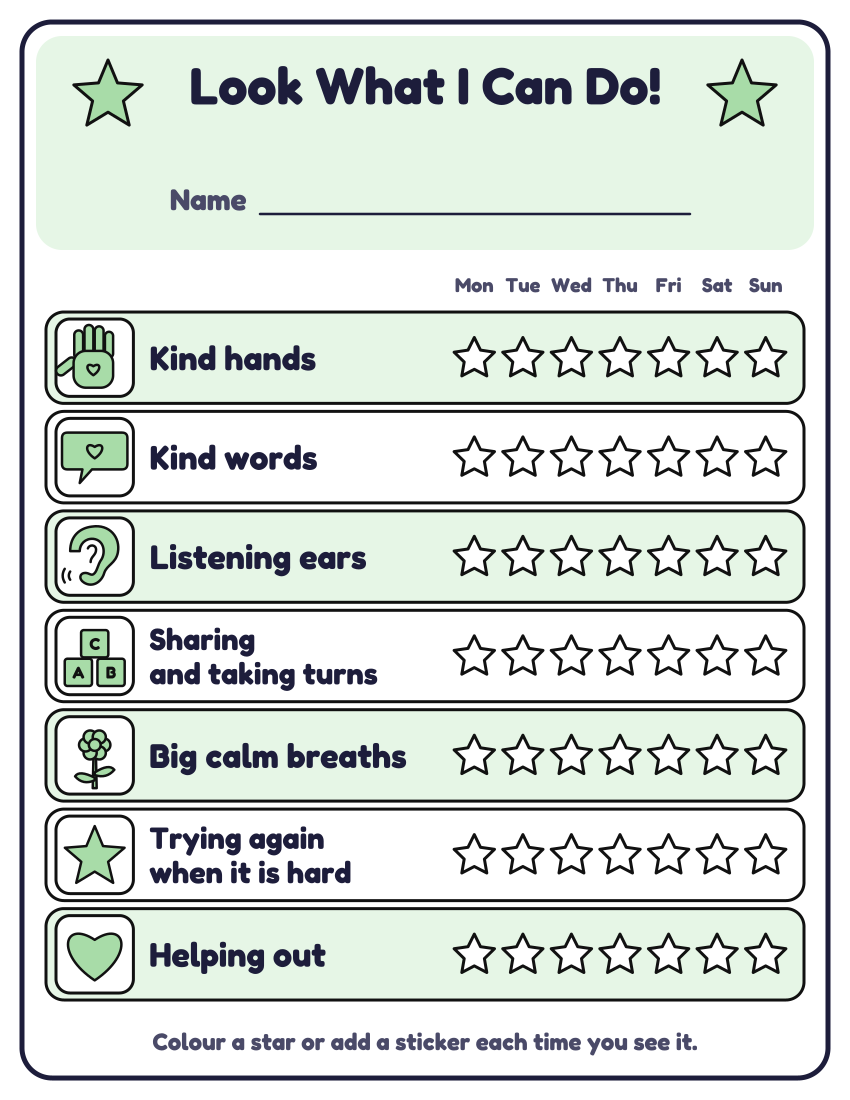
Tip: download the Letter or A4 PDF and print it at 100%. The colour-in version is further down. To add your child’s name or change the tasks, use the routine chart maker.
Up nextVisual Schedule Cards for Kids →Advertisement
A positive behaviour chart that only celebrates: kind hands, kind words, listening ears, sharing and taking turns, big calm breaths, trying again when it is hard, and helping out. Each has a picture and a star to colour for every day of the week. There are no frowns, red marks or warnings anywhere on the chart.
Add a name and change the tasks →
More versions of this chart
Colour-in version (black and white)
How to use a behaviour chart
Write each goal as something to do, not something to stop: “kind hands” rather than “no hitting”. The American Academy of Pediatrics suggests a chart that names the positive behaviour you want to see, a source of pride kept where it’s easy to see, and advises against penalties and demerits, which can be humiliating and discourage a child from trying.
Pick one or two goals to focus on first; the Raising Children Network finds charts work best for one behaviour at a time. In the maker you can keep just the goals that matter now.
Notice the behaviour and say what you saw (“You waited for your turn. That was kind.”), then let your child colour a star. Praise works best when it is specific and genuine (Raising Children Network). Stars are never taken away.
If you are worried about your child’s behaviour, talk to your GP, paediatrician or child and family health nurse.
Sources: HealthyChildren.org (AAP): Positive reinforcement through rewards; Raising Children Network: Reward charts; Raising Children Network: Praise. This is general information, not medical advice.
Other charts: Morning routineBedtime routineAfter-school routineChore chartReward or sticker chartPotty training chartVisual schedule cardsChart maker
Questions about this page
What is a positive behaviour chart?
A chart that records the behaviour you want to see, such as kindness or sharing, and celebrates it with stars or stickers. It never records misbehaviour or takes stars away.
Are behaviour charts bad for children?
Charts that shame, punish or compare children can be. The AAP advises using the chart as a measure of success and avoiding penalties and demerits. Keep it private to your child, focused on one or two goals, and paired with warm, specific praise.
Behavior chart or behaviour chart?
The same thing: “behavior” is the US spelling and “behaviour” is used in the UK, Australia and New Zealand.
Can I put my child’s name on the chart?
Yes. Open the routine chart maker, type the name and it is drawn in big bubble letters at the top. You can change the pictures and tasks too, then print or save a PDF. The name stays in your browser: it isn’t sent to us, saved, or added to the page address.
Advertisement
More routine charts


You might also like


Printing tips
- Print at 100% (actual size) on Letter or A4 paper; thicker paper or card lasts longer on a fridge.
- Slip the chart into a plastic sleeve or laminate it, and tick with a dry-erase marker so you can wipe it clean each week.
- Stickers stay on better than ink on a laminated chart. Star stickers suit younger children.
Advertisement