 Colouring Nest
Reward Chart and Sticker Chart
- Ages 2–10
- Easy
- 1 page
- Template
- PDF: Letter & A4

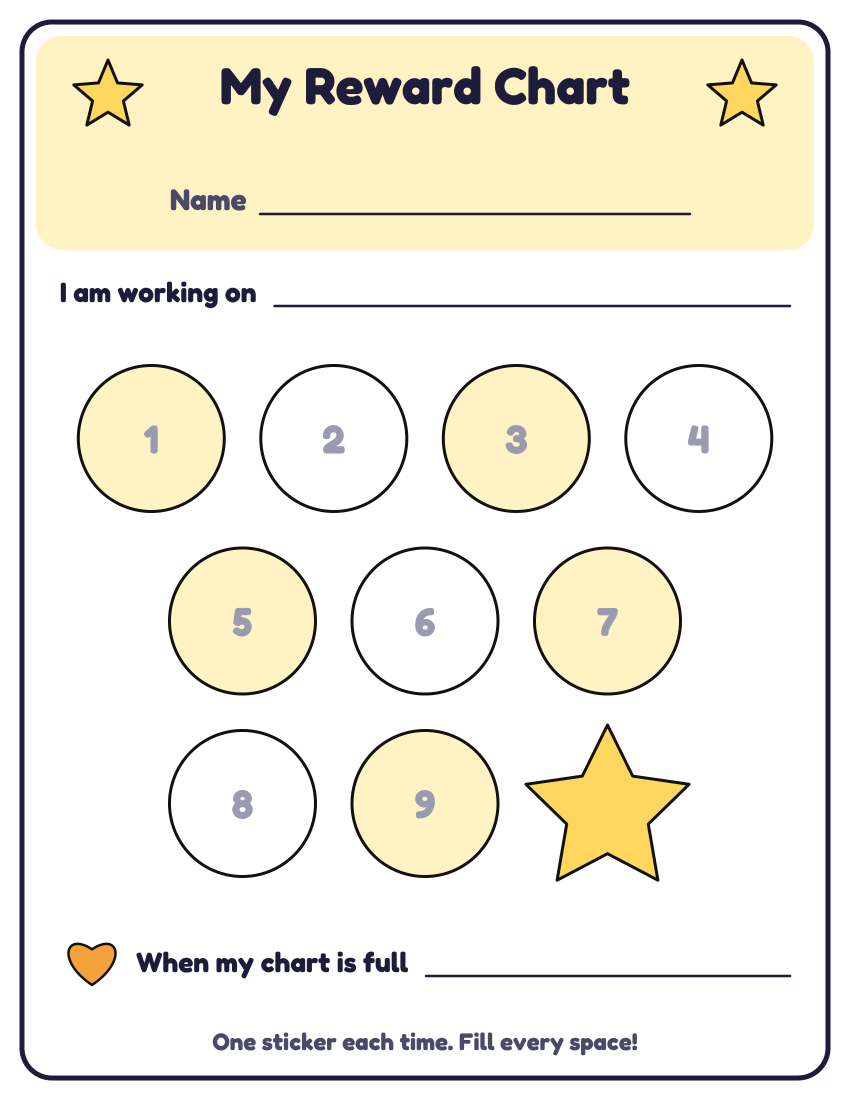
Tip: download the Letter or A4 PDF and print it at 100%. The colour-in version is further down. To add your child’s name or change the tasks, use the routine chart maker.
Up nextPotty Training Chart →Advertisement
A sticker chart with numbered spaces and a big star at the end. Write what your child is working on at the top and the reward for a full chart at the bottom. There are three sizes: 10 spaces for younger children or a quick goal, and 20 or 30 spaces for a longer one. Each comes in colour and as a colour-in version.
Add a name and change the tasks →
More versions of this chart
10 spaces, colour-in version
20 spaces, colour
20 spaces, colour-in version
30 spaces, colour
30 spaces, colour-in version
How to use a reward or sticker chart
Reward charts work best for one specific behaviour at a time, described clearly, and for a short period (Raising Children Network). Instead of “be good”, write exactly what you want to see, such as “put my shoes on by myself” or “stay in my bed all night”.
Let your child help choose the reward, and be clear how many stickers it takes (HealthyChildren.org). Start with the 10-space chart so the first reward comes quickly. Star stickers work well for younger children; older children may prefer points.
Give the sticker straight away, together with specific praise. The chart only ever gains stickers: the AAP advises against penalties and taking points away, because they can be humiliating and stop a child from trying.
When the behaviour has become a habit, phase the chart out by spacing the stickers further apart, and take a break before starting a new chart. Not every child responds to reward charts, and that is OK; if you are worried about your child’s behaviour, talk to your child and family health nurse or GP (Raising Children Network).
Sources: Raising Children Network: Reward charts; HealthyChildren.org (AAP): Positive reinforcement through rewards; Raising Children Network: Praise. This is general information, not medical advice.
Other charts: Morning routineBedtime routineAfter-school routineChore chartPotty training chartBehaviour chartVisual schedule cardsChart maker
Questions about this page
Do reward charts work?
They can, especially when they focus on one clear behaviour for a short time and come with praise. Different things motivate different children, so if a chart isn’t helping, try changing the goal or the reward, or stop for a while (Raising Children Network).
How many spaces should a sticker chart have?
Fewer spaces for younger children, so the reward is within reach in a few days: 10 spaces for toddlers and preschoolers, 20 or 30 for school-age children or a bigger reward.
What can I use as a reward?
Small, meaningful things your child helps choose: time playing with you, choosing a family game, a trip to the park or an extra story. The Raising Children Network suggests not overusing treats.
Can I put my child’s name on the chart?
Yes. Open the routine chart maker, type the name and it is drawn in big bubble letters at the top. You can change the pictures and tasks too, then print or save a PDF. The name stays in your browser: it isn’t sent to us, saved, or added to the page address.
Advertisement
More routine charts


You might also like


Printing tips
- Print at 100% (actual size) on Letter or A4 paper; thicker paper or card lasts longer on a fridge.
- Slip the chart into a plastic sleeve or laminate it, and tick with a dry-erase marker so you can wipe it clean each week.
- Stickers stay on better than ink on a laminated chart. Star stickers suit younger children.
Advertisement