 Colouring Nest
Hundreds, Tens and Ones with Base Ten Blocks
- Ages 7–8
- Medium
- 2 pages
- Worksheet
- Answer key
- PDF: Letter & A4
- Updated


Tip: download the PDF for Letter or A4 paper, print it at 100% and use a pencil or crayon. Tap "Show solution" to check your answer, or print it as an answer key.
Up nextExpanded Form: 3-Digit Numbers →Advertisement
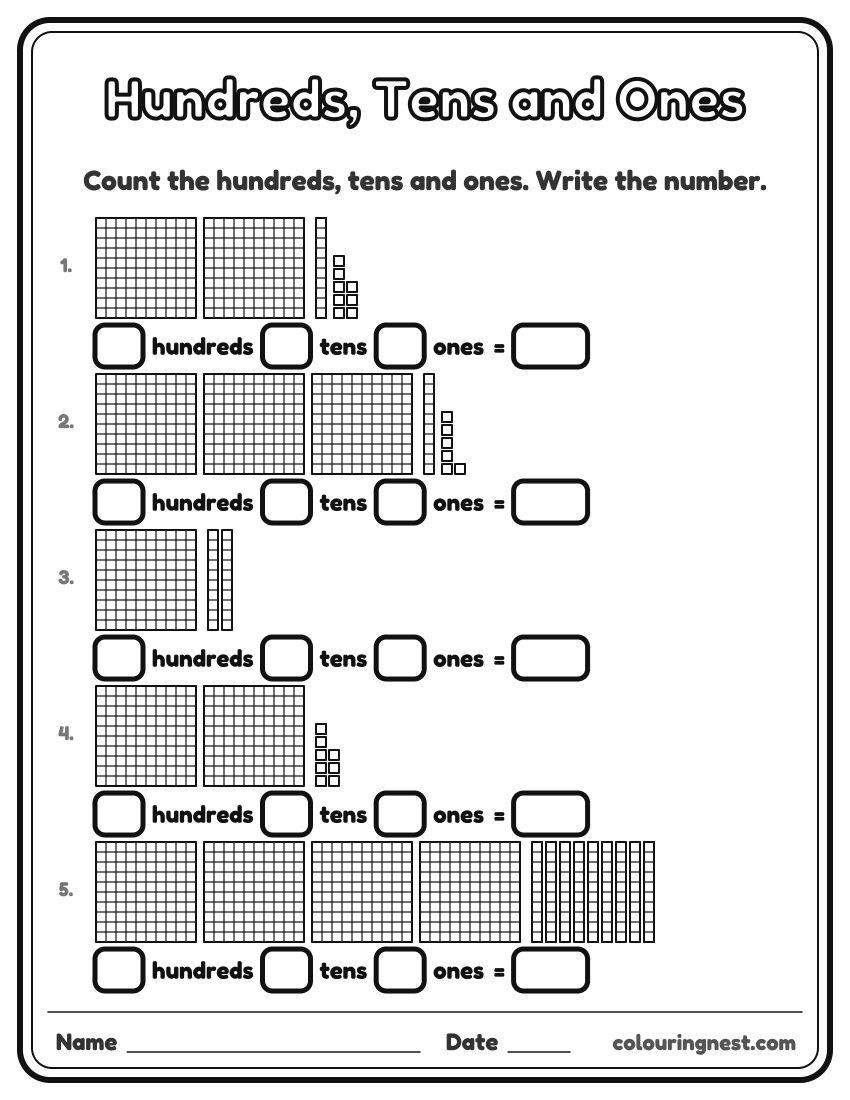
Five pictures of base ten blocks with flats added: a flat is a square of ten rods, one hundred. Children count the flats, rods and units, write how many hundreds, tens and ones, and then the three-digit number. Some pictures have no rods or no units, so the number has a zero in the middle or at the end: 2 flats and 8 units is 208, not 28.
Also try: Expanded Form: 3-Digit Numbers · Blank Place Value Chart · Compare Numbers to 1000
Tips for this place value worksheet
- Count the flats (hundreds), then the rods (tens), then the units (ones).
- No rods? Write 0 in the tens box, and in the number.
- Read the number aloud: “two hundred eight”.
Page 2 of the PDF is the answer key. The 0–99 number chart shows tens and ones in rows and columns. When this sheet feels easy, move on to the value of the underlined digit and rounding sheets. See all place value worksheets.
For teachers and parents
- What it practises
- Tens and ones with base ten blocks, expanded form and place value charts, value of a digit, comparing and rounding
- How to use it
- Build the numbers with base ten blocks or bundles of straws for the first sheets. Say the value of each digit aloud (“four hundred, sixty, five”). Answers on page 2.
- Time
- About 10–15 minutes
Advertisement
More place value worksheets


See all place value worksheets →
Seasonal: Back to School Coloring Pages
Collections: Second Grade Math WorksheetsThird Grade Math Worksheets
You might also like


Printing tips
- Build each number with real blocks, straws in bundles of ten, or coins first.
- Say the value of each digit out loud: “four hundred, sixty, five”.
- Mark with page 2 and redo the wrong ones the next day.
Advertisement