 Colouring Nest
Doctor’s role play printables
Free doctor’s role play printables for preschool, kindy and Reception: doctor’s, medical centre, surgery and waiting room signs, an open/closed sign, a check-up form with pictures to tick, a picture eye chart with shapes instead of letters, appointment cards with a clock face, labels and six role badges. A4 and US Letter PDFs, colour and ink saver.
Inside this set
- 6 printables
- A4 and US Letter PDFs
- Colour and ink-saver versions
- Free, no sign-up
About this resource
Ages 2–6, what you need and how to use it
- Ages
- 2 to 6 years (toddlers, preschool, school start)
- You’ll need
- Printer and paper or thin card
- Laminator or sticky-back plastic for anything that is handled
- Scissors
- Blu Tack or tape
- Supports
- Te Whāriki (NZ), EYLF (Australia), EYFS (England), ELOF (US)
How to use it in the room
- Print at 100% (actual size) on A4 or US Letter.
- Trim, and laminate what children will touch.
- Put it up at children’s eye level and talk about it together.
Show resources for
Remembered on this device only. It sets A4 or US Letter as the first download.
Setting up a doctor’s role-play area
You need a waiting room (two or three chairs and some books), a reception desk with a phone and the appointment cards, and a check-up space with a bed or mat, a toy stethoscope, bandages and a soft toy or a doll as a patient. Children can also be the patients themselves. Hang the eye chart at the far end of the room and mark a line on the floor to stand on.
Going to the doctor can worry young children, and playing it out helps. Keep the play gentle and practical: listening to a heartbeat, looking in ears, measuring height, putting on a bandage and washing hands. Our printables show no medicines, injections or hospital equipment, so the area stays about checking and caring. Choose the sign word your children know: “doctor’s” and “surgery” in the UK, “medical centre” in New Zealand and Australia, “doctor’s office” or just “doctor’s” in the US.
Supports: Communication | Mana reo, Exploration | Mana aotūroa, Belonging | Mana whenua, Contribution | Mana tangata (Te Whāriki) · Outcome 5, Outcome 4, Outcome 1, Outcome 2 (EYLF) · Communication and language, Literacy, Mathematics, Personal, social and emotional development (EYFS) · Language and Literacy, Cognition, Social and Emotional Development (ELOF).
1. Doctor’s, medical centre and surgery signs and an open/closed sign
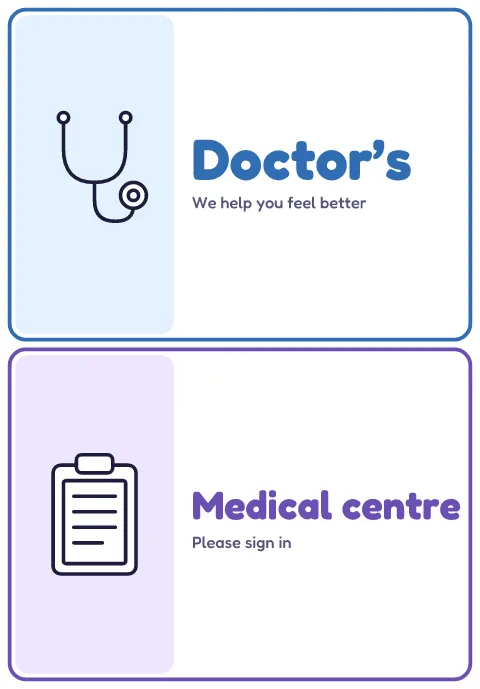
Doctor’s sign with a stethoscope and a Medical centre sign, plus Surgery and Waiting room signs and a fold-over OPEN and CLOSED sign.
Doctor’s, medical centre and surgery signs and an open/closed sign PDF (A4)Doctor’s, medical centre and surgery signs and an open/closed sign PDF (US Letter)
2. Check-up form with pictures to tick
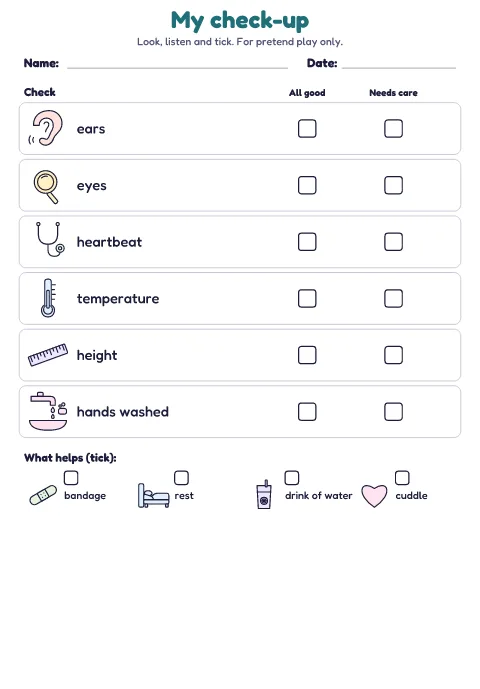
Check-up form: name and date, checks for ears, eyes, heartbeat, temperature, height and hand washing with all good or needs care boxes, and what helps to tick.
Check-up form with pictures to tick PDF (A4)Check-up form with pictures to tick PDF (US Letter)
3. Picture eye chart
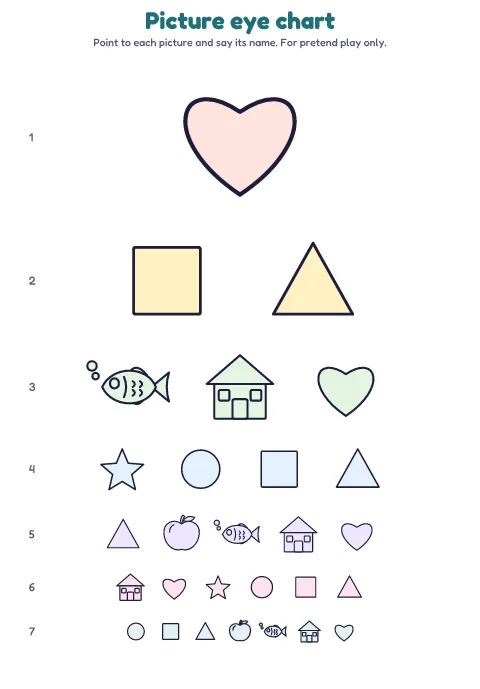
Picture eye chart: one big heart at the top, then rows of stars, circles, squares, triangles, apples and fish getting smaller.
Picture eye chart (shapes, no letters) PDF (A4)Picture eye chart (shapes, no letters) PDF (US Letter)
Advertisement
4. Doctor’s appointment cards
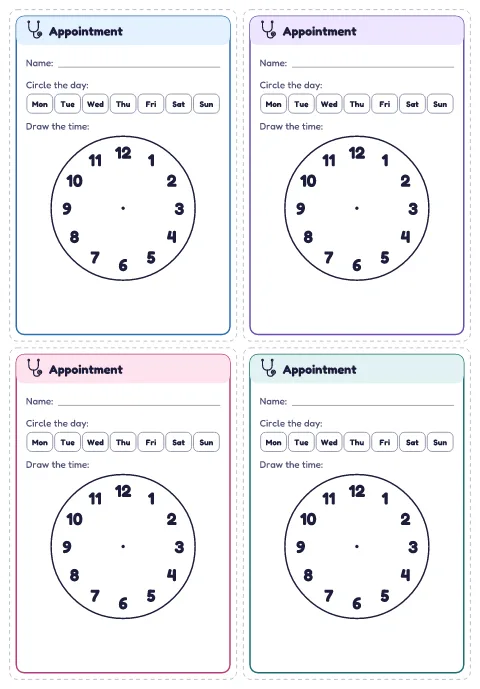
Four appointment cards with a name line, the days of the week to circle and a clock face to draw the time.
Doctor’s appointment cards PDF (A4)Doctor’s appointment cards PDF (US Letter)
5. Doctor’s role badges
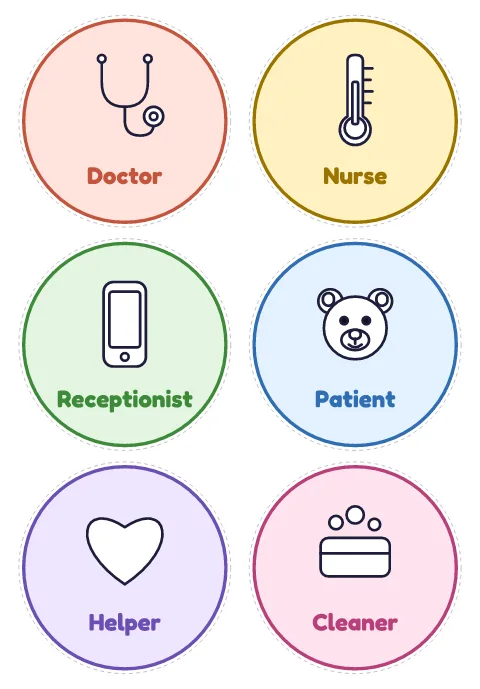
Six round role badges: doctor with a stethoscope, nurse with a thermometer, receptionist with a phone, patient with a teddy, helper and cleaner.
Doctor’s role badges PDF (A4)Doctor’s role badges PDF (US Letter)
6. Doctor’s labels with pictures
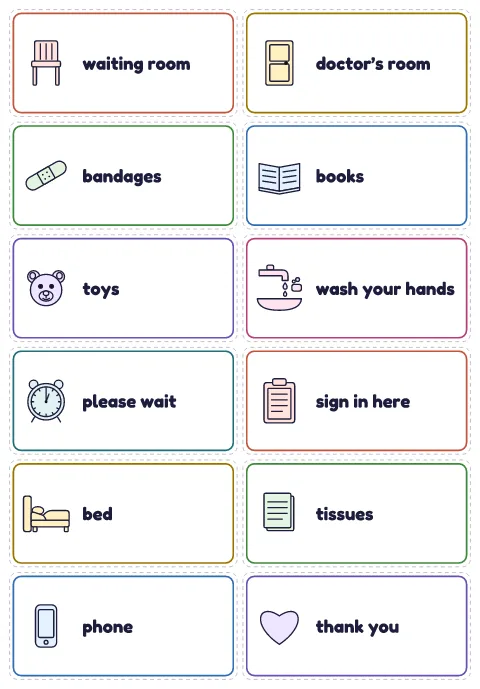
Twelve labels with pictures: waiting room, doctor’s room, bandages, books, toys, wash your hands, please wait, sign in here, bed, tissues, phone and thank you.
Doctor’s labels with pictures PDF (A4)Doctor’s labels with pictures PDF (US Letter)
Play ideas
- Sign in. Patients sign in at reception (any mark counts) and wait to be called.
- Read the eye chart. Point to each shape and name it, then try the smaller rows from further away.
- Do a check-up. Tick each picture on the form and choose what helps: a bandage, rest, a drink of water or a cuddle.
- Make the next appointment. Circle the day and draw the hands on the clock.
More role-play packs: café role play, vet clinic role play, shop role play. For the rest of the room, see continuous provision challenge cards, classroom labels with pictures and early learning by country.
Related sets
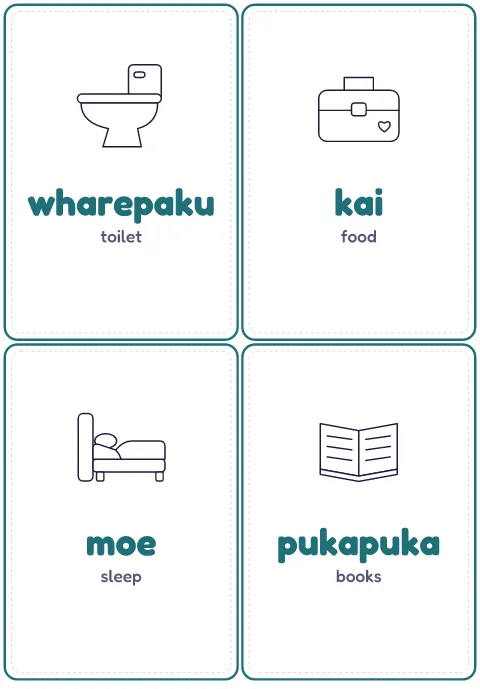 Te reo Māori room labels, greetings, shapes, feelingsDisplays and charts · ages 1–6
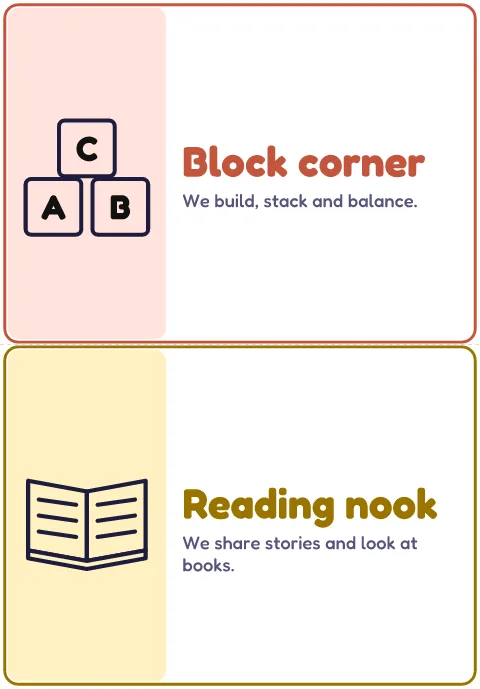 Classroom labels with pictures: area signs, trays, name tagsDisplays and charts · ages 1–6
 Te reo Māori classroom displays: signs, weather, seasons, birthdaysDisplays and charts · ages 1–6
 Café role play: menu, order pad, signs, badgesDisplays and charts · ages 2–6
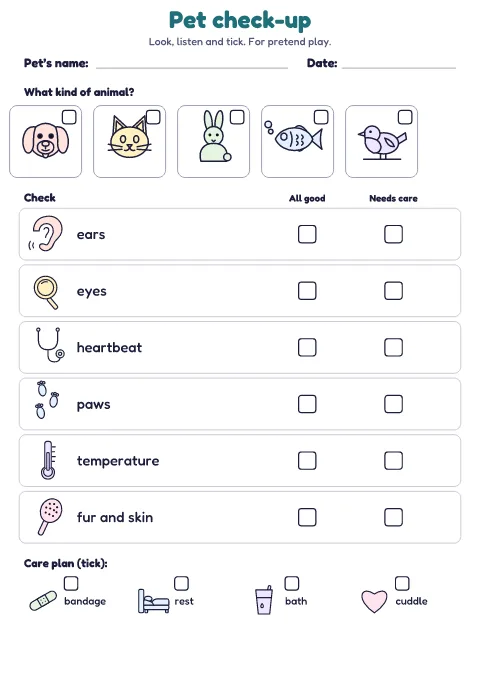 Vet role play: check-up form, appointment cards, signsDisplays and charts · ages 2–6
 Self-registration, welcome banner and birthday chartDisplays and charts · ages 2–6
Questions
What do you need for a doctor’s role play area?
A waiting area, a desk with a phone, appointment cards, a bed or mat, a toy stethoscope, bandages, a check-up form, an eye chart and signs.
How can role play help a child who is nervous about the doctor?
Playing the doctor and the patient lets children practise what will happen, use the words, and be in charge. Keep it gentle and follow the child’s lead.
Are these free?
Yes. Free for your own centre, kindergarten, school, class and family, with no sign-up. Please don’t resell them or upload them to another site.