 Colouring Nest
Classroom labels with pictures for early years rooms
Free classroom labels with pictures for preschool, kindy, nursery and early learning centres: eighteen area signs (block corner, reading nook, art area, sand, water, home corner, quiet space and more), tray labels for resources, blank tray labels, cubby and peg name tags, and name labels with picture symbols for children who are not reading yet. A4 and US Letter PDFs, each in colour and an ink-saver version.
Inside this set
- 5 printables
- A4 and US Letter PDFs
- Colour and ink-saver versions
- Free, no sign-up
About this resource
Ages 1–6, prep, what you need and how to use it
- Ages
- 1 to 6 years (toddlers, preschool, school start)
- Prep
- About 30 to 45 minutes to print, trim and laminate a room’s set.
- You’ll need
- Printer and card
- Scissors or a guillotine
- Laminator for signs near sand and water
- Clear tape and Blu Tack
- Supports
- Te Whāriki (NZ), EYLF (Australia), EYFS (England), ELOF (US)
How to use it in the room
- Print at 100% (“actual size”).
- Laminate signs near sand and water; card is enough for the rest.
- Stick tray labels with clear tape across the whole label.
- Walk the room at a child’s height: if you have to look up, a sign is too high.
Show resources for
Remembered on this device only. It sets A4 or US Letter as the first download.
Why label an early-years room?
A labelled room tells children where things live, so they can choose, use and put away resources on their own. Pictures carry the meaning for children who can’t read yet, and the printed word sits right next to the picture, so print starts to mean something: “that says blocks”. Labels at children’s eye level work best; adults’ labels can go higher. Each area sign carries one short “We…” line in plain words, for example “We dig, pour, fill and empty” on the sand sign, so a new staff member, a parent helper or a visiting family can see at a glance what happens in that space.
Supports:
- Te Whāriki NZ
- Communication | Mana reo
- Belonging | Mana whenua
- Contribution | Mana tangata
- EYLF Australia
- Outcome 5: Children are effective communicators
- Outcome 1: Children have a strong sense of identity
- Outcome 2: Children are connected with and contribute to their world
- EYFS England
- Communication and language
- Literacy
- Personal, social and emotional development
- ELOF US
- Language and Literacy
- Social and Emotional Development
1. Area signs (18 signs)
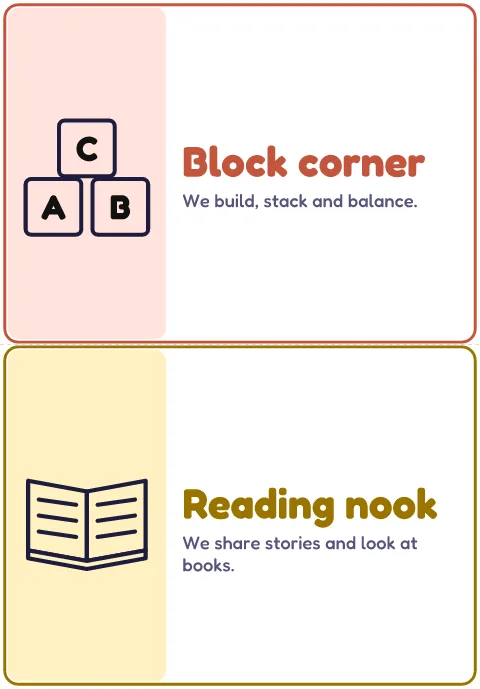
Two signs to a page, each with our own line drawing, the area name in large rounded letters and a “We…” line: block corner, reading nook, art area, sand play, water play, home corner, quiet space, outdoor play, bathroom, bags and coats, writing table, maths area, music corner, science and nature, puzzles, playdough, dress-ups, snack table. “Bags and coats” works for cubbies (US and Australia), pegs (UK) or hooks (NZ). The ink-saver PDF drops every tint, so the signs print crisp on a black-and-white printer and children can colour the pictures.
2. Resource tray labels (18 labels)
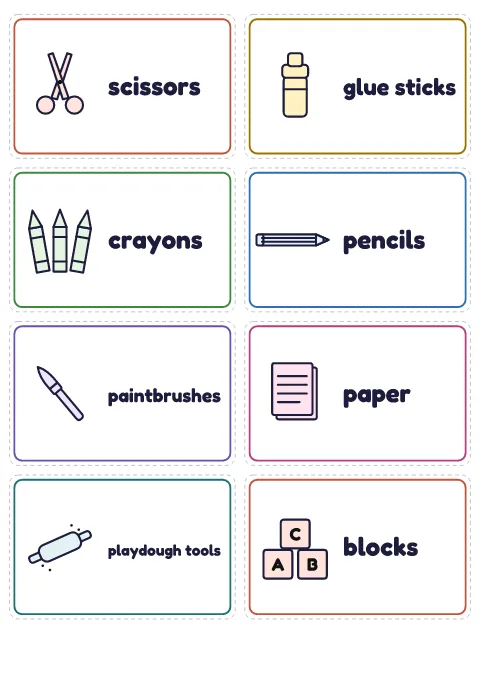
Eight to a page, sized for the front of a storage tray or tub: scissors, glue sticks, crayons, pencils, paintbrushes, paper, playdough tools, blocks, cars, animals, puzzles, books, counters, beads, balls, instruments, dress-ups, play food. The last page has six blank labels for your own resources. Lower-case words, because those are the letters children meet first in books.
Advertisement
3. Blank tray labels
Eight blank labels with a dashed box for a drawing or a photo of the real object (children love finding their own photo of the train set) and handwriting lines, so the word is written in the letter style your children are learning.
4. Cubby, peg and drawer name tags
Ten tags to a page with a photo-or-symbol box and three-line handwriting guides (the dashed midline shows how tall the small letters are), so every child’s name is written the way they will learn to write it. For a quick typed set from a class list, use our name label maker.
5. Name labels with picture symbols (24 symbols)
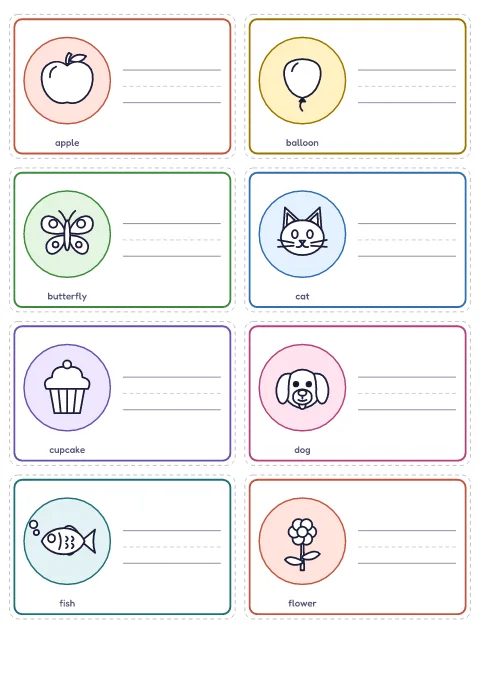
A symbol for each child (apple, balloon, butterfly, cat, cupcake, dog, fish, flower, heart, kite, leaf, lion, moon, owl, pig, rocket, shell, starfish, star, sun, tree, umbrella, van, whale) in a circle beside handwriting lines for the name. Give each child the same symbol on their cubby, their drawer and their self-registration card, so they can find their place before they can read their name.
Symbol name labels PDF (A4)Symbol name labels PDF (US Letter)
Printing and setting up
- Print at 100% (“actual size”). A4 and US Letter PDFs are drawn separately, so nothing is squashed.
- Laminate signs that live near sand and water; card stock is enough for the rest.
- Stick tray labels with clear tape across the whole label so small fingers can’t peel the corners.
- Walk the room at a child’s height when you put signs up: if you have to look up, they are too high.
- For bilingual signs in English and te reo Māori, see the te reo Māori classroom displays.
The rest of the room set: calendar and weather board, self-registration, welcome banner and birthday chart, helper chart and routine charts, te reo Māori classroom displays. For routines and feelings, see the visual timetable; for everything else for ages 0 to 6, early learning by country.
Related sets
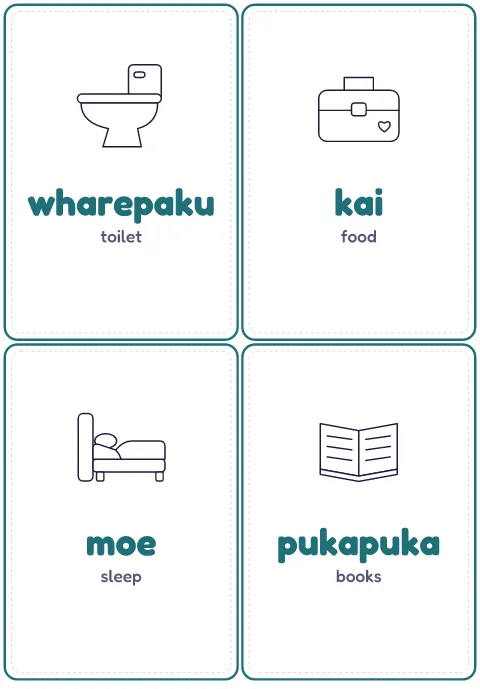 Te reo Māori room labels, greetings, shapes, feelingsDisplays and charts · ages 1–6
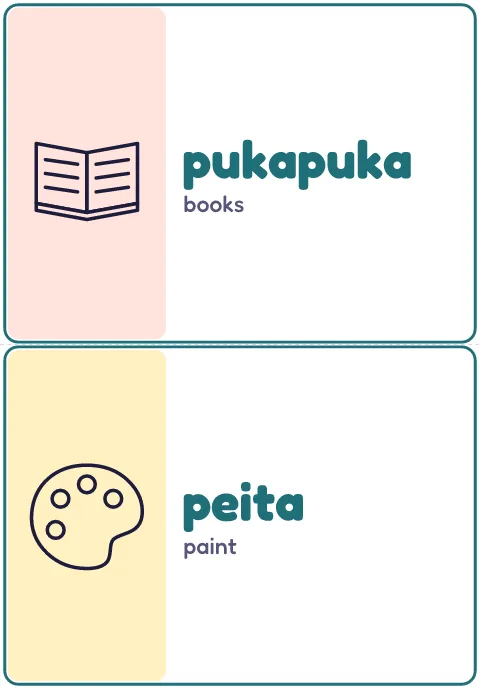 Te reo Māori classroom displays: signs, weather, seasons, birthdaysDisplays and charts · ages 1–6
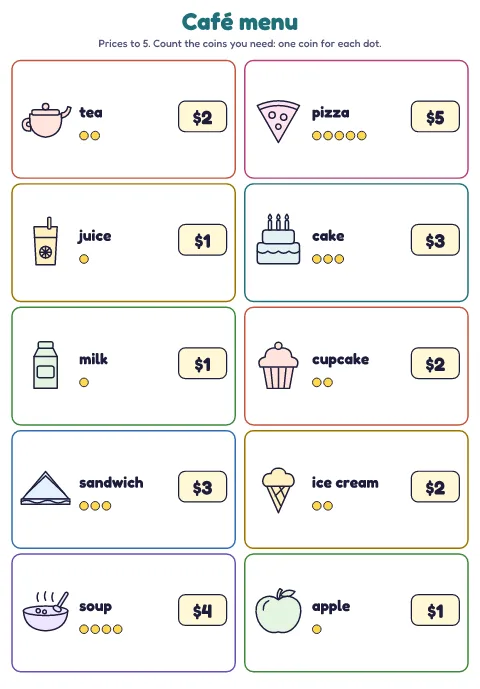 Café role play: menu, order pad, signs, badgesDisplays and charts · ages 2–6
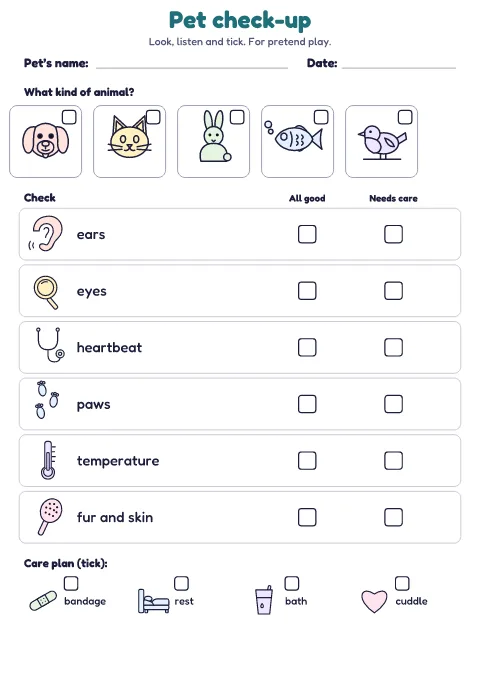 Vet role play: check-up form, appointment cards, signsDisplays and charts · ages 2–6
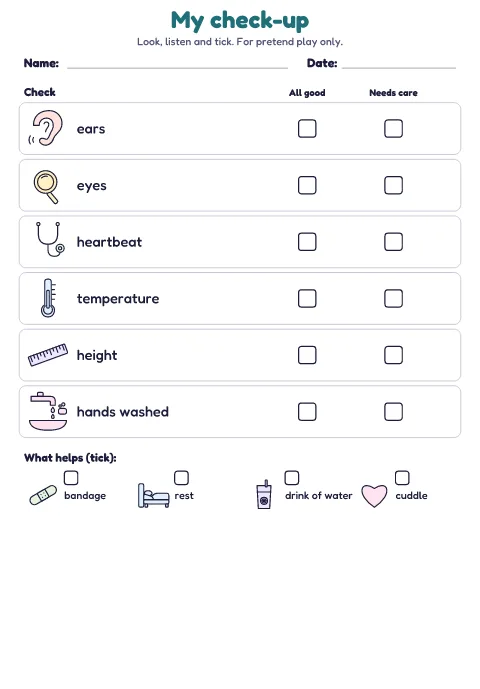 Doctor’s role play: check-up form, eye chart, signsDisplays and charts · ages 2–6
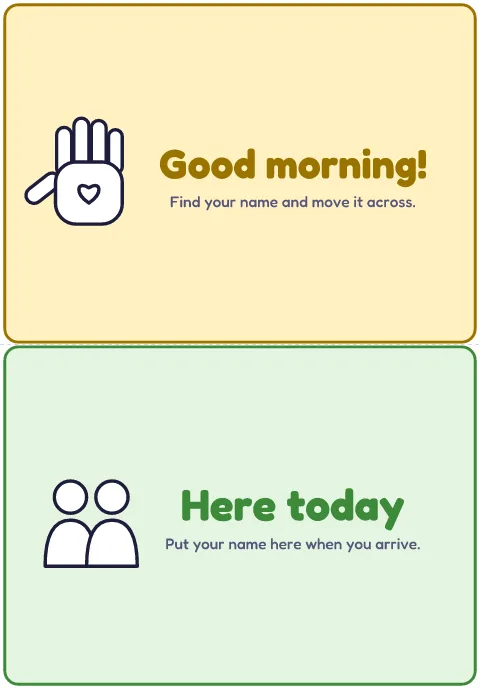 Self-registration, welcome banner and birthday chartDisplays and charts · ages 2–6
Questions
What areas should a preschool room have labels for?
The areas children choose between every day: blocks, books, art, sand, water, home corner, a quiet space, outdoors, the bathroom and where bags go. Our set adds writing, maths, music, science, puzzles, playdough, dress-ups and the snack table.
Should classroom labels use real photos or drawings?
Both work. Drawings stay clear on a black-and-white printer and keep the room calm; photos of your own resources help the youngest children. Our blank tray labels have a box for a photo or a drawing.
Capital letters or lower case on labels?
Lower case for everyday words, with a capital only where one belongs (names). Children meet lower-case letters far more often in books.
Are these labels free?
Free for your own centre, kindergarten, school, class and family. Please don’t resell them or upload them to another site.