 Colouring Nest
Visual timetable and feelings chart printables
Free printables that help young children know what is happening and put words to how they feel: a visual timetable board (a “daily schedule” version uses US wording), a now and next board, twelve picture cards for an early learning day, a feelings chart with twelve faces and a feelings check-in. For educators who need more, there are 24 routine cards in three sizes (with US and New Zealand wording and a black-and-white copy), a blank card template, first-then boards, now and next strips, daily and weekly strips and a one-page guide to introducing a visual timetable. For nursery, kindergarten, preschool and Reception rooms, toddlers and home. Every one is a free PDF in A4 and US Letter.
Where can I get a free printable visual timetable for preschool?
Colouring Nest has a free printable visual timetable for preschool, nursery and Reception: a timetable board, now and next and first-then boards, 24 routine cards in three sizes (toileting, nappy change, sleep, wait) with a blank template, daily and weekly strips and a feelings chart. A4 and US Letter PDFs, no sign-up.
- Timetable, now and next and first-then boards
- 24 routine cards in three sizes, plus blank cards
- Feelings chart with 12 faces
- UK and US wording
- Free PDF for US Letter and A4
- No sign-up or account
- Updated by Colouring Nest
Also free: Early years resources by country
Inside this set
- 13 printables
- A4 and US Letter PDFs
- Colour and ink-saver versions
- Free, no sign-up
About this resource
Ages 2–6, prep, what you need and how to use it
- Ages
- 2 to 6 years (toddlers, preschool, school start)
- Prep
- About 30 minutes to print, cut and laminate the cards.
- You’ll need
- Printer and thin card
- Scissors
- Laminator or sticky-back plastic
- Velcro dots or Blu Tack for the board
- Supports
- Te Whāriki (NZ), EYLF (Australia), EYFS (England), ELOF (US)
How to use it in the room
- Start with two cards (now and next or first-then), then add the rest of the session.
- Go through it at the start of the session, point to it at every change, and swap a card before a change happens.
- Use the same picture for the same thing every time, and keep the board within children’s reach.
- Keep the feelings chart for words and comfort, never for behaviour charts or rewards.
Show resources for
Remembered on this device only. It sets A4 or US Letter as the first download.
Supports:
- Te Whāriki NZ
- Belonging | Mana whenua
- Wellbeing | Mana atua
- EYLF Australia
- Outcome 1: Children have a strong sense of identity
- Outcome 3: Children have a strong sense of wellbeing
- EYFS England
- Personal, social and emotional development
- ELOF US
- Social and Emotional Development
- Approaches to Learning
See your country’s early learning page for what that means.
Why pictures help
Young children live in the present and cannot yet read a clock or a list. A row of pictures turns the day into something they can see: what is happening now, what comes next, and when home time is. Children who find changes hard, including many autistic children, often feel calmer when changes are shown in advance; predictable routines also help toddlers and preschoolers settle and cooperate (Raising Children Network: Routines and positive behaviour). The words differ by country: a visual timetable in UK and Australian settings, a visual schedule or picture schedule in the US.
1. Visual timetable board and cards
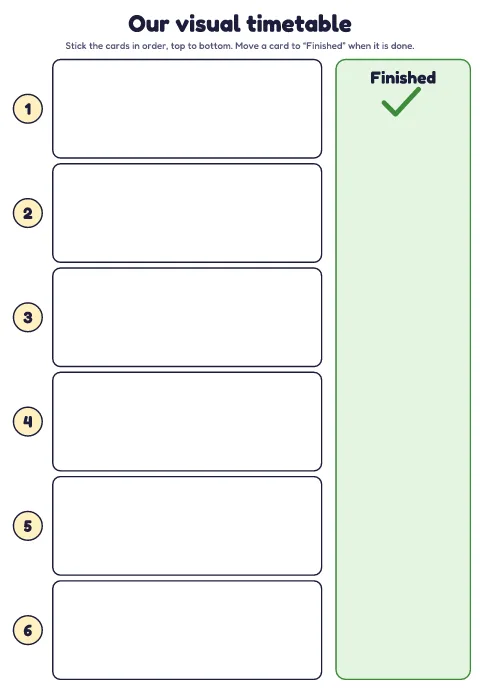
Six numbered slots down the page for the session’s cards in order, and a green “Finished” column: when an activity ends, the child moves its card across. Page 2 has the twelve picture cards (arrive, mat time, play, snack, wash hands, outside, story, lunch, rest, music, tidy up, home time) with dashed cut lines. Six slots is plenty for a morning or afternoon; for a whole day, print two boards.
Visual timetable PDF (A4)Visual timetable PDF (US Letter)
US wording (“Our daily schedule”):
2. Now and next board
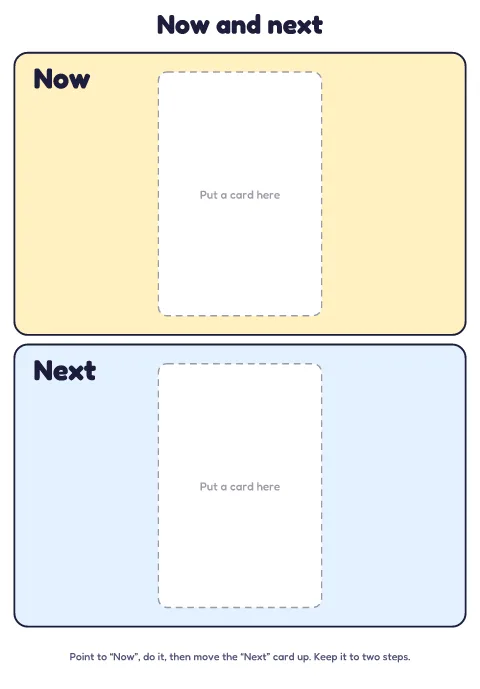
Two big boxes, Now and Next, with the same picture cards on page 2. Show “Now: tidy up, Next: story”, do the first one, then move the next card up and choose a new one. Two steps suit toddlers, a child who is new to the room, and moments when a whole day is too much.
Advertisement
3. Feelings chart with faces
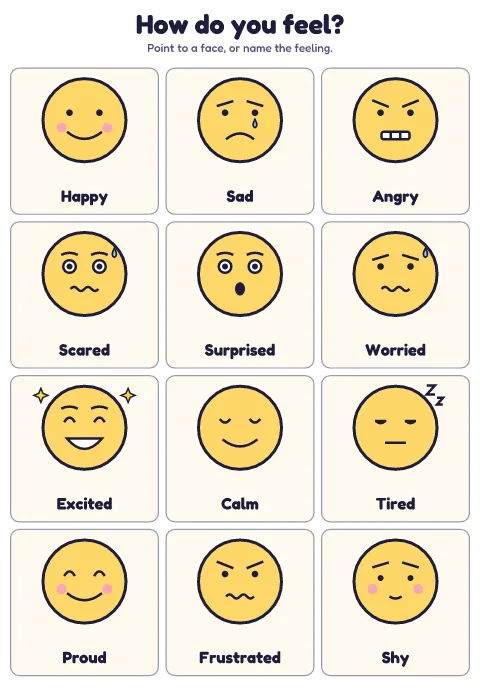
Twelve faces with their words, big enough to point at from the mat: happy, sad, angry, scared, surprised, worried, excited, calm, tired, proud, frustrated and shy. The ink-saver version has white faces to colour in, which is a good first activity with a new chart. Put it at child height near your book corner or calm space.
4. Feelings check-in
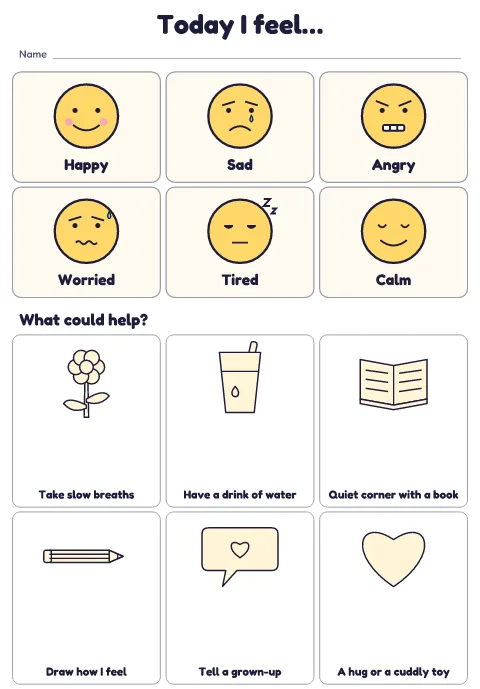
“Today I feel…” with six faces to point to or clip a peg on, and below it six things that could help: slow breaths, a drink of water, a quiet corner with a book, drawing the feeling, telling a grown-up, a hug or a cuddly toy. Use one per child at arrival, or one for the group at mat time. It is a conversation starter, not a test: every feeling is allowed.
5. Picture cards on their own
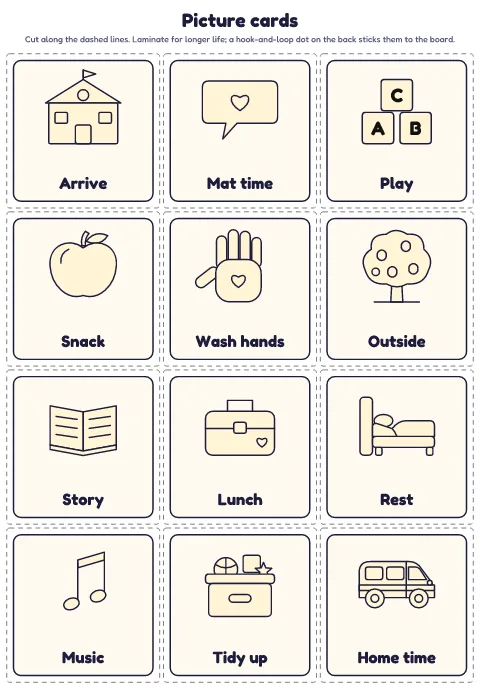
Just the twelve cards, for a second set or to replace lost ones. For home routines (wake up, get dressed, brush teeth, school, bath, bed) there are 24 more cards on the visual schedule cards page, and the routine chart maker lets you type your own.
6. 24 routine cards for the whole day
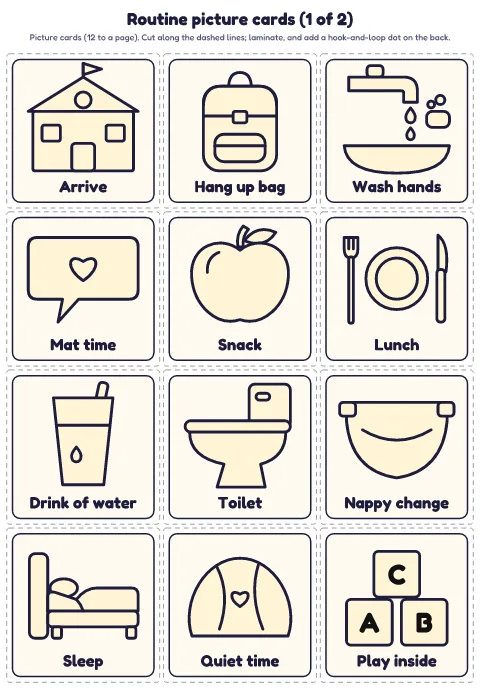
Every part of an early-years day on two pages: arrive, hang up bag, wash hands, mat time, snack, lunch, drink of water, toilet, nappy change, sleep, quiet time, play inside, play outside, sandpit, art, story, music, sun hat on, shoes on, tidy up, home time, wait, something new, all done. Toileting and nappy changes, sleep and rest, and the “Wait”, “Something new” and “All done” cards, because those are the moments a timetable helps most and that many free sets leave out. Same style and size as the twelve cards above, so the two sets mix.
The US version says circle time, bathroom, diaper change, sandbox and clean up; the New Zealand version says kai for snack. The black-and-white copy prints with no tints and children can colour it in.
Routine cards PDF (A4)Routine cards PDF (US Letter)
US wording PDF (A4)US wording PDF (US Letter)
7. Large and small cards
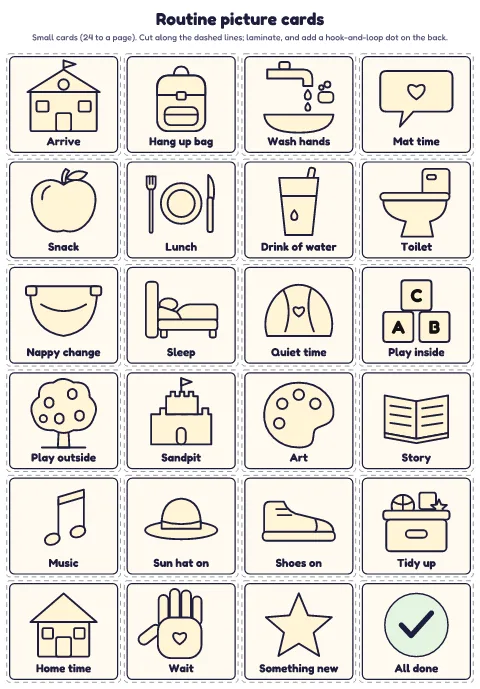
The same 24 cards at two more sizes. Large cards (six to a page, about 9 cm wide) read from across the room on a wall timetable or a group now and next board. Small cards (24 to a page, about 4.5 cm wide) fit the strips below, a lanyard or a key ring for an educator to carry outside, or a child’s own table strip.
Large cards PDF (A4)Large cards PDF (US Letter)
US wording PDF (A4)US wording PDF (US Letter)
8. Blank card template
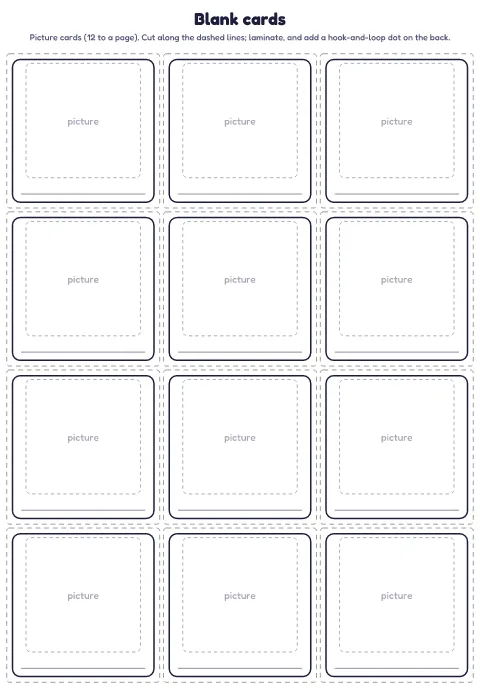
Blank cards in all three sizes (large, picture-card and small pages in one PDF), each with a dashed box for a drawing or a photo and a line for the word. Use them for the things only your room does (a cultural celebration, swimming, a visit from the dental nurse) or for a photo of the real place, which many of the youngest children find easier to read than a drawing.
9. First-then board
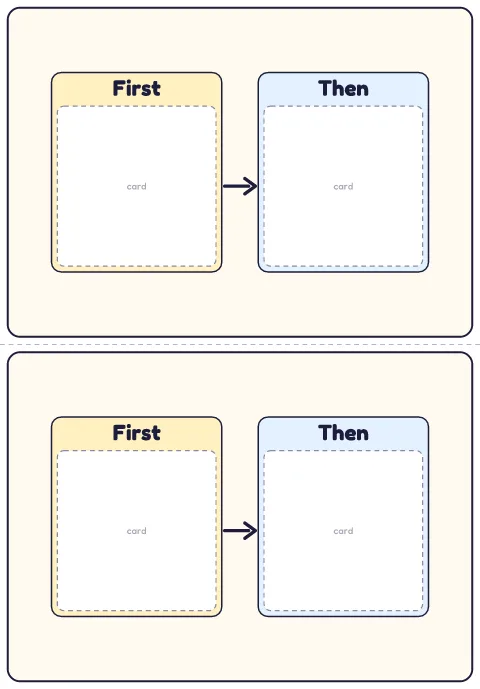
Two boards to a page, cut in half: “First” and “Then” with a pocket each, sized for the 12-to-a-page cards. Put the less-wanted step first and something the child is looking forward to second (“First shoes on, then outside”), and keep the promise. A now and next board shows the order of the day; a first-then board links one step to the next for a single moment.
10. Now and next strips
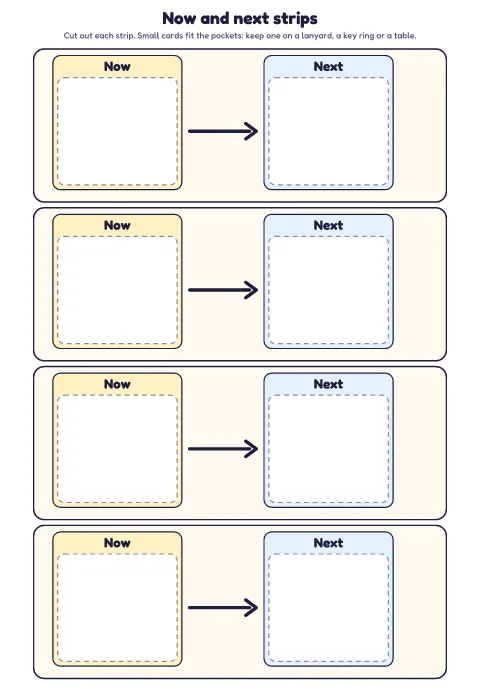
Four small now and next strips to a page, sized for the small cards. Laminate one for each educator’s lanyard or for the table of a child who needs their own; it goes outside, on trips and to the bathroom, where a wall board can’t.
Now and next strips PDF (A4)Now and next strips PDF (US Letter)
11. Daily strip
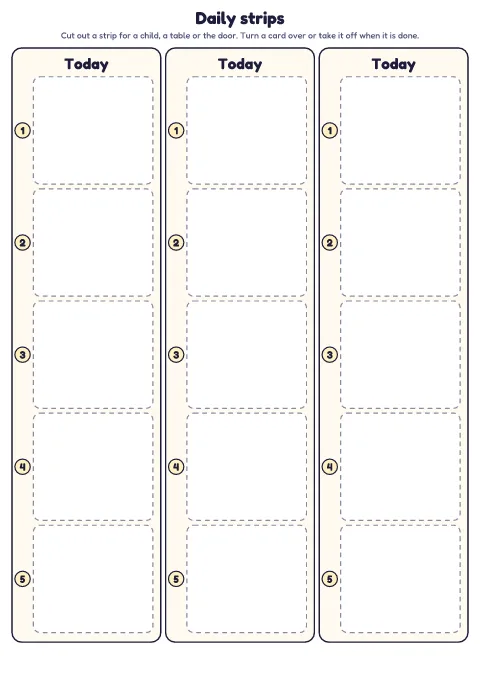
Three strips to a page, each headed “Today” with five numbered pockets for small cards: a child’s own morning or afternoon, top to bottom. Turn each card over or take it off when it is done, so the strip gets shorter as the session goes on.
12. Weekly strip
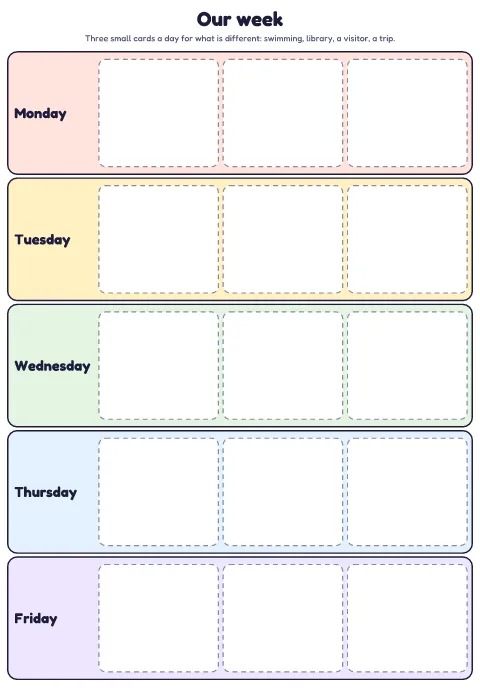
Monday to Friday, one coloured row a day with three pockets for small cards: the things that change from day to day, such as swimming on Tuesday, library on Thursday or a grandparent picking up on Friday. Put it up beside the calendar and weather board and talk about it on Monday morning; for days, dates and seasons use that board’s cards.
How to introduce a visual timetable
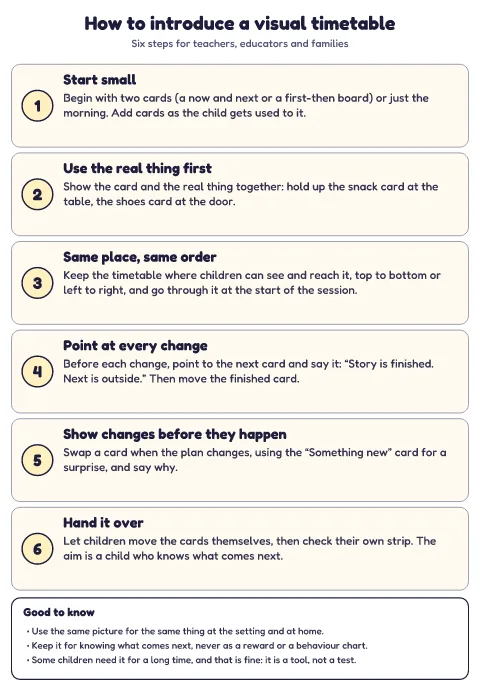
Six steps that work in a room and at home. Print the one-page guide for the staff room, relief teachers or a family who wants to try it at home.
- Start small. Begin with two cards (a now and next or a first-then board) or just the morning. Add cards as the child gets used to it.
- Use the real thing first. Show the card and the real thing together: hold up the snack card at the table, the shoes card at the door.
- Same place, same order. Keep the timetable where children can see and reach it, top to bottom or left to right, and go through it at the start of the session.
- Point at every change. Before each change, point to the next card and say it: “Story is finished. Next is outside.” Then move the finished card.
- Show changes before they happen. Swap a card when the plan changes, using the “Something new” card for a surprise, and say why.
- Hand it over. Let children move the cards themselves, then check their own strip. The aim is a child who knows what comes next.
At home: start with the hardest part of the day (often getting out of the door or bedtime), use three or four cards, and put the strip where it happens: the front door, the bathroom mirror. Use the same pictures as your child’s centre or school if you can; ask their teacher which cards they use.
In the room: introduce the board at mat time, with the whole group, before anyone needs it. Give a child who needs more support their own strip with the same cards as the wall, and show the change of plan card to everyone, not just to one child.
Tips from the room
- Go through the timetable at the start of the session, and point to it at every change.
- Show changes before they happen: swap the card for a visitor or a wet-day plan, and say so.
- Use the same picture for the same thing every time, and keep the board where children can reach it.
- Name your own feelings out loud (“I feel frustrated, I’ll take a slow breath”) more often than you ask children to name theirs.
- Keep the feelings chart for words and comfort, not for behaviour charts or rewards.
More routines and feelings printables
Emotion cards and emotion cards without words (16 faces, for games and talk), the feelings word mat, morning and bedtime routine charts, a potty training chart, and the all about me sheets for the first weeks. By country: New Zealand, Australia, UK, US.
Related sets
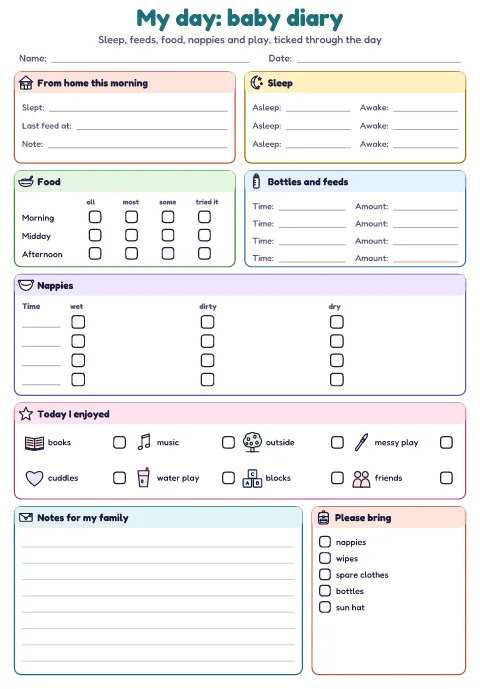 Daily care diary for babies and toddlers, family sheetsTemplates · ages 0–3
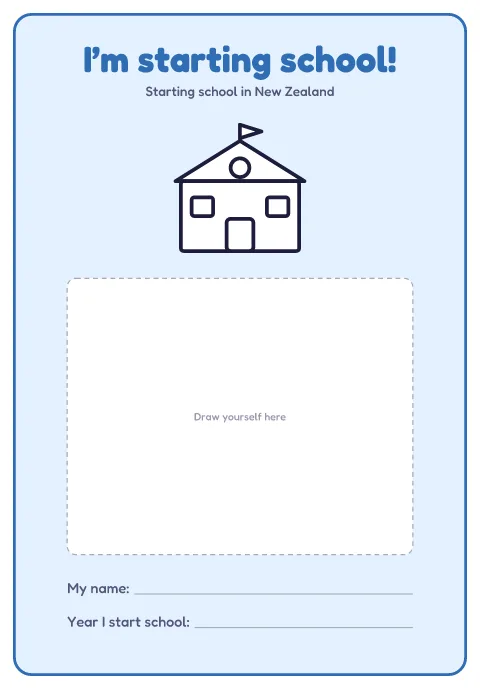 Starting school booklet and all about me for my new teacherTemplates · ages 4–6
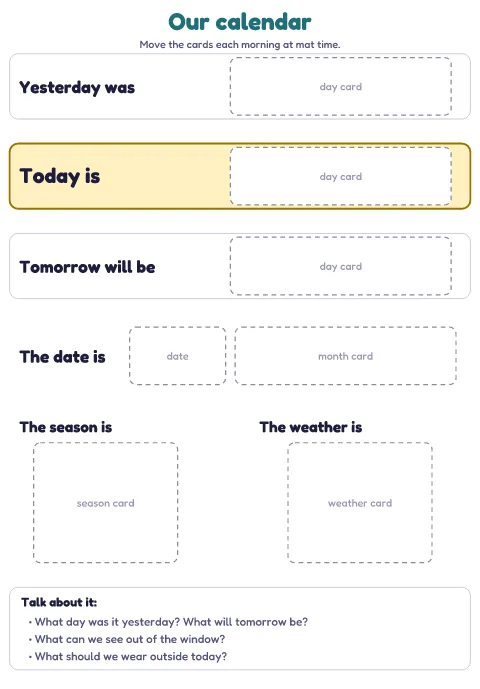 Circle-time calendar and weather boardDisplays and charts · ages 3–6
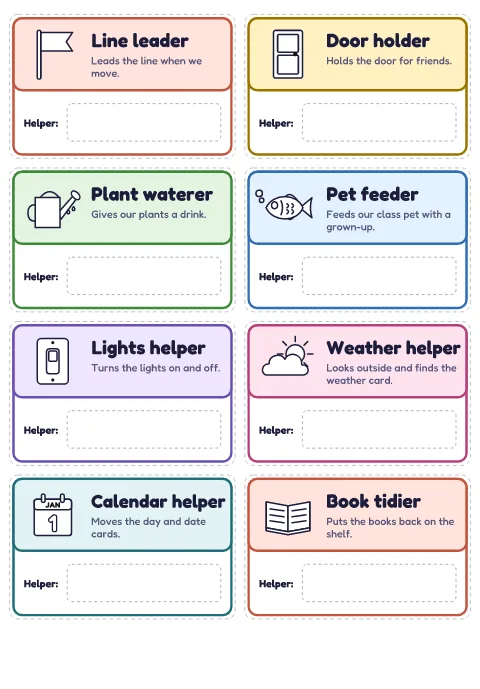 Classroom helper chart, job cards and routine chartsDisplays and charts · ages 3–6
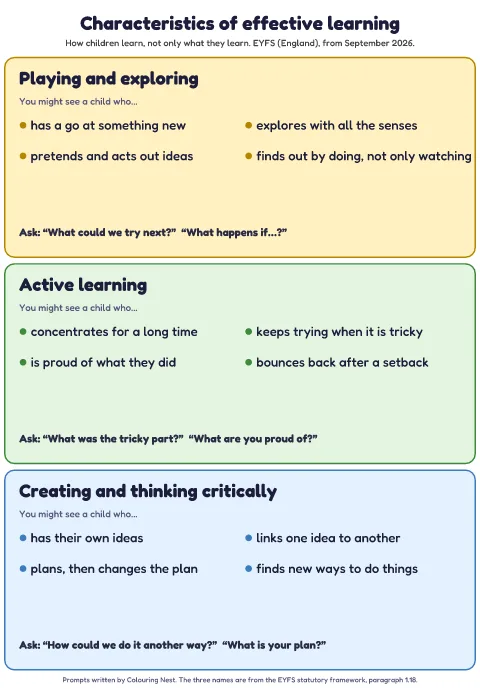 Characteristics of effective learning poster and promptsDisplays and charts · ages 1–5
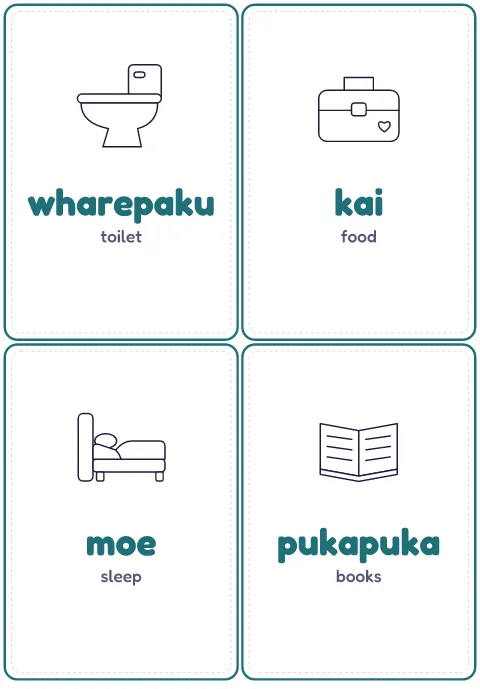 Te reo Māori room labels, greetings, shapes, feelingsDisplays and charts · ages 1–6
Questions
What is a visual timetable?
A row or column of picture cards that shows the parts of the day in order, so a child can see what is happening now and what comes next. In the UK and Australia it is usually called a visual timetable; in the US, a visual schedule or picture schedule.
What is the difference between a visual timetable and a now and next board?
A visual timetable shows the whole day or session. A now and next board shows just two steps, which suits toddlers and any child for whom a whole day is too much to take in at once.
How do I use a feelings chart with preschoolers?
Use it little and often: name your own feelings out loud, read a story and ask how a character might feel, or check in at the start of the day. Accept every answer; the aim is words for feelings, not the “right” feeling.
Is this the Zones of Regulation?
No. Zones of Regulation is a published programme with its own materials. Our chart is a simple set of faces and words of our own, with no colour zones.
What is a first-then board?
A board with two pockets, First and Then, that shows one step and what comes straight after it: first shoes on, then outside. It helps a child get through a less-wanted step because they can see what follows.
What size should visual timetable cards be?
Big enough to see from where they are used: large cards (about 9 cm) for a wall board the group reads from the mat, picture cards (about 6 cm) for a room timetable, and small cards (about 4.5 cm) for a lanyard, a key ring or a child’s own strip. Ours come in all three, with the same pictures.
How do I introduce a visual timetable?
Start with two cards or one part of the day, show each card with the real thing, keep it in the same place, point to the next card at every change, show changes before they happen and, over time, let children move the cards themselves.
Are the printables free for a nursery, kindergarten or classroom?
Yes. Print as many as you need for your own setting or home. Please don’t resell them or upload them to another site.