 Colouring Nest
Te reo Māori classroom displays
Not yet reviewed by a fluent speaker. Every Māori word is checked on Te Aka Māori Dictionary and a second source, with its macrons. Corrections welcome.
Free bilingual classroom displays in te reo Māori and English for early learning services and new entrant classes in Aotearoa New Zealand: fourteen area signs, weather cards (huarere), season cards with their months, a Nau mai, haere mai welcome banner, a birthday chart (ngā rā whānau) and a helpers header (ngā kaiāwhina). A4 PDFs (US Letter too), with every macron in place.
Inside this set
- 6 printables
- A4 and US Letter PDFs
- Colour and ink-saver versions
- Free, no sign-up
About this resource
Ages 1–6, prep, what you need and how to use it
- Ages
- 1 to 6 years (toddlers, preschool, school start)
- Prep
- About 45 minutes to print, trim and laminate the signs and cards.
- You’ll need
- Printer and card
- Scissors
- Laminator
- Blu Tack or tape
- Supports
- Te Whāriki (NZ), EYLF (Australia), EYFS (England), ELOF (US)
How to use it in the room
- Put the bilingual area signs up in each space.
- Use the weather and season cards at mat time.
- Say the words in everyday talk so they become normal in the room.
Show resources for
Remembered on this device only. It sets A4 or US Letter as the first download.
Te reo Māori on the walls
Words on the walls are words children and adults use. The te reo Māori word comes first and largest on every sign, with the English underneath, so both languages have a clear place and new kaiako and whānau can join in. These sets match the English classroom labels, calendar and weather board, birthday charts and helper chart, so a room can use both.
Supports:
- Te Whāriki NZ
- Communication | Mana reo
- Belonging | Mana whenua
- Contribution | Mana tangata
- EYLF Australia
- Outcome 5: Children are effective communicators
- Outcome 1: Children have a strong sense of identity
- Outcome 2: Children are connected with and contribute to their world
- EYFS England
- Communication and language
- Literacy
- Personal, social and emotional development
- ELOF US
- Language and Literacy
- Social and Emotional Development
1. Bilingual area signs (14)
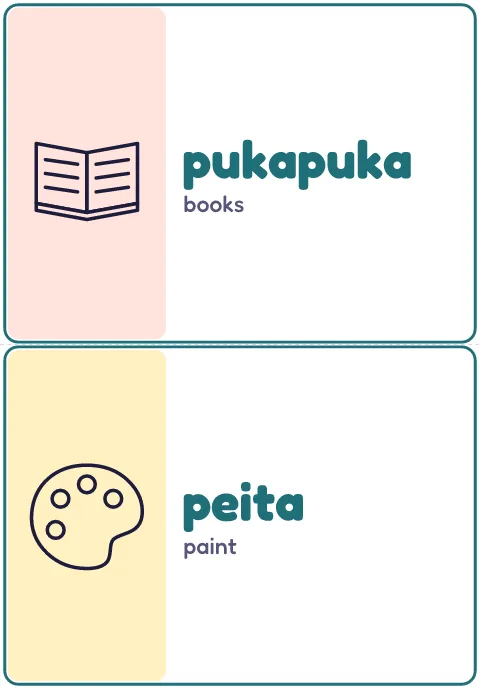
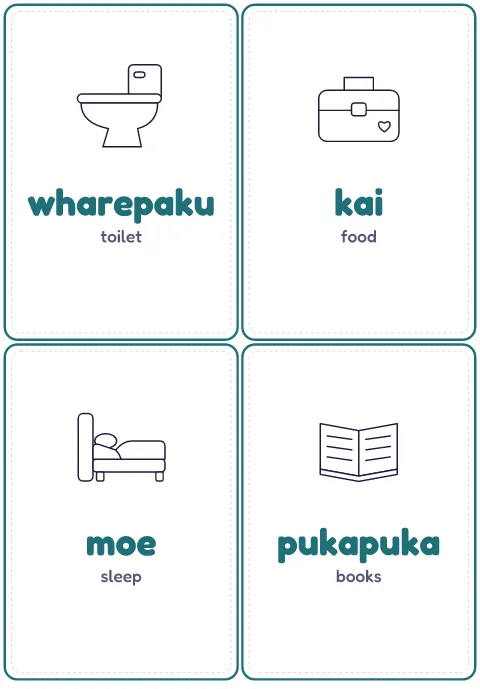
Two signs to a page with our own drawings: pukapuka (books), peita (paint), onepū (sand), wai (water), waho (outside), wharepaku (toilet), pēke (bags), tuhituhi (writing), pāngarau (maths), puoro (music), pūtaiao (science), panga (puzzles), kai (food), moe (sleep). For object labels (door, window, chair, table) see the te reo Māori room labels.
2. Weather cards: huarere
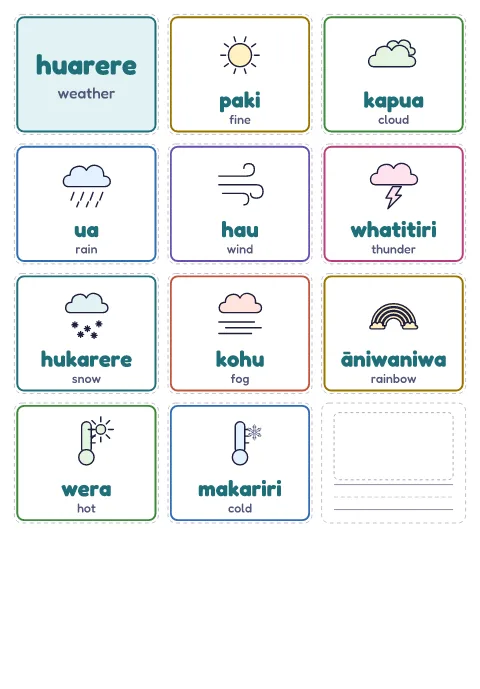
A title card and ten weather words, sized to fit the pockets of our calendar board: paki (fine), kapua (cloud), ua (rain), hau (wind), whatitiri (thunder), hukarere (snow), kohu (fog), āniwaniwa (rainbow), wera (hot), makariri (cold). Paki means fine weather (no rain); for a sunny day you can also point to the sun.
3. Seasons with their months
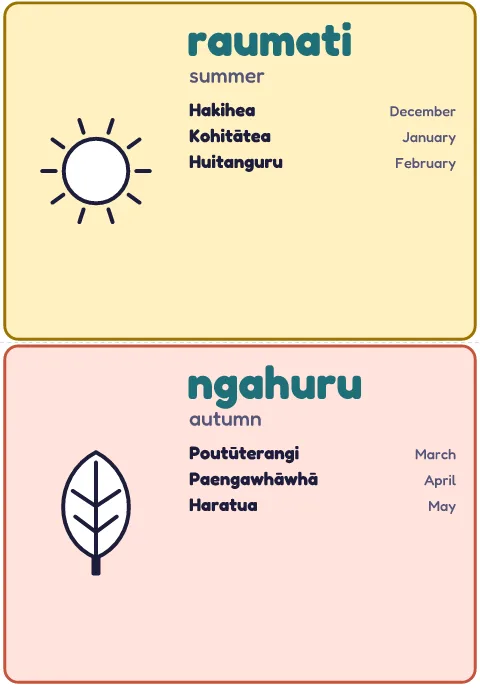
Four large cards: raumati (summer), ngahuru (autumn), takurua (winter), kōanga (spring), each listing its three months by their maramataka names with the English month. The months follow He Pātaka Kupu’s definitions of each season (for example raumati: Hakihea, Kohitātea, Huitanguru).
Advertisement
4. Nau mai, haere mai banner
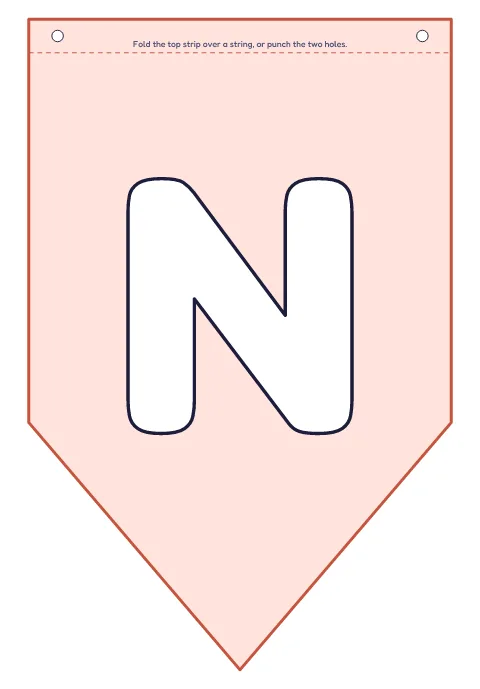
Seventeen pennants spelling NAU MAI ★ HAERE MAI with big outline letters to colour. Nau mai and haere mai both say welcome; together they are the familiar call of welcome you see at the entrance of many services.
5. Birthday chart: ngā rā whānau
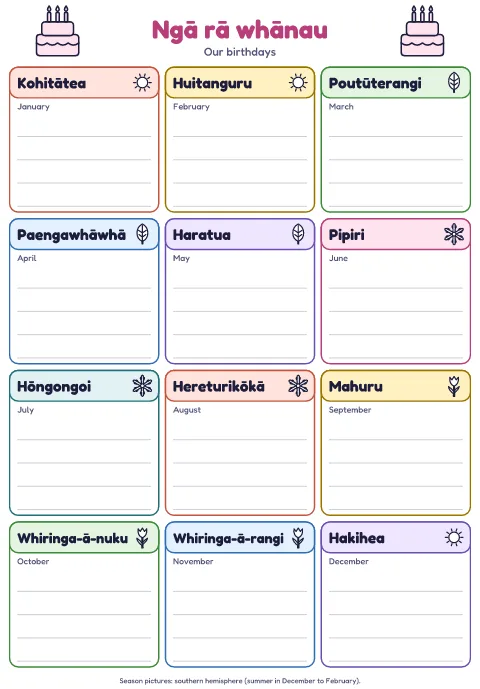
Twelve month boxes headed by their maramataka names (Kohitātea, Huitanguru, Poutūterangi …) with the English month underneath, a season picture and lines for names. Rā whānau means birthday.
6. Helpers header: ngā kaiāwhina
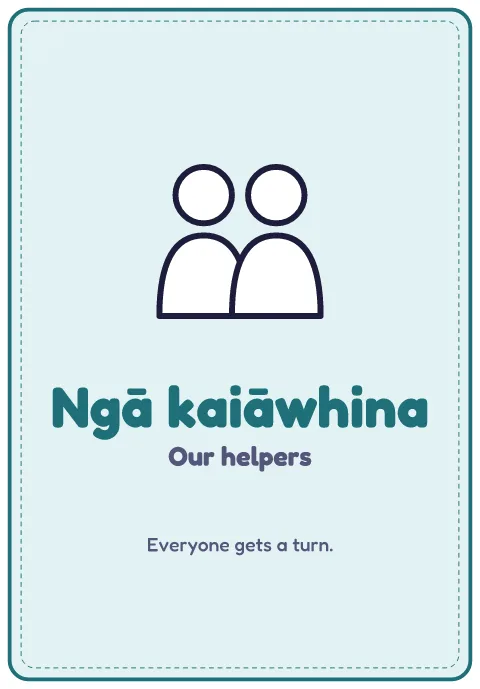
A header for the helper chart: ngā kaiāwhina, our helpers. Use it with the job cards.
All the words on this page
- raumati: summer
- ngahuru: autumn (also: ten)
- takurua: winter
- kōanga: spring, planting time
- huarere: weather
- paki: fine weather
- kapua: cloud
- ua: rain
- hau: wind
- whatitiri: thunder
- hukarere: snow
- kohu: fog, mist
- āniwaniwa: rainbow
- wera: hot
- makariri: cold
- onepū: sand
- tuhituhi: writing, to write
- pāngarau: mathematics
- puoro: music, song
- pūtaiao: science
- panga: puzzle, riddle
- kaiāwhina: helper
- nau mai: welcome!
- haere mai: welcome, come here
- rā whānau: birthday
Months, days and the words from our other sets are listed on the days and months and room labels pages. Where the dictionaries differ (for example single-word or hyphenated month names), we follow Te Taura Whiri i te Reo Māori’s orthography guidelines, as on those pages.
Not yet reviewed by a fluent speaker. Every word here is checked against Te Aka Māori Dictionary and a second source (Te Taura Whiri i te Reo Māori’s He Pātaka Kupu, or the Ministry of Education for rā whānau), with its macrons. No fluent speaker or Māori early childhood kaiako has read this page yet. If something should change, please tell us and we will fix it.
The rest of the room set: classroom labels and area signs, calendar and weather board, self-registration, welcome banner and birthday chart, helper chart and routine charts. For routines and feelings, see the visual timetable; for everything else for ages 0 to 6, early learning by country.
Related sets
 Te reo Māori room labels, greetings, shapes, feelingsDisplays and charts · ages 1–6
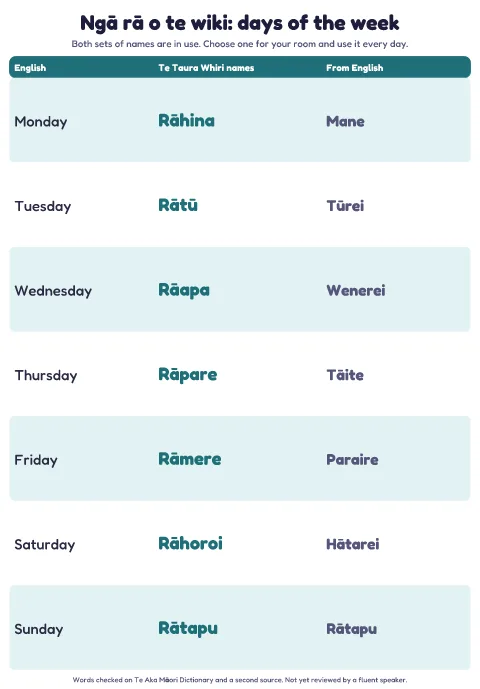 Days and months in te reo MāoriDisplays and charts · ages 3–6
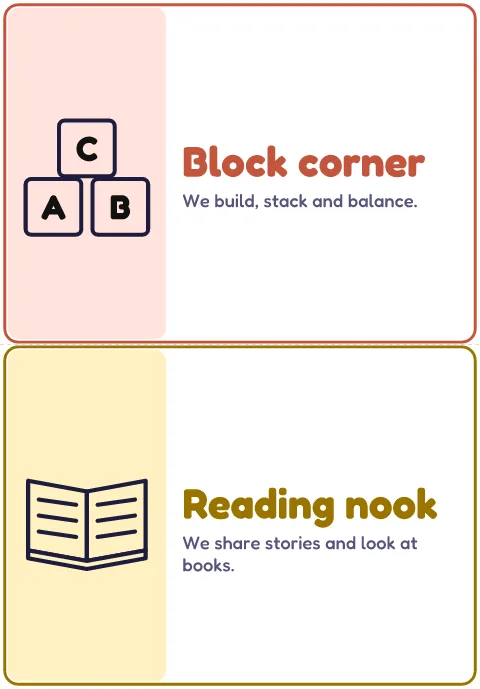 Classroom labels with pictures: area signs, trays, name tagsDisplays and charts · ages 1–6
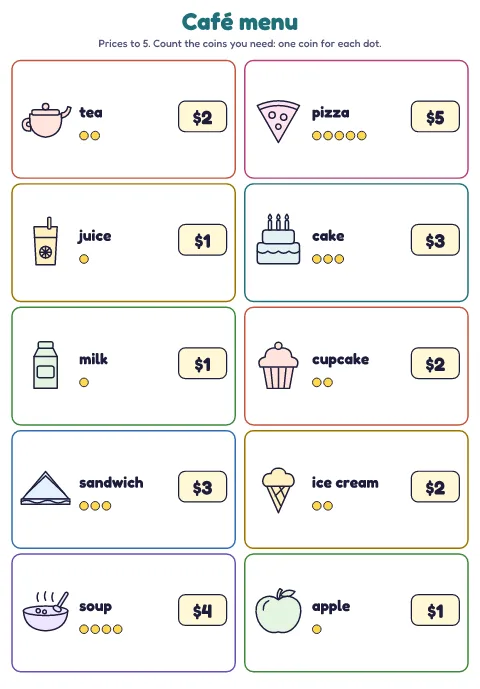 Café role play: menu, order pad, signs, badgesDisplays and charts · ages 2–6
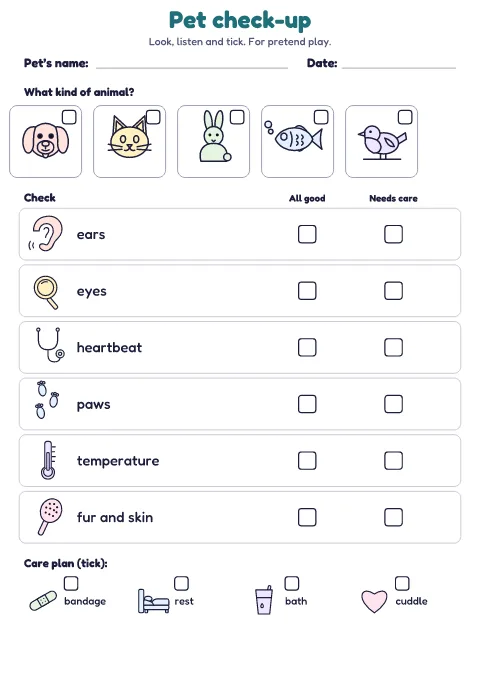 Vet role play: check-up form, appointment cards, signsDisplays and charts · ages 2–6
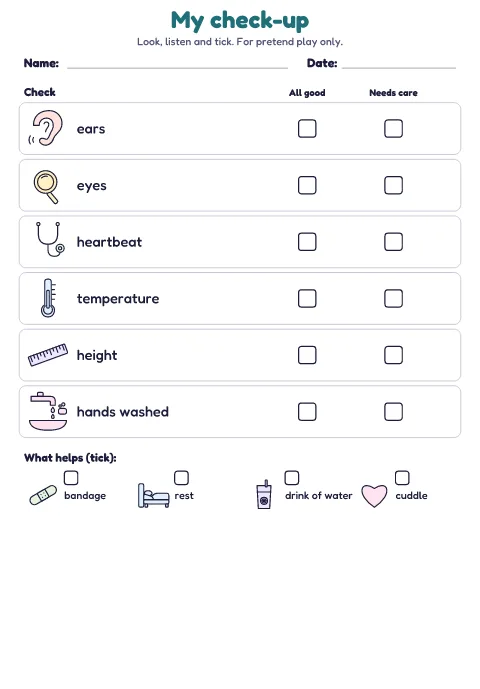 Doctor’s role play: check-up form, eye chart, signsDisplays and charts · ages 2–6
Questions
What is weather in te reo Māori?
Huarere. Our cards have paki (fine), kapua (cloud), ua (rain), hau (wind), whatitiri (thunder), hukarere (snow), kohu (fog), āniwaniwa (rainbow), wera (hot), makariri (cold).
What are the seasons in te reo Māori?
raumati (summer), ngahuru (autumn), takurua (winter), kōanga (spring).
How do you say welcome in te reo Māori?
Nau mai and haere mai both mean welcome; nau mai, haere mai together is a common welcome.
Has a fluent speaker checked these?
Not yet. Every word is checked against Te Aka and a second source with its macrons; we welcome corrections now.
Are these free?
Free for your own centre, kindergarten, school, class and family. Please don’t resell them or upload them to another site.