 Colouring Nest
Back to school teacher printables for NZ and Australia: Term 1 2027
Free back to school printables for teachers in New Zealand and Australia, ready for Term 1 2027: a week-by-week Term 1 planner for New Zealand and for every Australian state and territory, a whole-year overview by term week, a first-week timetable, name tags, desk name plates, exercise book labels, a class jobs chart, getting-to-know-you activities, a welcome letter for families, first day signs, summer holiday recount frames, a class agreement poster and a birthdays-by-term list. Eighteen resources, each an A4 and a US Letter PDF, most in colour and ink saver, with no sign-up.
Inside this set
- 18 printables
- A4 and US Letter PDFs
- Colour and ink-saver versions
- Free, no sign-up
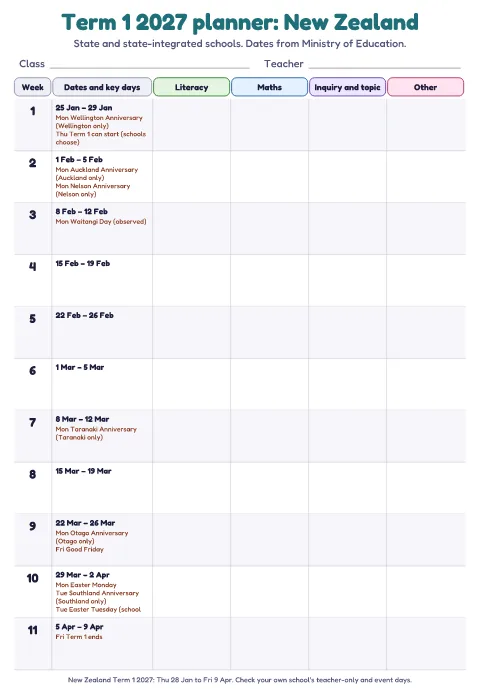 Term 1 2027 week-by-week planner
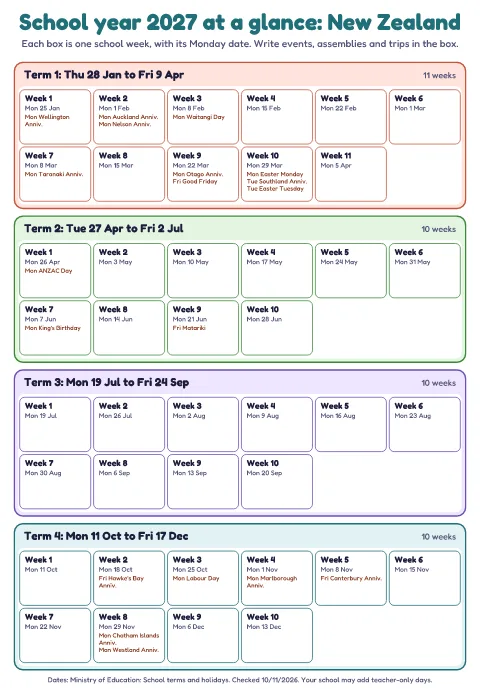 School year 2027 at a glance, by term week
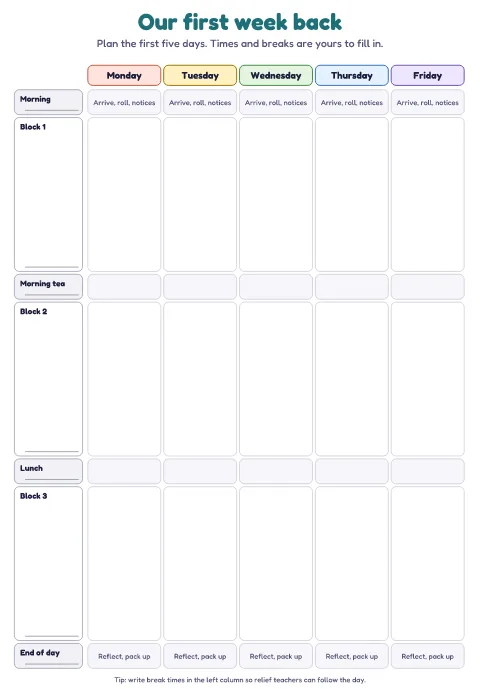 First week back timetable
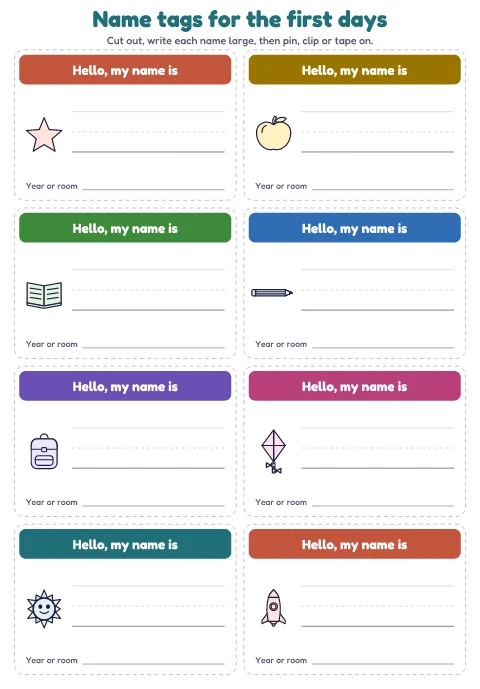 Hello, my name is: name tags
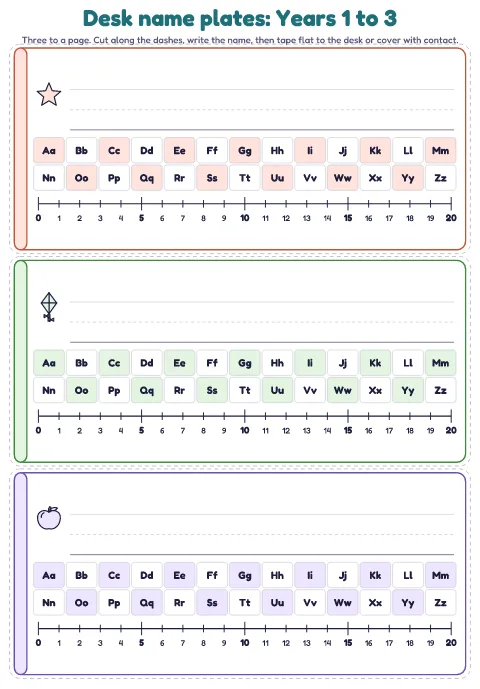 Desk name plates for Years 1 to 3
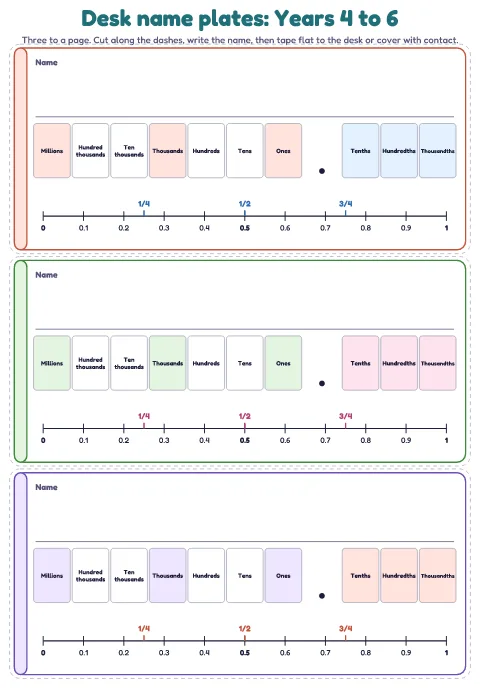 Desk name plates for Years 4 to 6
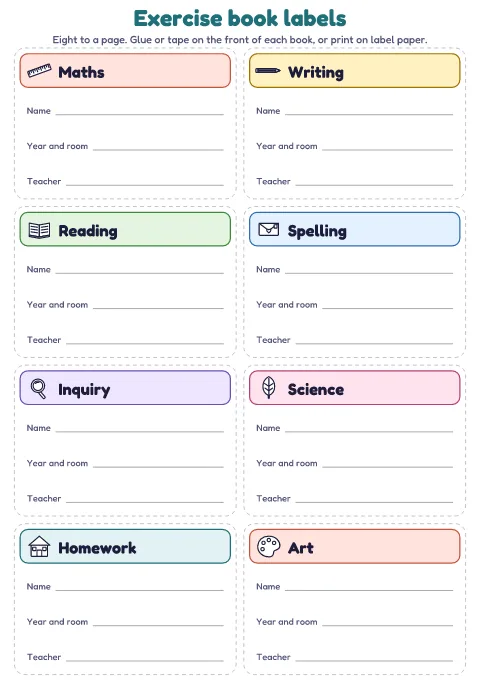 Exercise book labels
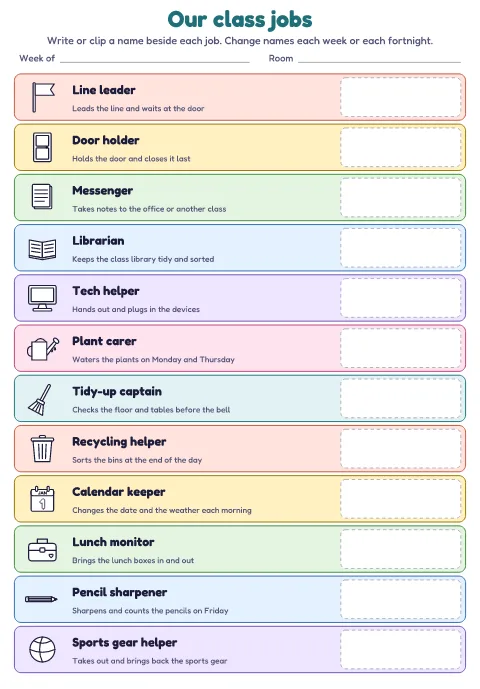 Class jobs chart
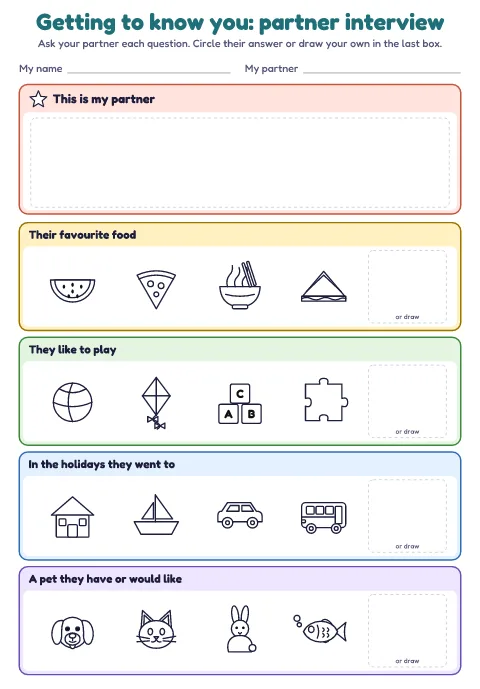 Partner interview, Years 1 to 3
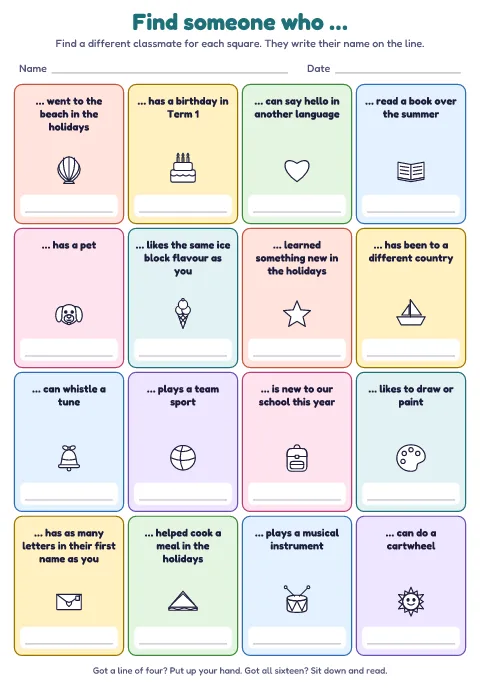 Find someone who: getting to know you bingo, Years 3 to 6
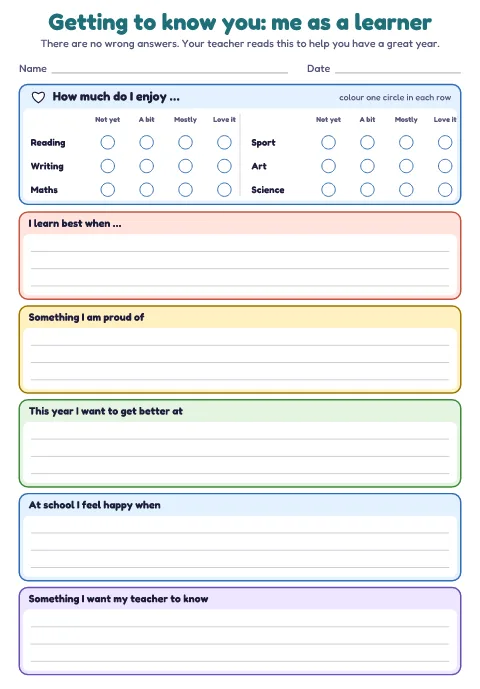 Me as a learner: student information sheet, Years 3 to 6
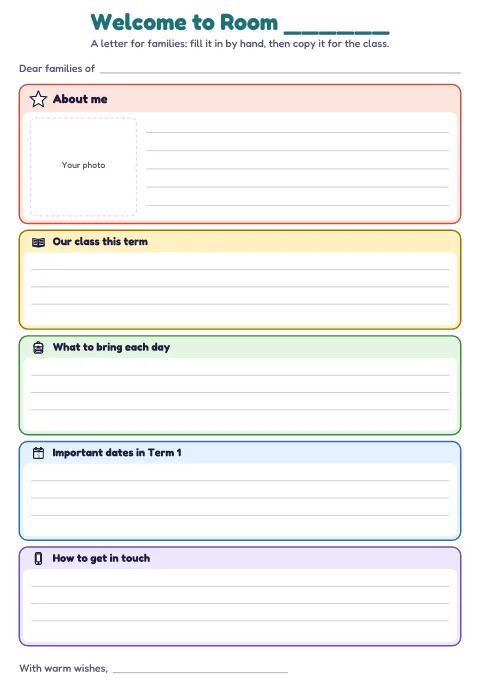 Meet the teacher: welcome letter and family sheet
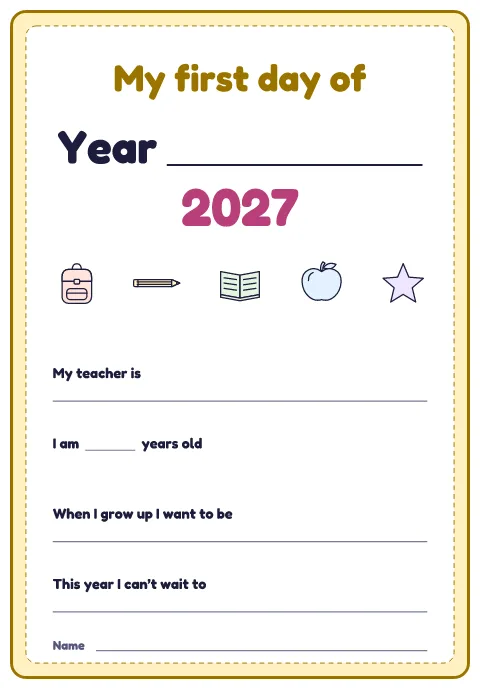 First day of Year ___ photo sign
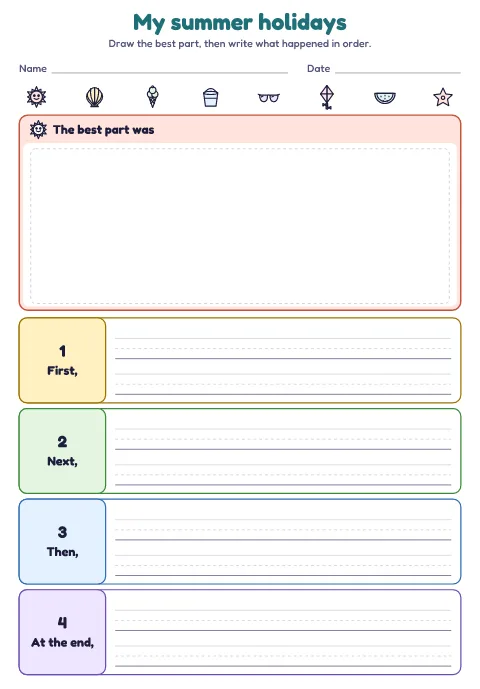 My summer holidays, Years 1 and 2
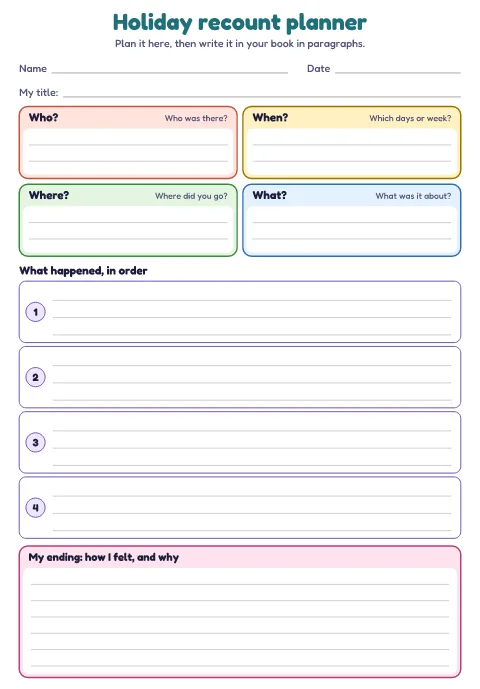 Holiday recount planner, Years 3 to 6
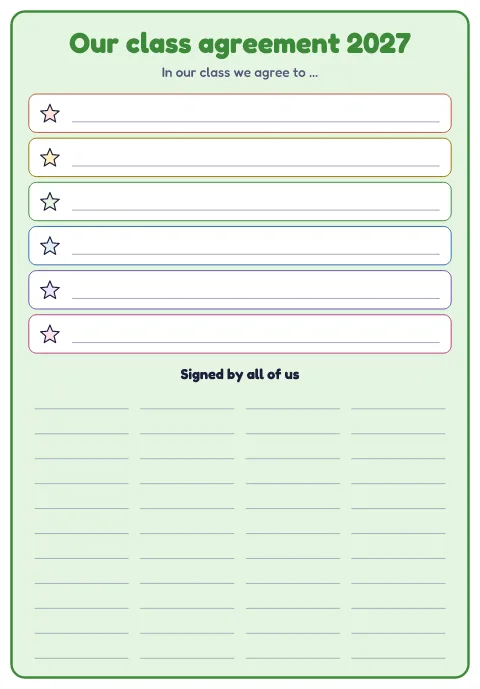 Class agreement poster and Y-chart
 Class birthdays by term
 Class checklist
When does Term 1 2027 start? The short answer
New Zealand state schools start Term 1 between Thu 28 Jan and Wed 3 Feb 2027 (each school picks its own day in that window) and finish on Fri 9 Apr. Australian government schools start between Wednesday 27 January (Victoria’s and South Australia’s first day for staff, Queensland, the NT) and Thursday 4 February (Tasmania), so most teachers have their first week back in the last days of January or the first week of February. The table below gives every state, and each planner prints its own dates in the right weeks.
| Where | Term 1 starts | Term 1 ends | Weeks on the planner | Note |
|---|---|---|---|---|
| New Zealand | Thu 28 Jan to Wed 3 Feb (each school chooses) | Fri 9 Apr | 11 | |
| New South Wales | Wed 3 Feb | Fri 9 Apr | 10 | Eastern division. Western division schools start on Wednesday 10 February |
| Victoria | Wed 27 Jan | Thu 25 Mar | 9 | Students in government schools start on Thursday 28 January |
| Queensland | Wed 27 Jan | Thu 25 Mar | 9 | |
| Western Australia | Mon 1 Feb | Fri 9 Apr | 10 | |
| South Australia | Wed 27 Jan | Fri 9 Apr | 11 | |
| Tasmania | Thu 4 Feb | Fri 9 Apr | 10 | |
| Australian Capital Territory | Tue 2 Feb | Fri 9 Apr | 10 | Continuing students. New students start on Monday 1 February |
| Northern Territory | Wed 27 Jan | Fri 2 Apr | 10 |
Every date on this page and on the planners comes from the department’s own term-dates page (named on each planner and in the sources below), checked on 10 November 2026. Catholic and independent schools set their own dates: use the blank term planner on page 2. Updated 13 November 2026.
Plan the term
1. Term 1 2027 week-by-week planner
One row for each week of Term 1, with the week’s dates and the days that matter already written in: the first and last day, Waitangi Day (observed on Monday 8 February in 2027) and the regional anniversary days in New Zealand; Australia Day, Labour Day, Canberra Day, Adelaide Cup, Eight Hours Day and Easter in the states that keep them. Columns for literacy, maths, inquiry and topic, and anything else. Page 2 is a blank term planner with no dates, for any term or for a school with its own calendar. New Zealand first; pick your state from the list for Australia.
Term 1 planner PDF (A4)Term 1 planner PDF (US Letter)
Australia: choose your state or territory (8)
2. School year 2027 at a glance, by term week
All four terms on one page, with a box for every school week and its Monday date, so “Term 2, Week 5” becomes a date at a glance. Public holidays print inside the week they fall in. Pin it beside the desk or glue it in the front of your planner, then write assemblies, trips, reports and sports days in the boxes.
Year at a glance PDF (A4)Year at a glance PDF (US Letter)
Australia: choose your state or territory (8)
3. First week back timetable
Monday to Friday, with rows for the start of the day, three teaching blocks, morning tea, lunch and the end of the day. Write your own times in the left column. Page 2 is an example first week filled in by hand: name games, a class agreement, a holiday recount in two steps, partner interviews and a celebration on Friday, using the sheets further down this page.
First week timetable PDF (A4)First week timetable PDF (US Letter)
Names, labels and the room
4. Hello, my name is: name tags
Eight tags to a page with a coloured band, a small picture and wide handwriting lines, so the name can be read from across the room. Write the names before the first bell for younger classes, or let older students write their own as a first job. Pin, clip or tape them on for the first few days, until you and the relief teacher know everyone.
5. Desk name plates for Years 1 to 3
Three flat strips to a page, to tape to the desk or cover with clear contact. Each has the name on handwriting lines, the alphabet in capital and lower-case pairs, and a number line from 0 to 20, so the two things young writers look up most are right under their hands.
Desk plates, junior PDF (A4)Desk plates, junior PDF (US Letter)
6. Desk name plates for Years 4 to 6
The same strip for older students: a name line, a place value chart from millions to thousandths with the decimal point, and a number line from 0 to 1 in tenths with quarters marked above. Useful all year, and plain enough that older students don’t find it babyish.
Desk plates, senior PDF (A4)Desk plates, senior PDF (US Letter)
7. Exercise book labels
Eight labels to a page: maths, writing, reading, spelling, inquiry, science, homework and art, each with a picture and lines for the name, year and room, and teacher. Page 2 is blank, for subjects your school names differently (topic, HASS, a second language). Print on plain paper and glue, or on A4 or Letter label sheets. For labels with each child’s name typed, use the name label maker.
8. Class jobs chart
Twelve jobs for a primary class, each with one line on what it involves, from line leader and messenger to plant carer and recycling helper, and a box beside each for a name or a peg. Page 2 is blank for your own jobs. Rotate weekly or fortnightly so everyone gets a turn; for a junior room, the early-years helper chart and job cards have picture-only cards.
Advertisement
Getting to know you
9. Partner interview, Years 1 to 3
Children pair up, draw their partner, then ask four questions and circle the answer in pictures: favourite food, what they like to play, where they went in the holidays, and a pet they have or would like. A box in each row is for an answer that isn’t pictured. No reading needed beyond the questions, which you read aloud; each child then introduces their partner to the class.
10. Find someone who: getting to know you bingo, Years 3 to 6
Sixteen squares written for a southern-hemisphere first week: went to the beach in the holidays, has a birthday in Term 1, can say hello in another language, likes the same ice block flavour as you. Students move round the room and collect a different name for each square. A blank card on page 2 lets the class write the next round.
11. Me as a learner: student information sheet, Years 3 to 6
A student information sheet the student fills in, not the family: how much they enjoy reading, writing, maths, sport, art and science (four circles from “not yet” to “love it”), how they learn best, something they are proud of, what they want to get better at, when they feel happy at school, and something they want you to know. Keep it in your planning folder and look at it again at the end of Term 1.
Families
12. Meet the teacher: welcome letter and family sheet
A one-page letter to fill in by hand and copy for the class: a box for your photo, about me, our class this term, what to bring each day, important dates in Term 1 and how to get in touch. Page 2 is a “tell me about your child” sheet for families to send back: what their child likes and is good at, what helps when things are hard, and their hopes for the year. It asks for no health details, which belong on the school’s enrolment form.
13. First day of Year ___ photo sign
A big sign for the first-day photo with the year level left blank, so it works for Year 0 or new entrants, Year 4 or Year 8 and for every Australian state’s name for the first year of school. Page 1 says 2027, page 2 has a date line instead, and page 3 is the matching last day sign for the end of the year. A US wording version says Grade.
First day sign PDF (A4)First day sign PDF (US Letter)
Ink saver (A4)Ink saver (US Letter)
US wording (Grade) (A4)US wording (Grade) (US Letter)
US wording (Grade) ink saver (A4)US wording (Grade) ink saver (US Letter)
First writing of the year
14. My summer holidays, Years 1 and 2
A southern summer page: beach pictures across the top, a box to draw the best part, then four sentence starters in order, first, next, then and at the end, each on handwriting lines. It works whether a child went away or stayed home; the best part can be a backyard, a book or a visit to a cousin.
Summer holidays recount PDF (A4)Summer holidays recount PDF (US Letter)
15. Holiday recount planner, Years 3 to 6
Plan a recount before writing it: who, when, where and what, four events in order, and an ending that says how the writer felt and why. Page 2 is a word bank of twelve time words and eighteen summer words, and a six-point checklist (orientation, order, time words, past tense, a personal ending, capitals and full stops) to tick before handing in.
Class culture
16. Class agreement poster and Y-chart
Write the agreement with the class, not for them: use the Y-chart on page 3 to work out what an idea like “a great learner” looks like, sounds like and feels like, then write five or six agreements on the poster and have everyone sign. In New Zealand many schools call this a class treaty. Page 1 says 2027 and page 2 has no year.
17. Class birthdays by term
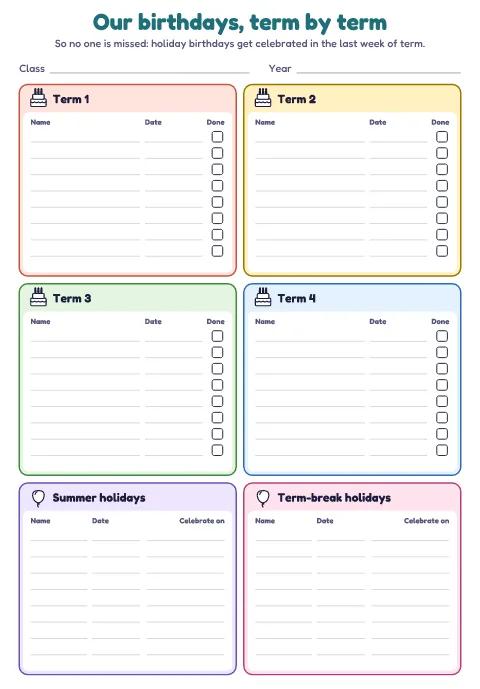
Your list, not a display: a panel for each term, one for the summer holidays and one for the shorter term breaks, with lines for name and date. Holiday birthdays are the ones that get missed in New Zealand and Australian classes, because December and January fall in the long break, so those panels have a column for the day you will celebrate. For a wall chart, use the one-page birthday chart (southern seasons).
18. Class checklist
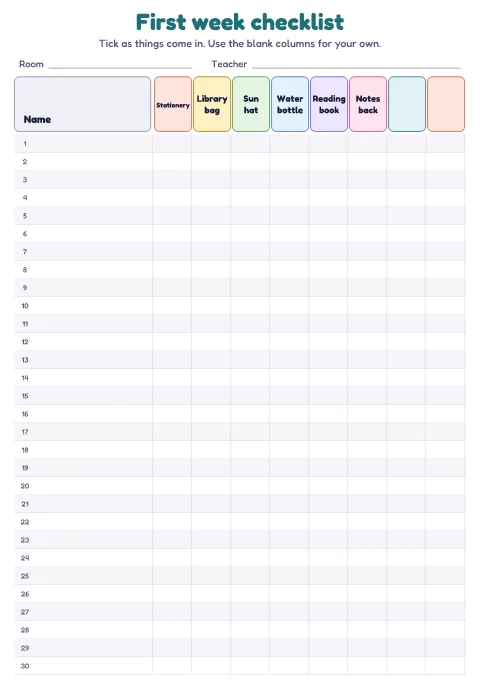
Thirty numbered rows and eight tick columns. Page 1 has the first-week headings filled in, stationery, library bag, sun hat, water bottle, reading book and notes back, with two blank columns; page 2 is blank for permission slips, camp forms or reading logs all year.
How to use the first week
- Before the first day: fill in your term planner and the year at a glance, write the name tags and desk plates, and copy the welcome letter. A labelled desk tells a nervous child they were expected.
- Day one: name tags on, a first day photo with the sign, the partner interview or find someone who, and a tour of the room and the school.
- Days two and three: build the class agreement together with the Y-chart, choose the first class jobs, and plan the holiday recount.
- Days four and five: write the recount, fill in me as a learner, and put the work up. Send the welcome letter and the family sheet home before the weekend.
Year level names. New Zealand numbers the years from Year 1 (children who start in the second half of the year are often called Year 0 or new entrants) to Year 13. In Australia the first year of school has a different name in each state: Kindergarten in New South Wales and the ACT, Prep in Queensland, Victoria and Tasmania, Pre-primary in Western Australia, Reception in South Australia and Transition in the Northern Territory; the Australian Curriculum calls it Foundation. That is why the signs and labels leave the year level blank. For children starting school for the first time, see starting school booklets and first day signs.
Sources for the dates: Ministry of Education (NZ), NSW Department of Education (NSW), Victorian Government (VIC), Queensland Department of Education (QLD), WA Department of Education (WA), SA Department for Education (SA), Tasmanian Department for Education, Children and Young People (TAS), ACT Education (ACT), NT Government (NT). School term dates can change; if your school has told you something different, trust your school.
More for the start of the year: printable 2027 calendars with New Zealand and Australian term dates, all about me worksheets and the first day of school sheet (NZ and AU), goal setting worksheets for Term 1 goals, the random name picker and classroom timer, certificates, classroom labels with pictures for junior rooms, and everything else for teachers.
Questions
When does Term 1 2027 start in New Zealand?
State and state-integrated schools start between Thu 28 Jan and Wed 3 Feb 2027, on a day each school chooses, and Term 1 ends on Fri 9 Apr. The New Zealand planner starts its Week 1 on Monday 25 January, the week of the earliest start.
When does Term 1 2027 start in Australia?
For government schools: Victoria, Queensland, South Australia and the Northern Territory on Wednesday 27 January (Victorian students on Thursday 28 January), Western Australia on Monday 1 February, the ACT on Tuesday 2 February, New South Wales on Wednesday 3 February (eastern division) and Tasmania on Thursday 4 February.
Is there a term planner for my state?
Yes. There is a Term 1 2027 planner for New Zealand and for New South Wales, Victoria, Queensland, Western Australia, South Australia, Tasmania, the ACT and the Northern Territory, each with its own dates and public holidays, plus a blank planner for any term.
What should I do in the first week of school?
Learn names, set routines and build the class together: name tags and a partner interview on day one, a class agreement and class jobs by day three, and a short piece of writing such as a holiday recount by the end of the week. Keep the learning light and the routines clear.
What goes in a class agreement?
Five or six things the class agrees to, written in their words and signed by everyone, such as “we listen when someone is talking”. Build it with a Y-chart: what does a good learner look like, sound like and feel like? In New Zealand it is often called a class treaty.
Are these back to school printables free?
Yes. Free for your own class, school and family, with no sign-up. Please don’t resell them or upload them to another site.