 Colouring Nest
Minibeasts topic pack with an adult input plan
A free minibeasts topic pack for nursery, preschool, kindy and Reception: a one-page adult input plan with big questions, key words and an adult-led and child-initiated idea for six learning areas, twelve vocabulary cards, a count-and-graph sheet at two levels, a “how many legs?” cut-and-stick sort, a minibeast hunt spotter sheet and an observation prompt sheet. Answer pages are included. A4 and US Letter PDFs, colour and ink saver; the word cards and spotter sheet also come with US words (ladybug).
Inside this set
- 6 printables
- A4 and US Letter PDFs
- Colour and ink-saver versions
- Free, no sign-up
About this resource
Ages 2–5, prep, what you need and how to use it
- Ages
- 2 to 5 years (toddlers, preschool, school start)
- Prep
- About 20 minutes to print the plan and sheets; collect magnifiers, bug pots and a few logs or stones for the hunt.
- You’ll need
- Printer and paper (card for the word cards)
- Scissors and glue sticks for the legs sort
- Clipboards and magnifiers for the hunt
- Crayons for the graph
- Supports
- Te Whāriki (NZ), EYLF (Australia), EYFS (England), ELOF (US)
How to use it in the room
- Pin the one-page plan up for the team and choose one adult-led idea a day.
- Set up the child-initiated ideas and leave them out for the whole topic.
- Go on the minibeast hunt early, then use the count and legs sheets with what children found.
- Put every minibeast back where it was found.
Show resources for
Remembered on this device only. It sets A4 or US Letter as the first download.
How to use this minibeasts plan
Minibeasts is one of the most loved topics in early years because the resources are free and outside the door. The plan below is built for a week or two in spring or early summer, when there are most minibeasts about, but snails, slugs and worms turn up after rain in any season. Start with what the children already know: ask them where they have seen a bug, and write their answers on a big sheet you can come back to at the end.
Each row of the plan pairs one short adult-led activity with one child-initiated set-up. The adult-led idea is something to do with a small group for ten to fifteen minutes, where you model words and questions. The child-initiated idea is something you set out and leave, so children can return to it when they choose; your job there is to watch, wait and join in only when invited. A balance of both is what early years frameworks in New Zealand, Australia, England and the US describe, even though each uses different words for it.
Looking after living things
Set the rules before the first hunt: we look with our eyes and a magnifier, we touch gently with one finger if the minibeast is happy to walk onto a leaf, and we put every log and stone back the way it was. Bug pots should have air holes, a little damp soil and a leaf, and every minibeast goes back where it was found before the end of the session. Children are quick to copy the care they see from adults. Wash hands after handling soil, and check for bee or wasp allergies on your enrolment records before the hunt.
Supports:
- Te Whāriki NZ
- Exploration | Mana aotūroa
- Communication | Mana reo
- Wellbeing | Mana atua
- EYLF Australia
- Outcome 2: Children are connected with and contribute to their world
- Outcome 4: Children are confident and involved learners
- Outcome 5: Children are effective communicators
- Outcome 3: Children have a strong sense of wellbeing
- EYFS England
- Understanding the world
- Communication and language
- Literacy
- Mathematics
- Expressive arts and design
- Physical development
- ELOF US
- Cognition
- Language and Literacy
- Approaches to Learning
- Perceptual, Motor, and Physical Development
1. Minibeasts adult input plan
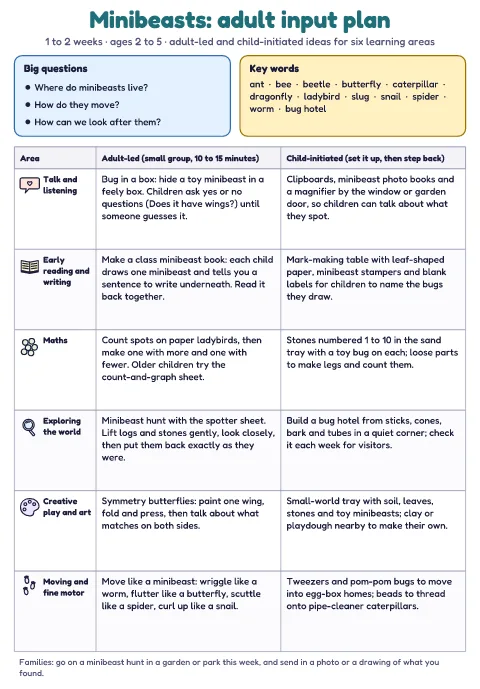
One page to pin up for the team: three big questions, twelve key words, and for each of six learning areas one adult-led activity and one child-initiated set-up, plus a line for families.
Minibeasts adult input plan PDF (A4)Minibeasts adult input plan PDF (US Letter)
2. Minibeasts vocabulary cards
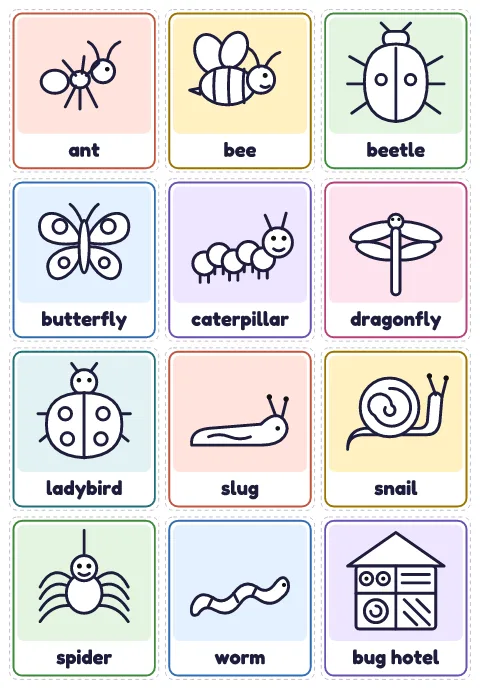
Twelve word cards with large pictures for the writing table, a word wall or a matching game. Print two sets to play snap or pairs.
Minibeasts vocabulary cards PDF, UK, NZ and AU words (A4)Minibeasts vocabulary cards PDF, UK, NZ and AU words (US Letter)
Ink saver (A4)Ink saver (US Letter)
3. Count the minibeasts and graph them
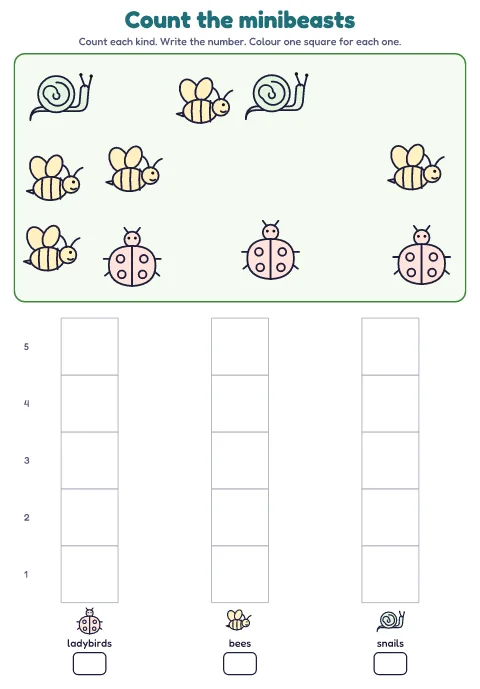
Level 1: count three kinds of minibeast up to 5 and colour one square of the graph for each. Level 2: four kinds up to 10. Each level has an answer page.
Count the minibeasts and graph them PDF (A4)Count the minibeasts and graph them PDF (US Letter)
Advertisement
4. How many legs? Cut-and-stick sort with answers
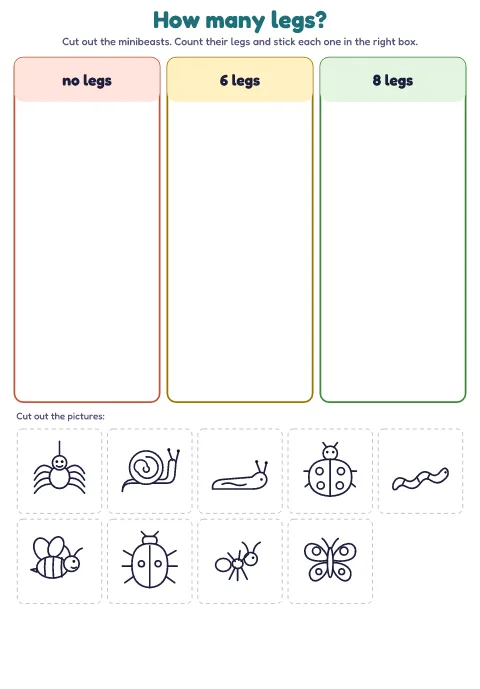
Children cut out nine minibeasts and stick them under no legs, 6 legs or 8 legs. The answer page shows each group.
How many legs? Cut-and-stick sort with answers PDF (A4)How many legs? Cut-and-stick sort with answers PDF (US Letter)
5. Minibeast hunt spotter sheet
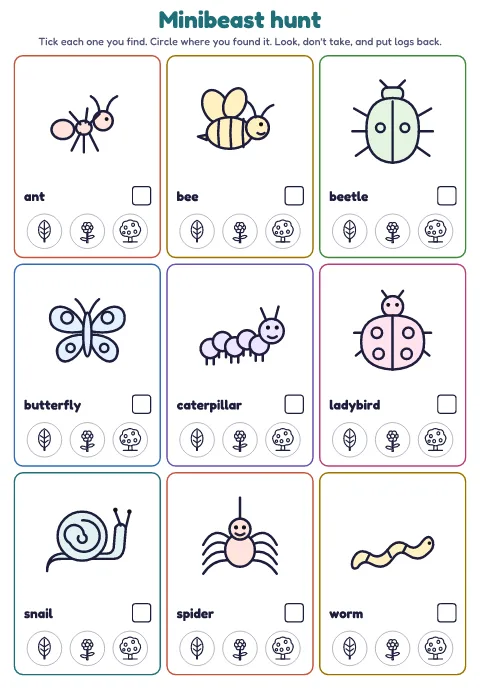
Take it outside on a clipboard: tick each minibeast you find and circle whether it was on a leaf, a flower or a tree.
Minibeast hunt spotter sheet PDF, UK, NZ and AU words (A4)Minibeast hunt spotter sheet PDF, UK, NZ and AU words (US Letter)
Ink saver (A4)Ink saver (US Letter)
6. Minibeasts observation prompts
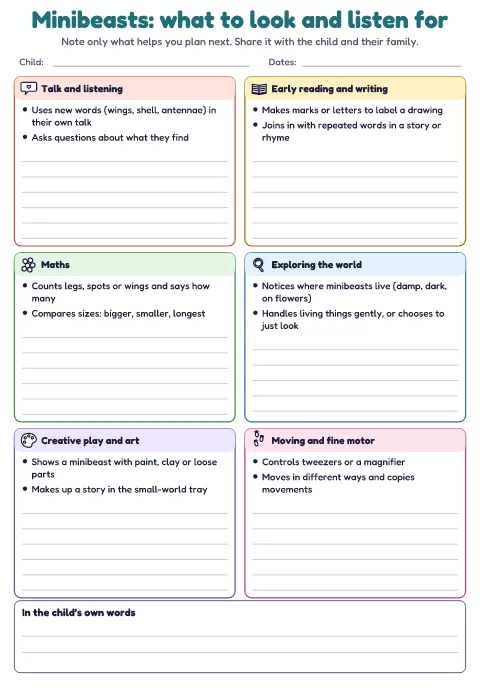
Two things to look and listen for in each learning area, with lines for notes and a box for the child’s own words.
Minibeasts observation prompts PDF (A4)Minibeasts observation prompts PDF (US Letter)
The plan at a glance
- Talk and listening. Adult-led: Bug in a box: hide a toy minibeast in a feely box. Children ask yes or no questions (Does it have wings?) until someone guesses it. Child-initiated: Clipboards, minibeast photo books and a magnifier by the window or garden door, so children can talk about what they spot.
- Early reading and writing. Adult-led: Make a class minibeast book: each child draws one minibeast and tells you a sentence to write underneath. Read it back together. Child-initiated: Mark-making table with leaf-shaped paper, minibeast stampers and blank labels for children to name the bugs they draw.
- Maths. Adult-led: Count spots on paper ladybirds, then make one with more and one with fewer. Older children try the count-and-graph sheet. Child-initiated: Stones numbered 1 to 10 in the sand tray with a toy bug on each; loose parts to make legs and count them.
- Exploring the world. Adult-led: Minibeast hunt with the spotter sheet. Lift logs and stones gently, look closely, then put them back exactly as they were. Child-initiated: Build a bug hotel from sticks, cones, bark and tubes in a quiet corner; check it each week for visitors.
- Creative play and art. Adult-led: Symmetry butterflies: paint one wing, fold and press, then talk about what matches on both sides. Child-initiated: Small-world tray with soil, leaves, stones and toy minibeasts; clay or playdough nearby to make their own.
- Moving and fine motor. Adult-led: Move like a minibeast: wriggle like a worm, flutter like a butterfly, scuttle like a spider, curl up like a snail. Child-initiated: Tweezers and pom-pom bugs to move into egg-box homes; beads to thread onto pipe-cleaner caterpillars.
Tips
- Start outside. A ten-minute hunt on the first morning gives children something real to talk about all week.
- Count what is real. Before the count sheet, count the legs on a real beetle or the spots on a real ladybird with a magnifier.
- Insects have six legs. Spiders have eight and are not insects; snails, slugs and worms have none. The legs sort is built on those three groups only, because caterpillars and woodlice are harder to count.
- Keep a bug hotel. It turns a two-week topic into something children check all year.
More topic packs: weather and seasons and people who help us. For the room, see continuous provision challenge cards, the circle-time calendar and weather board, sequencing cards and early learning by country.
Related sets
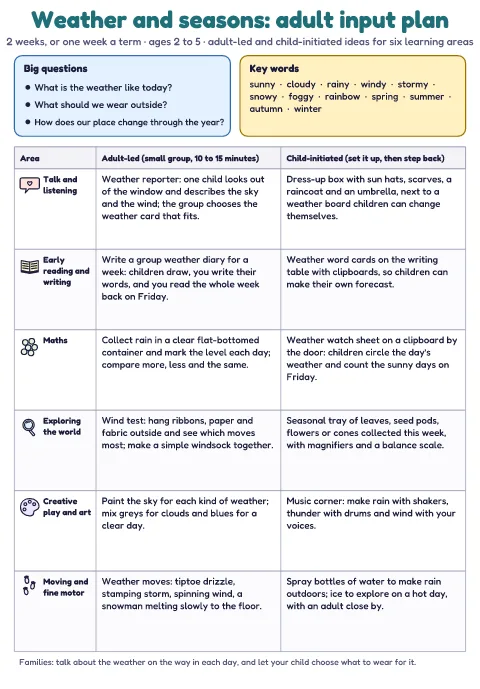 Weather and seasons topic pack (both hemispheres)Templates · ages 2–5
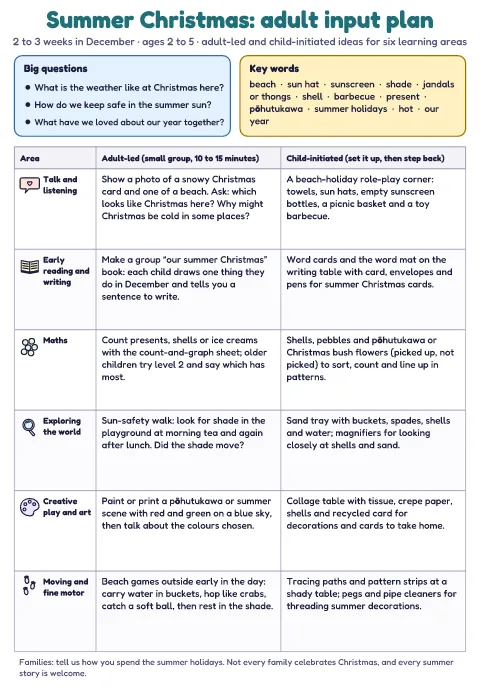 Summer Christmas pack: plan, sun safety, sheets and certificateTemplates · ages 2–6
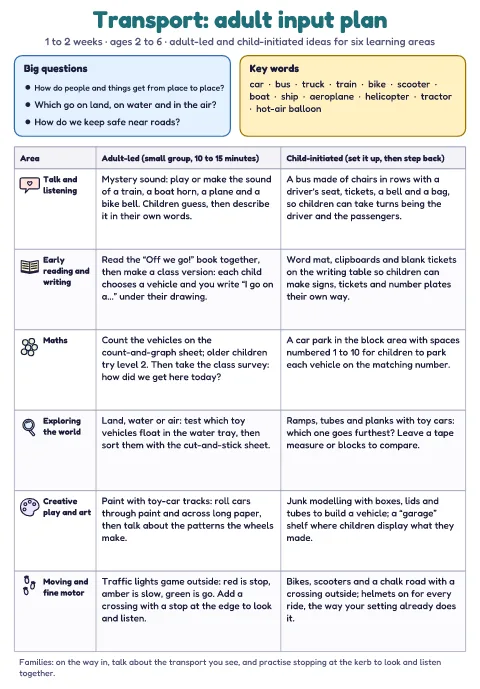 Transport topic pack: plan, word cards, road safety, sortsTemplates · ages 2–6
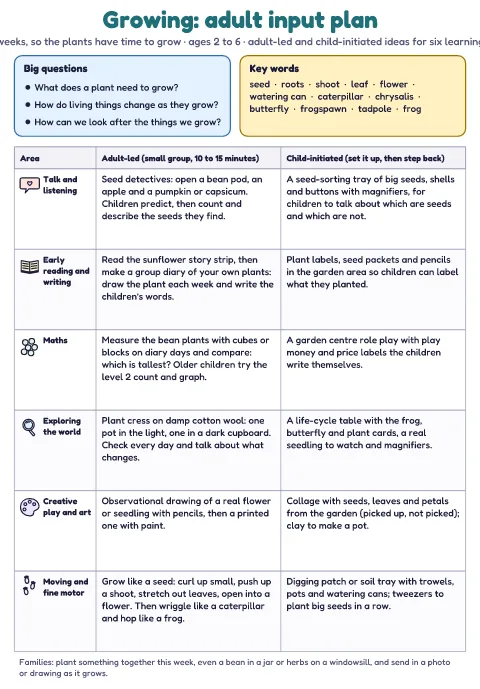 Growing topic pack: plant, butterfly and frog life cyclesTemplates · ages 2–6
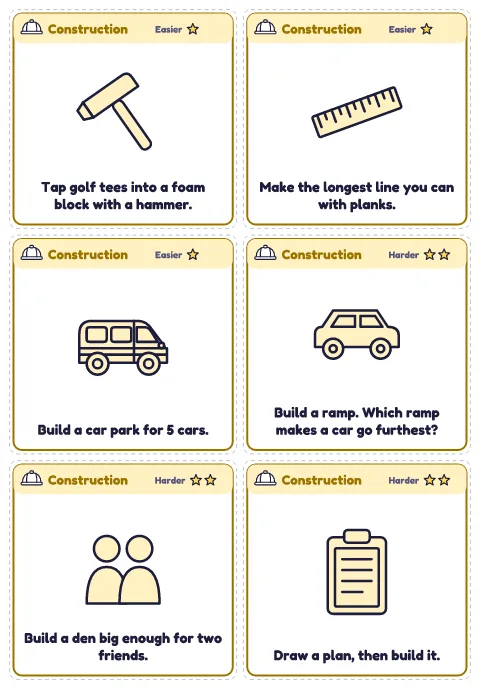 Continuous provision challenge cards for 10 play areasCards · ages 3–5
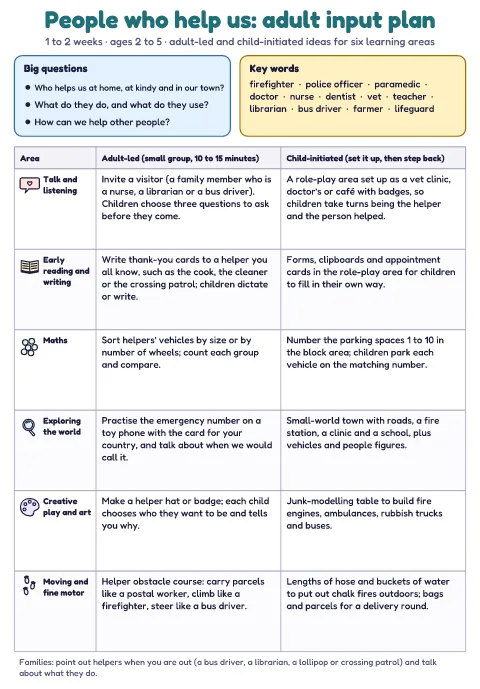 People who help us topic pack and emergency number cardsTemplates · ages 2–5
Questions
What is an adult input plan?
A short plan for a topic that lists what adults will lead (short, focused activities with a small group) and what they will set up for children to choose freely. Ours fits on one page and covers six learning areas.
How many legs does a minibeast have?
Insects such as ants, bees, ladybirds, beetles and butterflies have six legs. Spiders have eight. Snails, slugs and worms have no legs. Our sort sheet uses those three groups.
When is the best time for a minibeasts topic?
Spring and early summer, when most minibeasts are active: September to December in New Zealand and Australia, April to June in the UK and US. Snails and worms are easy to find after rain at any time of year.
Are these free?
Yes. Free for your own centre, kindergarten, school, class and family, with no sign-up. Please don’t resell them or upload them to another site.