 Colouring Nest
Te reo Māori printables for early learning
Not yet reviewed by a fluent speaker. Every Māori word is checked on Te Aka Māori Dictionary and a second source, with its macrons. Corrections welcome.
Free te reo Māori printables for New Zealand early learning services and new entrant classes, made for kaiako and whānau: bilingual room labels, a greetings poster, a shapes poster and a feelings chart, plus sets for numbers, days and months, the alphabet and a pepeha template. A4 PDFs (US Letter too), with every macron in place.
Inside this set
- 4 printables
- A4 and US Letter PDFs
- Free, no sign-up
About this resource
Ages 1–6, prep, what you need and how to use it
- Ages
- 1 to 6 years (toddlers, preschool, school start)
- Prep
- About 20 minutes to print, trim and laminate the labels.
- You’ll need
- Printer and paper or thin card
- Scissors
- Laminator or sticky-back plastic
- Blu Tack or tape
- Supports
- Te Whāriki (NZ), EYLF (Australia), EYFS (England), ELOF (US)
How to use it in the room
- Put the bilingual labels up where children use those things.
- Say the words every day in normal talk, not only at mat time.
- Check pronunciation with the sources listed on the page.
Show resources for
Remembered on this device only. It sets A4 or US Letter as the first download.
Everyday te reo in the room
Licensed early learning services in New Zealand acknowledge the place of Māori as tangata whenua, and Te Whāriki expects children to hear and use te reo Māori as part of everyday life. The simplest start is the words you use every day anyway: hello in the morning, “how are you?” at mat time, the names of things on the walls, counting at snack time. These printables put those words where children and adults will see them, always next to the English, so new kaiako and families can join in too.
Supports:
- Te Whāriki NZ
- Communication | Mana reo
- Belonging | Mana whenua
- Contribution | Mana tangata
- EYLF Australia
- Outcome 5: Children are effective communicators
- Outcome 1: Children have a strong sense of identity
- Outcome 2: Children are connected with and contribute to their world
- EYFS England
- Communication and language
- Literacy
- Personal, social and emotional development
- ELOF US
- Language and Literacy
- Social and Emotional Development
1. Bilingual room labels
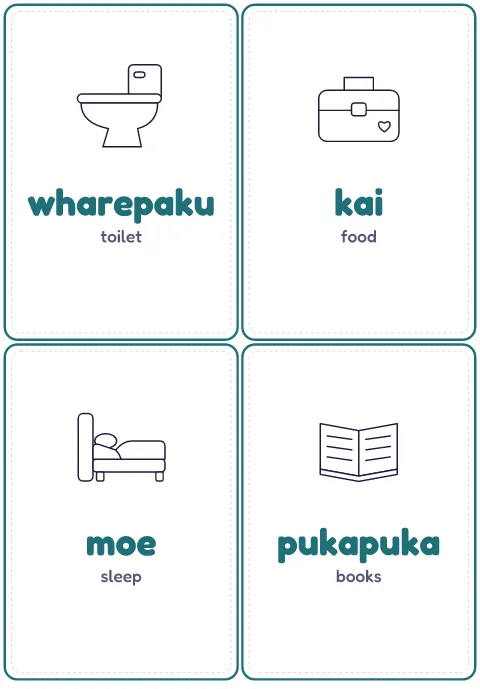
Fifteen labels, four to a page: wharepaku, kai, moe, pukapuka, wai, waho, kākahu, pēke, horoi, tatau, matapihi, tūru, tēpu, peita and taputapu tākaro (play gear), each with our own drawing and the English underneath. The te reo Māori word comes first and largest, as the bilingual signage guide from Te Puni Kōkiri and Te Taura Whiri recommends giving both languages equal standing.
2. Greetings poster
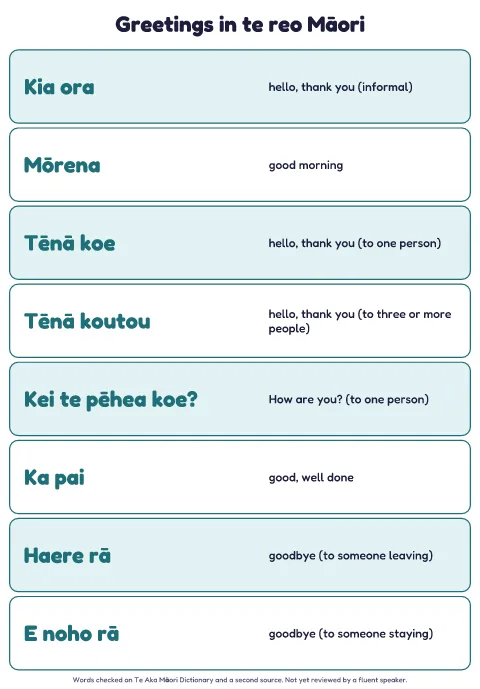
Eight greetings with their meanings: Kia ora, Mōrena, Tēnā koe, Tēnā koutou, Kei te pēhea koe?, Ka pai, Haere rā, E noho rā. Notice the two goodbyes: haere rā to someone who is leaving and e noho rā to someone who is staying.
Advertisement
3. Shapes poster
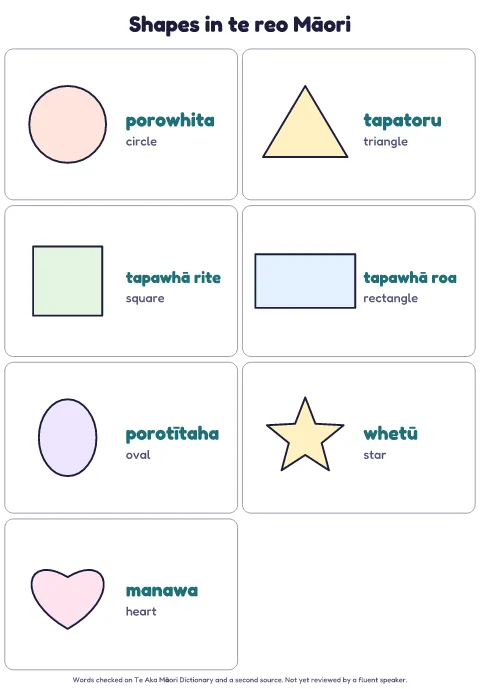
Seven shapes, each drawn large with its name: porowhita (circle), tapatoru (triangle), tapawhā rite (square), tapawhā roa (rectangle), porotītaha (oval), whetū (star), manawa (heart). Use it with the shapes worksheets or a shape hunt outside.
4. Feelings chart
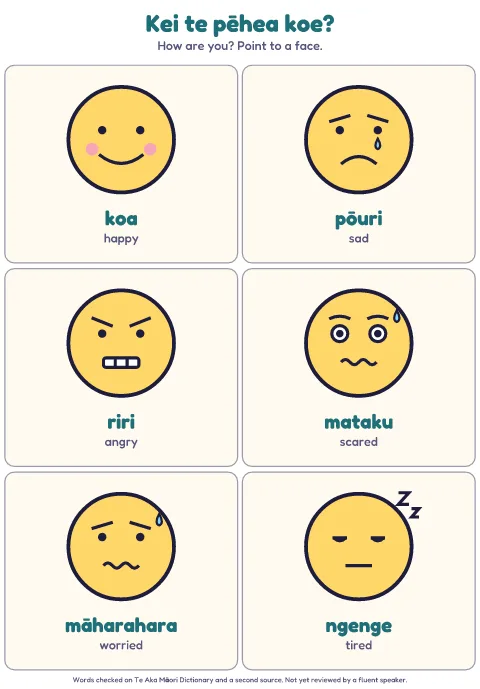
Six faces (our own drawings) under the question Kei te pēhea koe?: koa (happy), pōuri (sad), riri (angry), mataku (scared), māharahara (worried), ngenge (tired). Feelings words carry nuance in any language, so this chart keeps to words whose dictionary meanings match the face closely. The English feelings chart has twelve faces.
All the words on this page
Room labels:
- wharepaku: toilet
- kai: food, meal
- moe: sleep
- pukapuka: book
- wai: water
- waho: outside
- kākahu: clothes
- pēke: bag
- horoi: wash
- tatau: door
- matapihi: window
- tūru: chair
- tēpu: table
- peita: paint
- taputapu tākaro: sports equipment, play gear
Greetings:
- Kia ora: hello, thank you (informal)
- Mōrena: good morning
- Tēnā koe: hello, thank you (to one person)
- Tēnā koutou: hello, thank you (to three or more people)
- Kei te pēhea koe?: How are you? (to one person)
- Ka pai: good, well done
- Haere rā: goodbye (to someone leaving)
- E noho rā: goodbye (to someone staying)
Colours are on the te reo Māori colours chart and the colour by word sheets.
What we do not publish
No karakia or waiata texts (they belong to iwi, composers and your own service), no Māori pattern art (patterns belong to iwi and artists), and no one’s actual pepeha. For karakia and waiata, learn from your local iwi, your own kaiako and Ministry of Education publications.
More te reo Māori for early learning: numbers 1 to 10, days and months, the alphabet, pepeha template and mihi prompts, classroom displays: signs, weather, seasons, birthdays, colours chart. For kaiako, the New Zealand early learning page and the Te Whāriki learning story templates.
Not yet reviewed by a fluent speaker. Every word here is checked against Te Aka Māori Dictionary and a second source (Te Taura Whiri i te Reo Māori’s He Pātaka Kupu or its orthography guidelines), with its macrons. No fluent speaker or Māori early childhood kaiako has read this page yet. If something should change, please tell us and we will fix it.
Related sets
 Doctor’s role play: check-up form, eye chart, signsDisplays and charts · ages 2–6
 Classroom labels with pictures: area signs, trays, name tagsDisplays and charts · ages 1–6
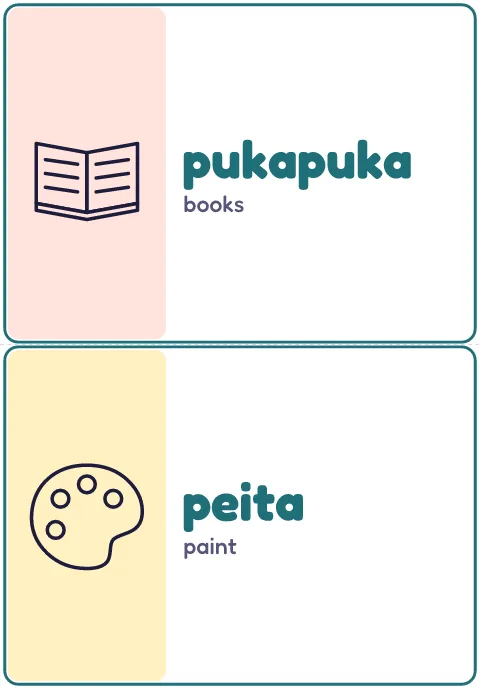 Te reo Māori classroom displays: signs, weather, seasons, birthdaysDisplays and charts · ages 1–6
 Café role play: menu, order pad, signs, badgesDisplays and charts · ages 2–6
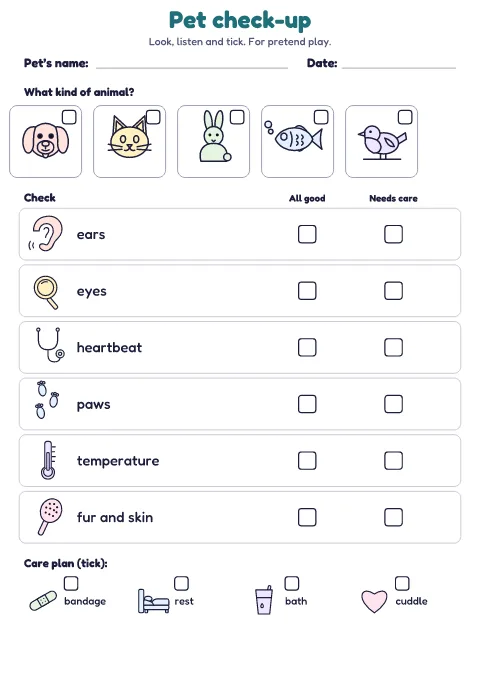 Vet role play: check-up form, appointment cards, signsDisplays and charts · ages 2–6
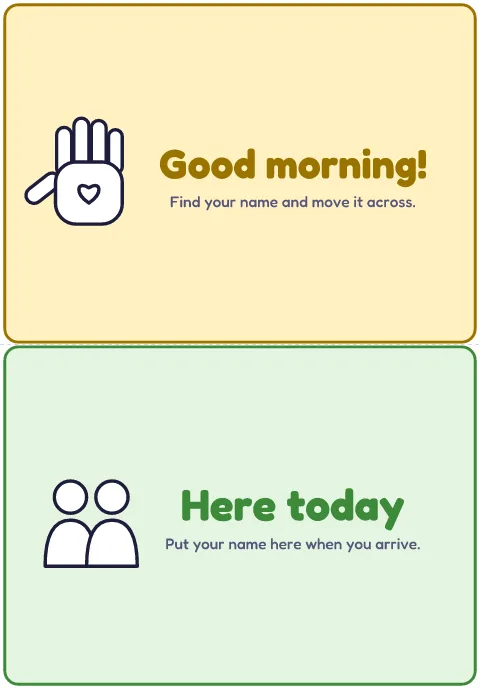 Self-registration, welcome banner and birthday chartDisplays and charts · ages 2–6
Questions
How do I say hello in te reo Māori?
Kia ora is an everyday hello (and thank you). Tēnā koe is a more formal hello to one person and tēnā koutou to three or more; mōrena means good morning.
Which word comes first on a bilingual label?
Our labels put the Māori word first and largest with the English underneath, giving both languages a clear place. Many services do the same; follow your own service’s signage policy if it has one.
Are these free for my centre?
Yes, for your own service, school, class and whānau. Please don’t resell them or upload them to another site.
Has a fluent speaker checked these?
Not yet. Every word is checked against Te Aka and a second source with its macrons; a fluent reviewer will read the pages later, and we welcome corrections now.
Sources
- Te Aka Māori Dictionary (meanings and macrons; each word’s entry read 2026-11-11)
- He Pātaka Kupu, Te Taura Whiri i te Reo Māori (spelling of each word)
- Te Taura Whiri i te Reo Māori’s orthography guidelines (letters, macrons, and appendix 4: days and months)
- Te Puni Kōkiri and Te Taura Whiri i te Reo Māori: bilingual signage guide