 Colouring Nest
Letter of the week printables A to Z
Free letter of the week printables for preschool, kindy, nursery and the first year of school: a six-page pack for every letter from A to Z, with a sound mat, a picture hunt, a find-the-letter page, a letter formation page and answers, plus letter formation books in seven handwriting styles and an A to Z sound mat. A4 and US Letter PDFs, black and white friendly.
Inside this set
- 3 printables
- A4 and US Letter PDFs
- Colour and ink-saver versions
- Free, no sign-up
About this resource
Ages 3–6, what you need and how to use it
- Ages
- 3 to 6 years (preschool, school start)
- You’ll need
- Printer and paper
- Pencils, crayons or felt-tips
- Supports
- Te Whāriki (NZ), EYLF (Australia), EYFS (England), ELOF (US)
How to use it in the room
- Print at 100% on A4 or US Letter.
- Choose the sheet that fits the child, starting a step easier than you think.
- Sit alongside and talk about what they are doing.
Show resources for
Remembered on this device only. It sets A4 or US Letter as the first download.
How a letter of the week works
Pick one letter for the week. On Monday, show the sound mat and say the sound together, stretching it (“sssss… sun”). Through the week, children hunt for pictures and things in the room that start with that sound, find the letter among others that look like it, and practise forming it with a start dot and arrows. It suits children of about 3 to 5 who are ready to notice letters; two-year-olds get more from listening games (see phase 1 phonics).
Many programmes now teach letters in a sound order (s, a, t, p, i, n first) rather than A to Z, because those six letters make lots of short words straight away (sat, tap, pin). Each pack stands on its own, so you can follow A to Z, your school’s phonics order or the letters in children’s names.
Why the pictures matter
Every picture was chosen so its word starts with the sound the letter usually makes for a beginner: short vowels for a, e, i, o and u (apple, egg, igloo, octopus, umbrella), never owl for o or unicorn for u. X rarely starts a word with its own sound (xylophone starts with a z sound), so the x pack asks children to listen for x at the end: fox, box, ox. The c and k packs never use each other’s pictures as “not this sound”, because cat and kite start the same.
Supports: Communication | Mana reo, Exploration | Mana aotūroa, Wellbeing | Mana atua (Te Whāriki) · Outcome 5, Outcome 3 (EYLF) · Communication and language, Literacy, Physical development (EYFS) · Language and Literacy, Perceptual, Motor, and Physical Development (ELOF).
1. Letter packs A to Z
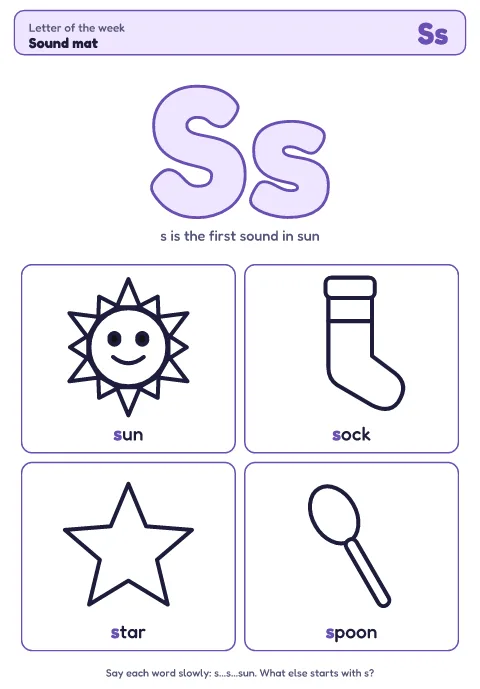
Each pack has six pages. Sound mat: big outline letters to colour and three or four pictures with the letter picked out in each word. Picture hunt: nine pictures to name; colour those that start with the sound. Find the letter: 42 letters in circles, with lookalikes (b, d, p and q together), to colour every capital and small letter. Write it: the capital and small letter in print with a green start dot and numbered arrows, rows to trace and a picture word. Then two answer pages.
Advertisement
2. Letter formation books in seven handwriting styles
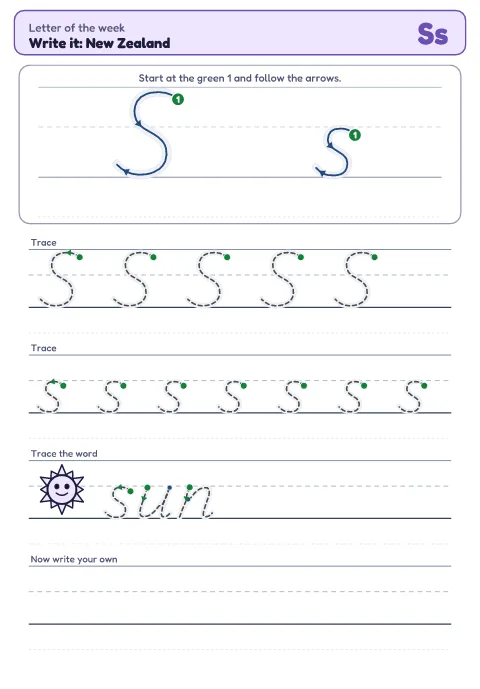
The Write it page for every letter from A to Z, in the style your children’s school teaches. Print (manuscript), as used in most US preschools and kindergartens, is in every letter pack; these books add the UK pre-cursive style with exit flicks, the New Zealand style and the five Australian state styles. Each is one 26-page PDF, so you print just the page for this week’s letter.
- UK pre-cursive letter formation book (UK-style): UK pre-cursive book (A4) UK pre-cursive book (US Letter)
- New Zealand letter formation book (New Zealand): New Zealand book (A4) New Zealand book (US Letter)
- NSW Foundation letter formation book (New South Wales): NSW Foundation book (A4) NSW Foundation book (US Letter)
- Victorian Modern Cursive letter formation book (Victoria): Victorian Modern Cursive book (A4) Victorian Modern Cursive book (US Letter)
- Queensland Beginners letter formation book (Queensland): Queensland Beginners book (A4) Queensland Beginners book (US Letter)
- South Australian Pre-cursive letter formation book (South Australia): South Australian Pre-cursive book (A4) South Australian Pre-cursive book (US Letter)
- Tasmanian Modern Cursive letter formation book (Tasmania): Tasmanian Modern Cursive book (A4) Tasmanian Modern Cursive book (US Letter)
For a full practice sheet per letter in these styles, see NZ handwriting, alphabet charts in every style and letter tracing.
3. Alphabet sound mat A to Z
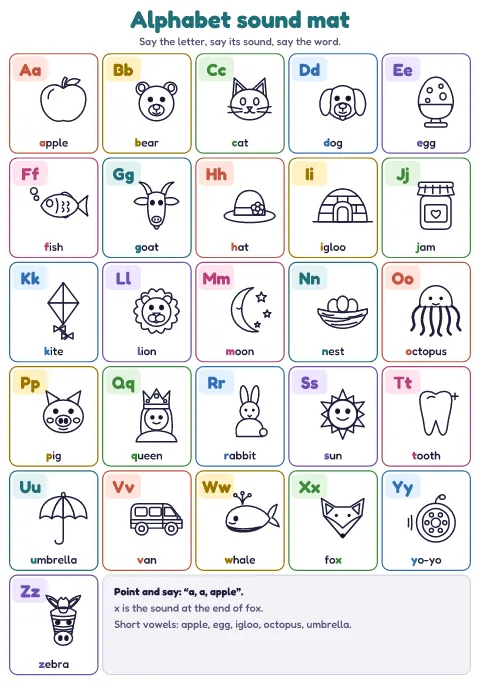
All 26 letters on one page, each with its picture and the sound picked out in the word. Keep one on the writing table or send one home; the ink-saver version has no tints.
Alphabet sound mat PDF (A4)Alphabet sound mat PDF (US Letter)
More for each letter
- Colouring pages for every letter: alphabet colouring A to Z.
- Flash cards with pictures: beginning sounds picture cards and letter flash cards with pictures.
- When children know their sounds: phonics worksheets (beginning sounds, CVC words).
- For sorting games with three pictures per letter, use the initial sound sorting cards.
More early literacy and maths: phase 1 phonics and listening activities, counting mats and number formation rhymes, number tracks and subitising cards, pattern cards, sorting and matching cards. Everything for ages 0 to 6 is on early learning by country.
Related sets
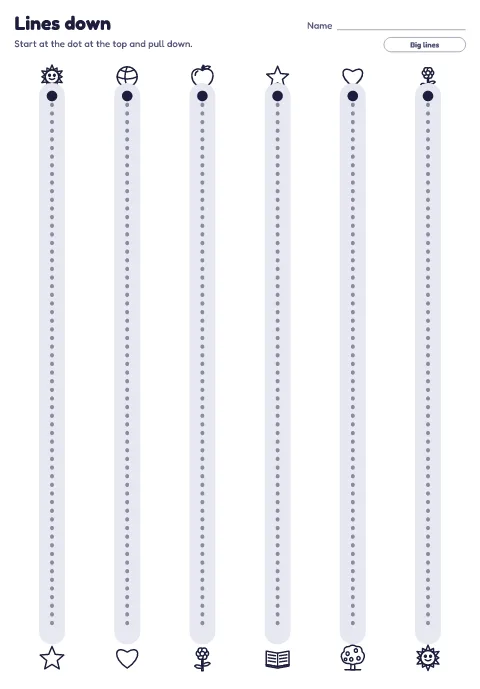 Tracing lines and pre-writing patternsWorksheets · ages 3–6
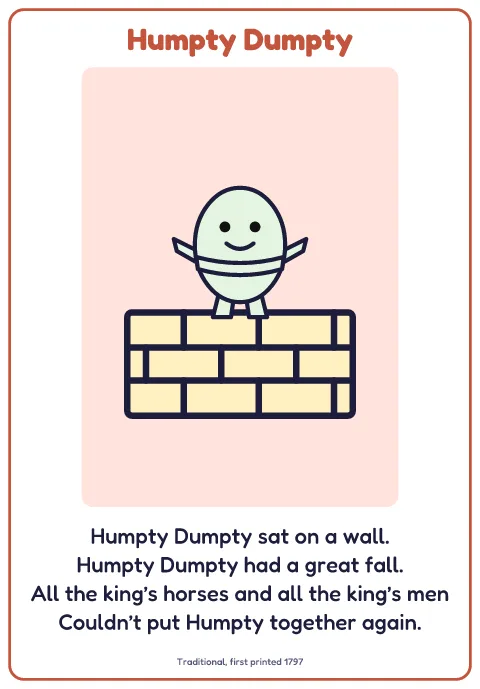 Nursery rhymes: posters, sequencing, actions, rhyming and countingCards · ages 1–6
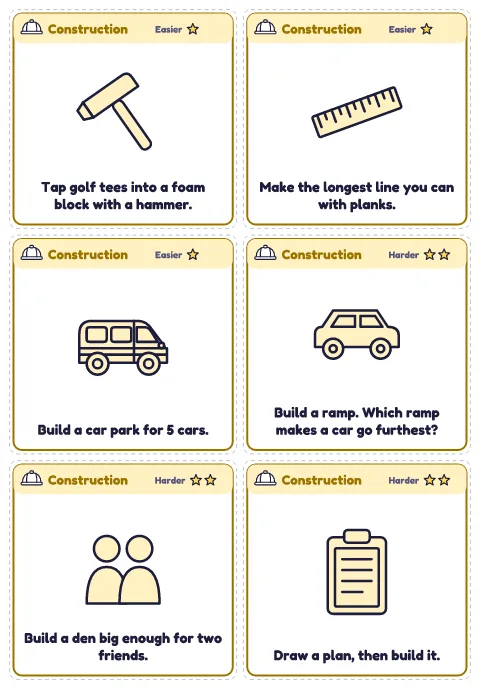 Continuous provision challenge cards for 10 play areasCards · ages 3–5
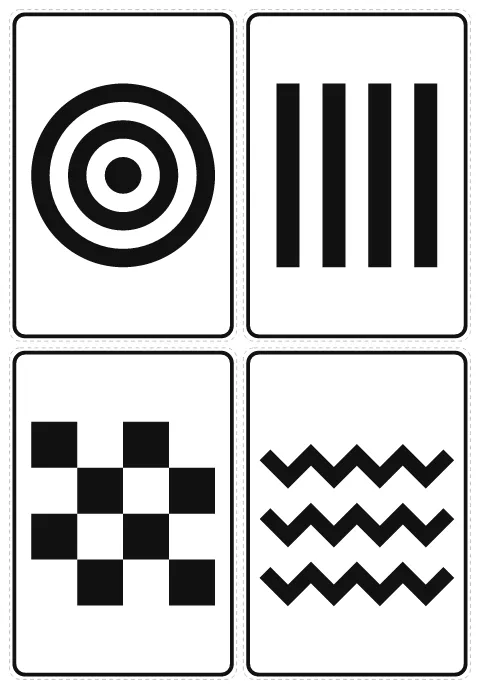 High-contrast cards for babies and first words cardsCards · ages 0–2
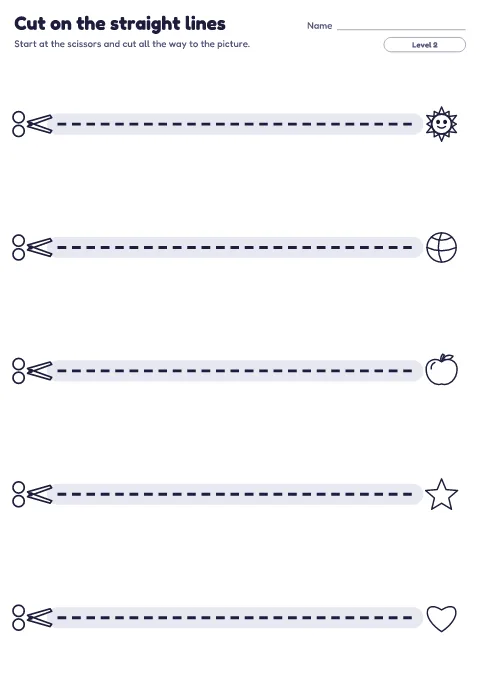 Cutting practice worksheets (5 levels)Worksheets · ages 3–6
 Classroom labels with pictures: area signs, trays, name tagsDisplays and charts · ages 1–6
Questions
What is letter of the week?
A simple way to introduce the alphabet: one letter each week, with its sound, pictures that start with it, finding it among other letters and learning to form it. Our packs give you a page for each part.
What order should I teach letters in?
Any order works with these packs. Many phonics programmes start with s, a, t, p, i, n because they quickly make words; others go A to Z or start with the letters in children’s names.
Which handwriting style should I use?
The style your local schools teach. Print is in every pack (most US settings); the formation books add UK pre-cursive, New Zealand and the NSW, Victorian, Queensland, South Australian and Tasmanian styles.
Why does the x pack use fox and box?
Very few words start with the sound x makes; xylophone starts with a z sound. Listening for x at the end of fox, box and ox teaches the sound children will actually read.
Are these free?
Yes. Free for your own centre, kindergarten, school, class and family, with no sign-up. Please don’t resell them or upload them to another site.