 Colouring Nest
Free printable reading logs, book report templates and World Book Day activities
Free printable reading logs for kids and adults, as PDF files you can print today: a picture log for children who can’t read yet, weekly logs for kindergarten to grade 2 with a parent signature line, monthly logs for grades 3 to 5 with genre, pages and a summary, minutes trackers, and a reading journal for grown-ups. Alongside them are book report templates by grade, a non-fiction report, a story map, recommendation cards, question cards, reading challenge bingo, bookmarks and a World Book Day and reading month kit. Sixteen resources, each in A4 and US Letter, in colour or ink saver, with no sign-up.
Inside this set
- 16 printables
- A4 and US Letter PDFs
- Colour and ink-saver versions
- Free, no sign-up
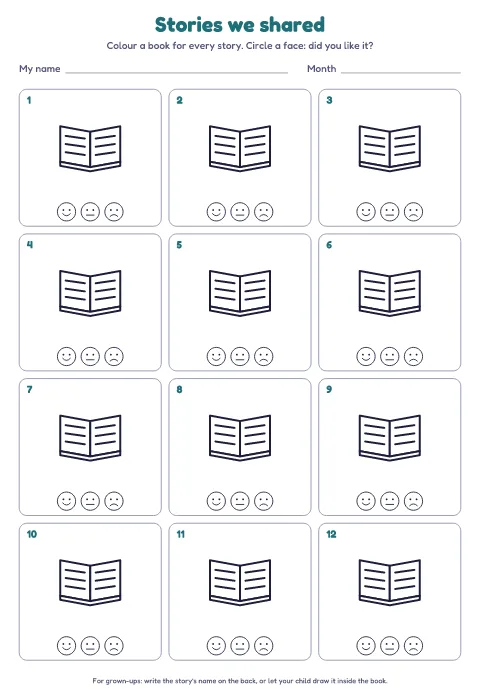 Picture reading log for pre-readers
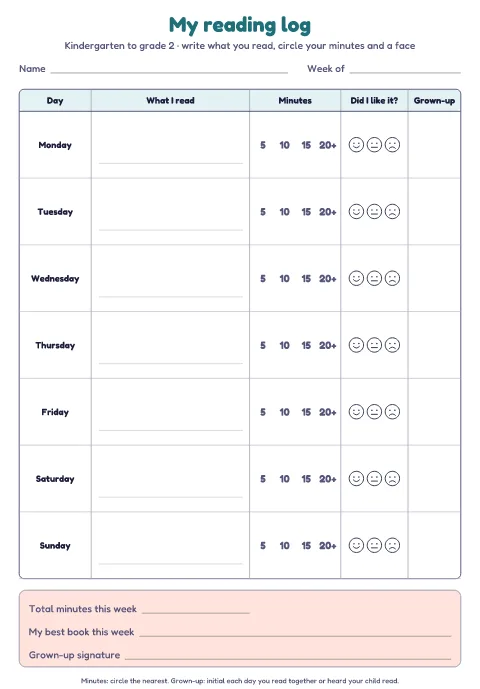 Weekly reading log for kindergarten to grade 2
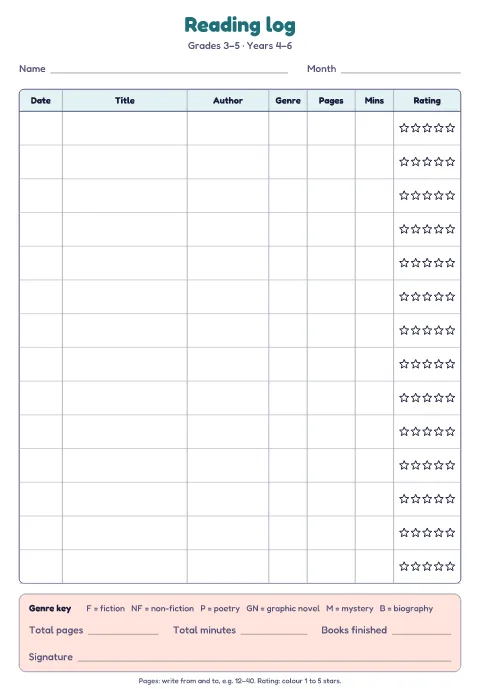 Reading log for grades 3 to 5, with a summary version
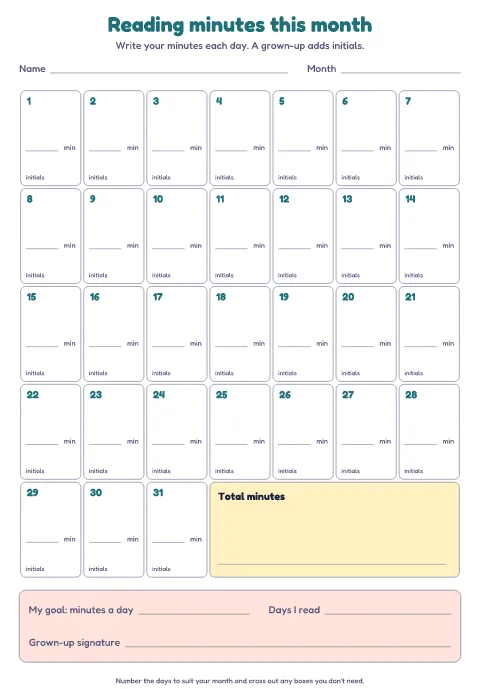 Reading minutes trackers
 Reading challenge bingo
 Reading tracker bookmarks and bookmarks to colour
 Book report template for kindergarten to grade 2
 Book report template for grades 3 to 5
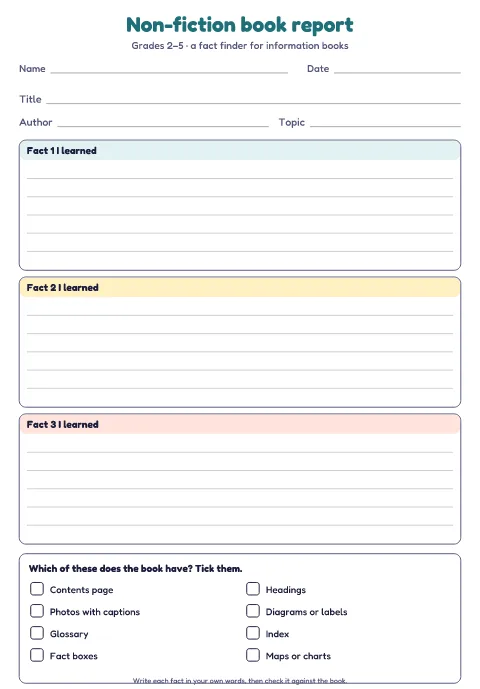 Non-fiction book report
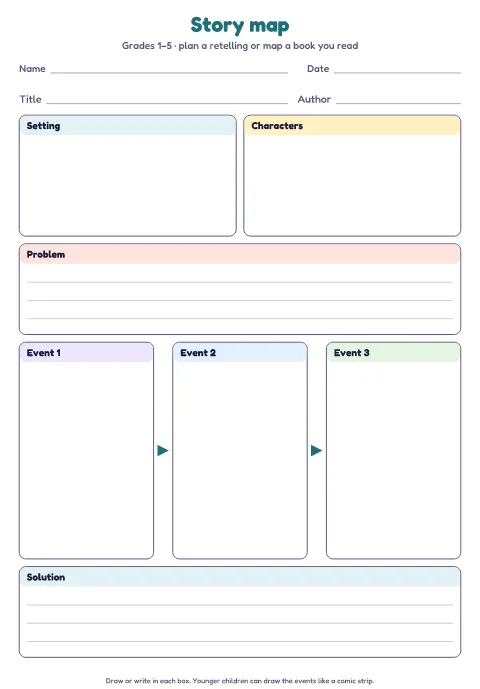 Story map and character profile
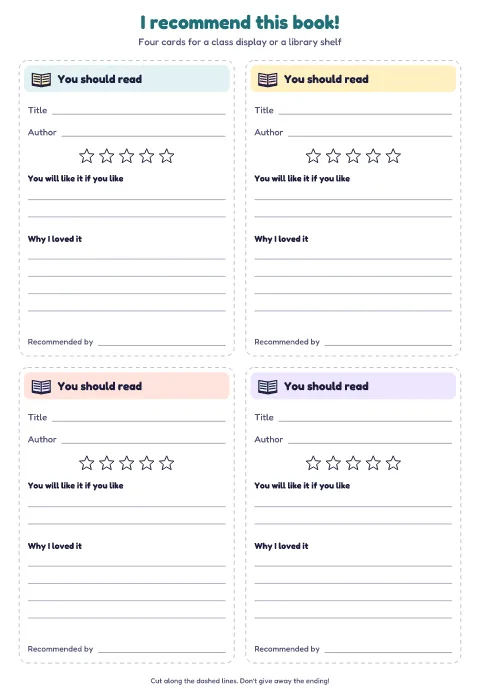 Book recommendation cards and a book review
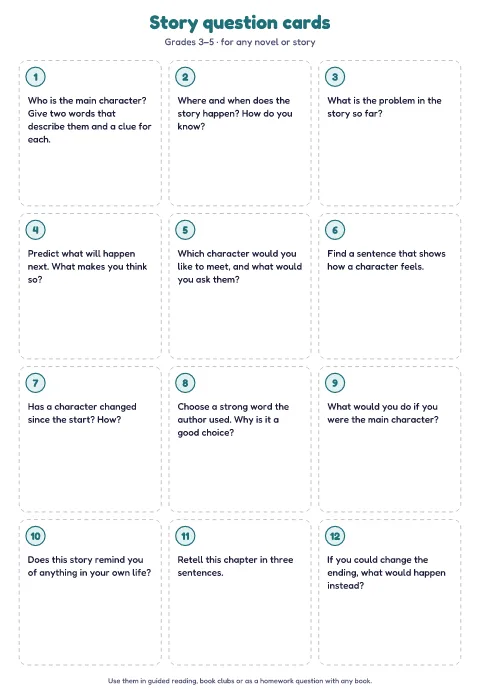 Reading response question cards for grades 3 to 5
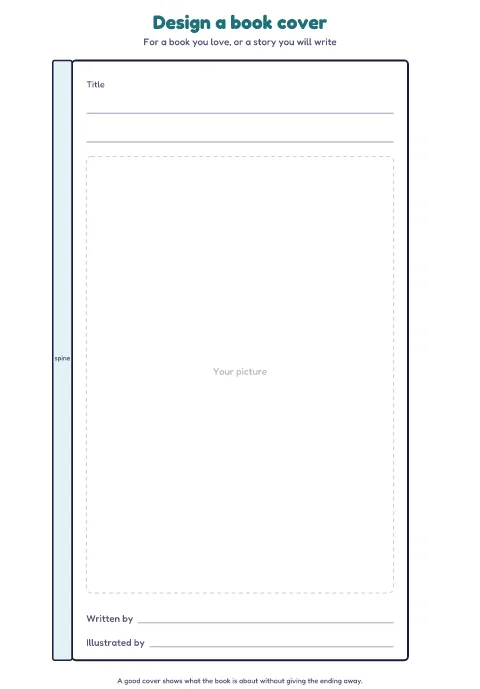 Design a book cover
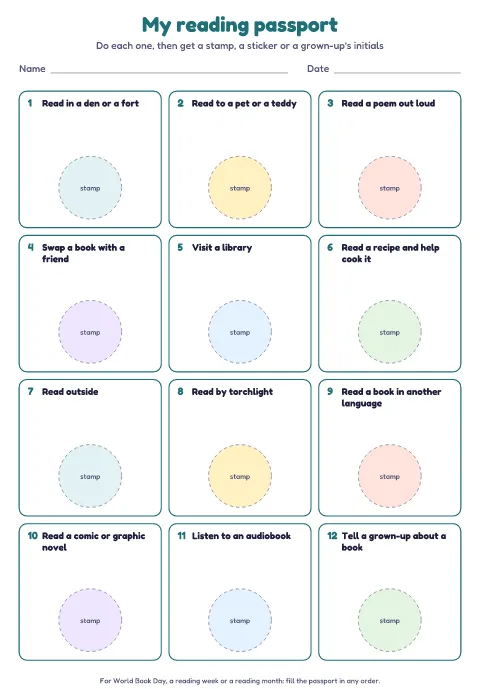 Reading passport and reading month calendar
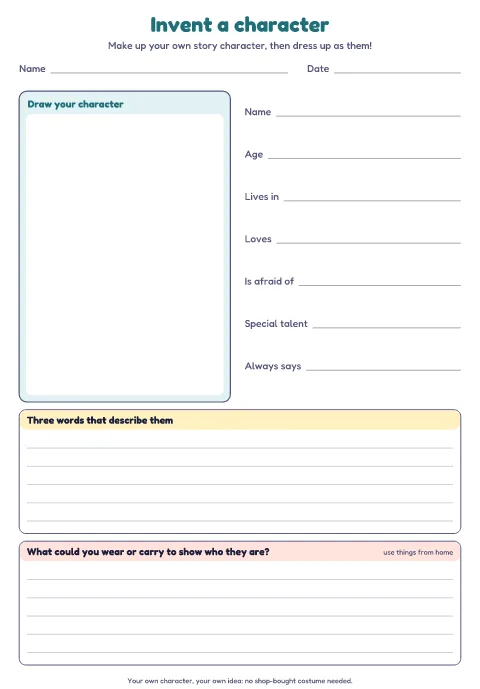 Invent a character and plan a story opening
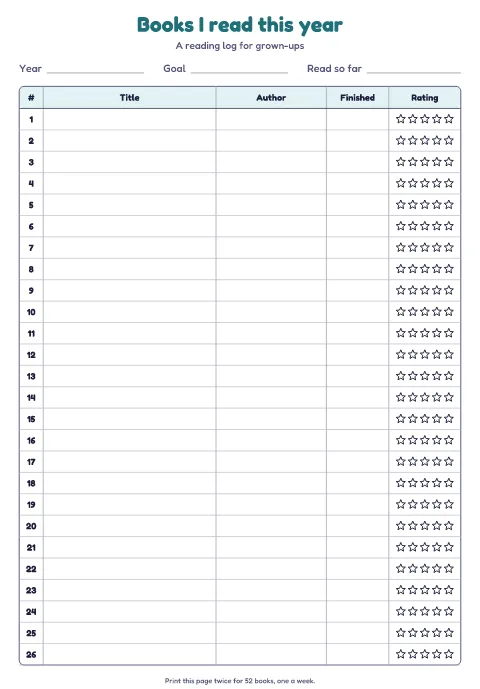 Reading journal for adults
Which reading log should I print?
Match the log to what the reader can write. Under-fives colour a book and circle a face, so the log is about sharing stories, not paperwork. Five- to seven-year-olds can copy a title and circle minutes, while a grown-up initials the day. From about eight, children can record the author, genre and pages and write a two-line summary, which is what most grade 3 to 5 homework asks for. Adults usually want a year list and space for notes. World Book Day 2027 is on Thursday 4 March 2027 in the UK and Ireland, and many US schools make March a reading month, so this kit includes ready-made activities for both. Updated 18 November 2026.
Which sheets for which reader
| Reader | Good first picks |
|---|---|
| Preschool and EYFS (3 to 5) | The picture reading log, 30 story stars, the picture bingo card and the bookmarks to colour |
| Kindergarten to grade 2, Years 1 to 3 (5 to 8) | The weekly reading log with a parent signature, read, draw and write, the K–2 book report, beginning, middle and end, the reading passport |
| Grades 3 to 5, Years 4 to 6 (8 to 11) | The monthly reading log, the log with summary, the 1,000-minute chart, the grades 3–5 book report, the non-fiction report, the story map, the question cards and the 25-square bingo |
| Teens and adults | The reading journal: books of the year, the bookshelf tracker, book notes, the to-be-read list and the 24-prompt challenge |
Reading logs
1. Picture reading log for pre-readers
A reading log for preschoolers that needs no writing at all. On the first sheet, “Stories we shared”, a child colours one of twelve books for every story read with them and circles a happy, so-so or not-for-me face. The second sheet is thirty big stars to colour, one per story, with pictures to circle for where you read (in bed, at home, at school, outside, on the bus) and a line to agree a small celebration when the chart is full. It is the reading log we wanted for nursery and Reception: about enjoying books together, with nothing to fail.
Picture reading log PDF (A4)Picture reading log PDF (US Letter)
2. Weekly reading log for kindergarten to grade 2
One week to a page, Monday to Sunday: a line for what I read, the minutes to circle (5, 10, 15 or 20+) so children don’t have to write numbers they can’t yet tell the time for, three faces for how they liked it and a column for a grown-up’s initials. The foot has total minutes, the best book of the week and a parent signature line, which is what most schools ask for with home reading. Page 2, “Read, draw and write”, gives three books a box each to draw a favourite part and finish the sentence “I liked it because”.
3. Reading log for grades 3 to 5, with a summary version
A month on one page: fourteen rows for the date, title, author, genre code, pages read (from and to), minutes and a five-star rating to colour, with a genre key and totals for pages, minutes and books finished. The second page is a reading log with summary: three sessions, each with lines for what happened in two or three sentences and a “my thinking” prompt to circle (I predict, I wonder, I noticed, it reminds me of). It suits teachers who want evidence of understanding, not just minutes.
Grades 3–5 reading log PDF (A4)Grades 3–5 reading log PDF (US Letter)
4. Reading minutes trackers
For schools and families who count time: a monthly log with 31 day boxes for minutes and initials, a goal, the number of days read and a signature; and the 1,000-minute reading chart, a hundred squares worth ten minutes each, one row per hundred minutes. A thousand minutes is about 16 hours and 40 minutes, roughly twenty minutes a day for seven weeks, which makes a good half-term or reading-month target.
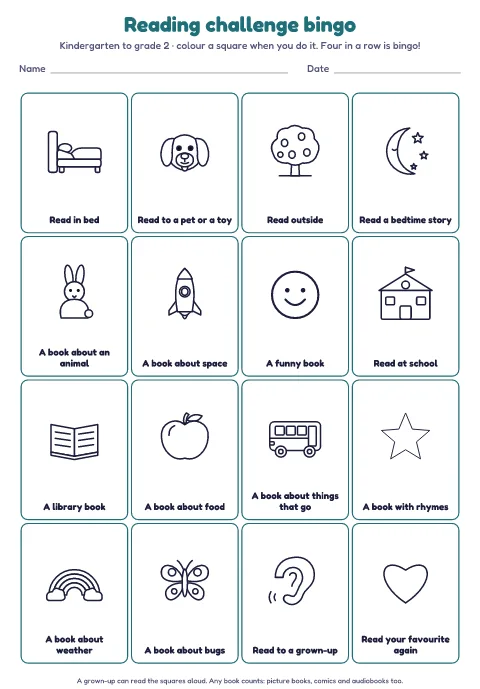
5. Reading challenge bingo
Two challenge cards that push children to try new kinds of book. The 4 × 4 card for kindergarten to grade 2 is all pictures and short words: read in bed, read to a pet or a toy, read outside, a book about space, a funny book, a book with rhymes. The 5 × 5 card for grades 3 to 5 asks for a mystery, a graphic novel, a poem read aloud, a true story about a real person, a book over 150 pages and twenty more, with a free square in the middle and a line in each square for the title.
Reading challenge bingo PDF (A4)Reading challenge bingo PDF (US Letter)
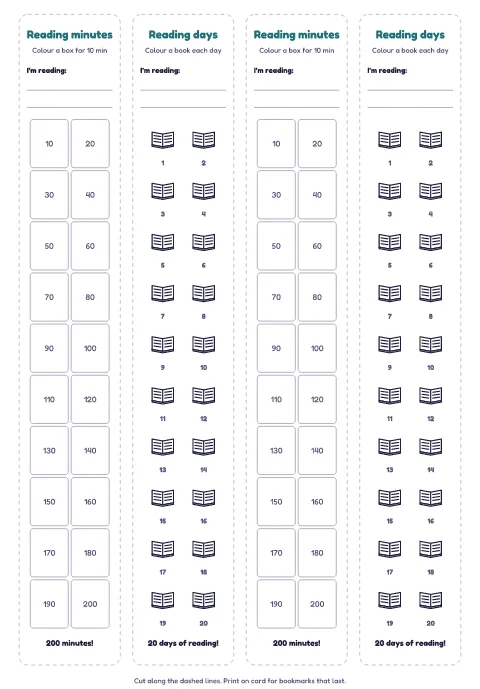
6. Reading tracker bookmarks and bookmarks to colour
Four bookmarks to a page, with dashed cut lines. Two are reading trackers that live in the book: one colours a box for every ten minutes up to 200, the other colours a little book for each reading day up to 20. The second page has four bookmarks to colour (stars, flowers, books and moons) with a “this book belongs to” line. For more designs, see our printable bookmarks.
Advertisement
Book reports and responding to books
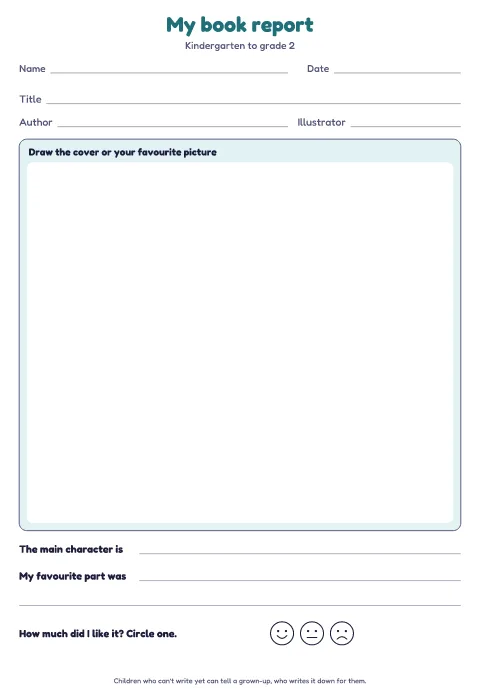
7. Book report template for kindergarten to grade 2
A first book report: title, author and illustrator, a big box to draw the cover or favourite picture, the main character, a favourite part and three faces to rate it. Children who can’t write yet tell a grown-up, who scribes. Page 2 is beginning, middle and end, three boxes to draw and write the story in order with first, next, then and finally, which is the retelling skill most kindergarten and grade 1 standards ask for.
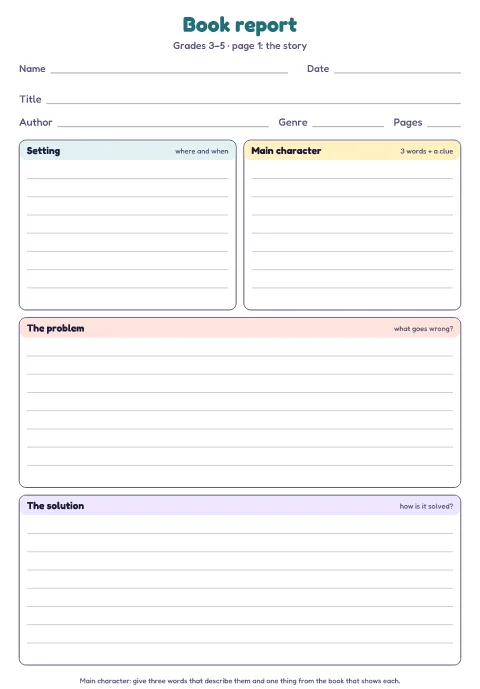
8. Book report template for grades 3 to 5
Two pages that walk through a novel the way a teacher would. Page 1: title, author, genre and page count, then the setting (where and when), the main character with three describing words and a clue for each, the problem and the solution. Page 2: a summary in five sentences or fewer, a favourite part, new words and their meanings, who you would recommend it to and why, a star rating and one thing you would change.
Grades 3–5 book report PDF (A4)Grades 3–5 book report PDF (US Letter)
9. Non-fiction book report
Most book report templates assume a story. This one is for information books: three facts learned in your own words, a checklist of the text features the book uses (contents page, headings, captions, diagrams, glossary, index, fact boxes, maps), a diagram to draw with a caption, a question the book did not answer, four new words and what they mean, where to find out more and who would find the book useful.
Non-fiction report PDF (A4)Non-fiction report PDF (US Letter)
10. Story map and character profile
The story map lays out setting, characters, the problem, three events joined by arrows and the solution, for retelling a book or planning a story of your own. The character profile puts a drawing in the middle and asks what the character looks like, says, does, feels and thinks, and how they change from the start to the end, with a reminder to back each answer with something from the book.
11. Book recommendation cards and a book review
Four “You should read” cards to a page, with title, author, five stars, “you will like it if you like...” and who recommended it: cut them out for a class display, a library shelf or a book swap. The book review page for grades 3 to 6 asks for the book in one sentence, its best point, what could be better, who to give it to and whether it was easy, just right or tricky to read.
Recommendation cards PDF (A4)Recommendation cards PDF (US Letter)
12. Reading response question cards for grades 3 to 5
Twenty-four questions that work with any book, twelve for stories (characters, setting, prediction, the author’s word choices, how a character changes) and twelve for information books (headings, glossaries, diagrams, fact and opinion). Use them in guided reading, book clubs or as a single homework question. For grades 1 and 2, the question cards on our reading comprehension worksheets page use simpler question starters.
World Book Day and reading month
13. Design a book cover
A front cover with a spine, title lines, a picture area and “written by” and “illustrated by” lines, and a back cover with space for a blurb, a quote from a reader, an age line and a pretend barcode. Children can redesign the cover of a book they love or make one for their own story, which also makes a bright World Book Day display.
Book cover template PDF (A4)Book cover template PDF (US Letter)
14. Reading passport and reading month calendar
The passport has twelve reading adventures to collect a stamp, sticker or initials for: read in a den, read to a teddy, read a poem aloud, swap a book with a friend, visit a library, read a recipe and help cook it, read by torchlight, listen to an audiobook and more. The calendar gives one idea for each of twenty school days, from starting a reading log to a reading picnic, for March reading month, a reading week or the four weeks before World Book Day.
15. Invent a character and plan a story opening
Instead of buying a costume, children invent their own story character: a drawing, a name and age, where they live, what they love and fear, a special talent and a catchphrase, plus what they could wear or carry from home to show who they are. The second page plans where the story starts, who they meet and what goes wrong, then has lines for the opening paragraph.
Invent a character PDF (A4)Invent a character PDF (US Letter)
For grown-ups
16. Reading journal for adults
A printable reading journal in five pages, with larger writing lines than most: a year list of 26 books (print it twice for 52) with the date finished and a star rating; a bookshelf of spines to colour, one per book, with the title written along each; book notes, two to a page, with start and finish dates, format (print, ebook, audio, library, borrowed), a line to remember and your thoughts; and a to-be-read list beside a 24-prompt reading challenge for adults, from a book in translation to the one you started and never finished. It suits book clubs, retirees and anyone who wants a paper record instead of an app.
Adult reading journal PDF (A4)Adult reading journal PDF (US Letter)
How we made these reading logs
Every sheet was written and drawn by us. None of them name a real book, author or famous character, so they work with whatever your reader is reading and are safe to share with any class. Each one is designed for black-and-white printing, with pale tints that turn light grey and an ink-saver version with no colour at all, and leaves a wide margin so nothing is lost at the printer’s edge. Logs for younger children use pictures, faces and circling in place of writing, because a reading log should make children want to read, not dread the paperwork.
World Book Day is a UK and Ireland celebration run by the World Book Day charity, always on the first Thursday in March; these activities are our own and are not connected to the charity. Most other countries mark UNESCO’s World Book and Copyright Day on 23 April, and the reading passport and calendar suit that too. Sources: World Book Day (the charity): World Book Day 2027 is on 4 March 2027; UNESCO: World Book and Copyright Day, 23 April.
More for readers: the reading comprehension worksheets for grades 1 and 2, the super reader certificate for a finished challenge, the books and reading word search, decodable sentences for beginning readers, and our teachers’ hub with every worksheet by subject and age.
Questions
What should a reading log include?
For young children: the title, the minutes (to circle) and a grown-up’s initials. From about grade 3: the date, title, author, genre, pages read, minutes and a rating, and sometimes a short summary. Adults usually log the title, author, date finished and a rating with a few notes.
Is there a reading log for kids who can’t read yet?
Yes. The picture reading log has books to colour and faces to circle, and the 30 story stars chart counts stories read aloud. Nothing on either sheet needs reading or writing.
Do you have a reading log with a parent signature?
Yes. The weekly K–2 log has a grown-up column for daily initials and a signature line, and the monthly minutes log and the grades 3–5 log both end with a signature line.
When is World Book Day 2027?
World Book Day 2027 is on Thursday 4 March 2027 in the UK and Ireland. It is always the first Thursday in March. UNESCO’s World Book and Copyright Day, marked in many other countries, is on 23 April.
Are there World Book Day activities that don’t need a costume?
Yes. Children can design a book cover, collect stamps in a reading passport, follow the 20-day reading calendar or invent their own story character and show who they are with things from home.
Is there a reading log for adults?
Yes. The reading journal for adults has a books-of-the-year list, a bookshelf tracker to colour, book notes pages, a to-be-read list and a 24-prompt reading challenge.
Are these reading logs free?
Yes, for your own class, school, library or family, with no account. Please link to this page rather than selling the sheets or uploading the PDFs elsewhere.