 Colouring Nest
Self-registration, welcome banner and birthday chart
Free printables for the first wall a child sees each morning: a self-registration system (blank name cards, board headers and a one-page how-to), welcome and happy birthday banners with big outline letters for children to colour, and birthday charts as twelve cake cards or one page, with the seasons the right way round for your hemisphere. A4 and US Letter PDFs.
Inside this set
- 8 printables
- A4 and US Letter PDFs
- Colour and ink-saver versions
- Free, no sign-up
About this resource
Ages 2–6, prep, what you need and how to use it
- Ages
- 2 to 6 years (toddlers, preschool, school start)
- Prep
- About 30 minutes to print, cut and laminate the name cards and headers.
- You’ll need
- Printer and card
- Scissors
- Laminator
- Pens for names, crayons for the banner letters
- Supports
- Te Whāriki (NZ), EYLF (Australia), EYFS (England), ELOF (US)
How to use it in the room
- Follow the one-page guide to set up self-registration by the door.
- Let children colour the banner letters before you put them up.
- Use the season that matches your hemisphere for the birthday chart.
Show resources for
Remembered on this device only. It sets A4 or US Letter as the first download.
Self-registration in early years
Self-registration means children sign themselves in: they find their own name card and move it from “At home” to “Here today”. It replaces the adult ticking a register with a job the child does, which is why many nurseries, kindergartens and Reception classes use it. It builds name recognition day by day, gives a calm way to separate from a parent at the door, and at mat time the board becomes a counting activity: how many of us are here?
Start with a photo or symbol plus the name, then fade the picture as children learn their name. The one-page guide below sets out six steps, including privacy (first names only) and making sure no one is ever named as late.
Supports:
- Te Whāriki NZ
- Belonging | Mana whenua
- Contribution | Mana tangata
- Communication | Mana reo
- EYLF Australia
- Outcome 1: Children have a strong sense of identity
- Outcome 2: Children are connected with and contribute to their world
- Outcome 5: Children are effective communicators
- EYFS England
- Personal, social and emotional development
- Communication and language
- Literacy
- ELOF US
- Social and Emotional Development
- Language and Literacy
1. Self-registration name cards
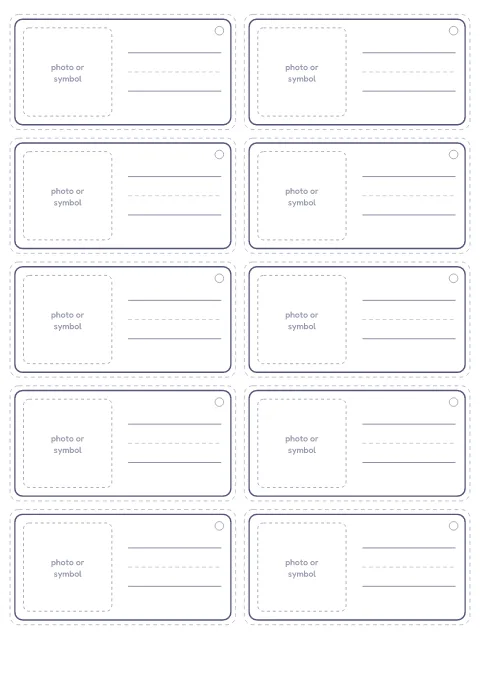
Ten blank cards to a page with a photo-or-symbol box, handwriting lines for the name and a small circle that marks where the hook-and-loop dot goes. For ready-made symbols, use the symbol name labels and give each child the same symbol everywhere.
2. Board headers
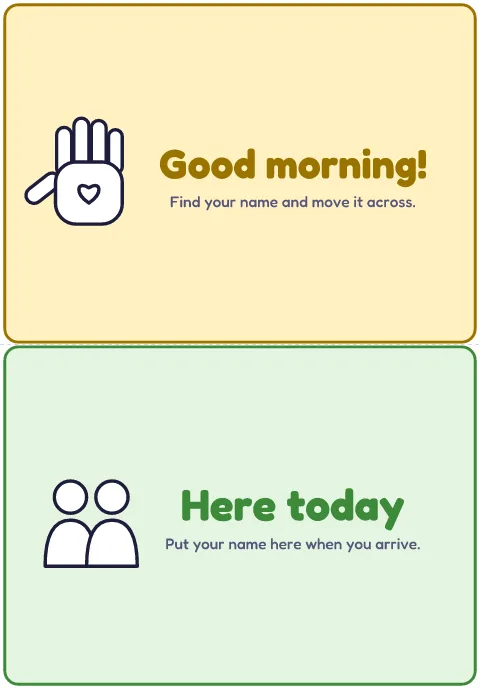
Four half-page headers: “Good morning! Find your name and move it across”, “Here today”, “At home” and “How many? How many of us are here today?”.
3. How to set it up (one-page guide)
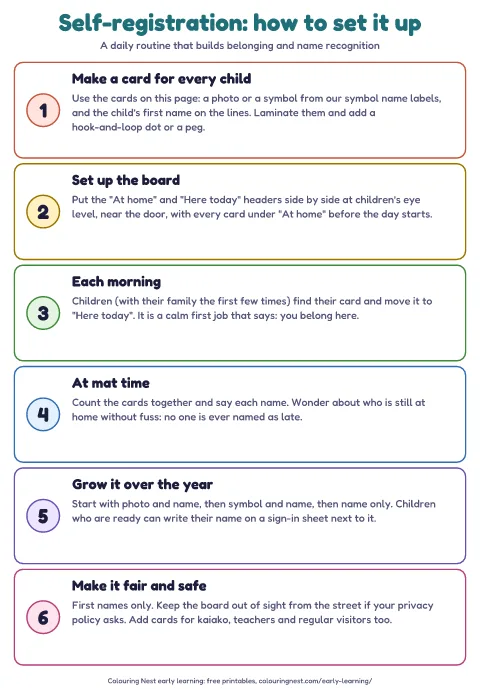
Six numbered steps for staff and families: make the cards, set up the board, the morning routine, mat time, growing it over the year, and keeping it fair and safe. Pin it by the board for relief staff.
Advertisement
4. Welcome banner
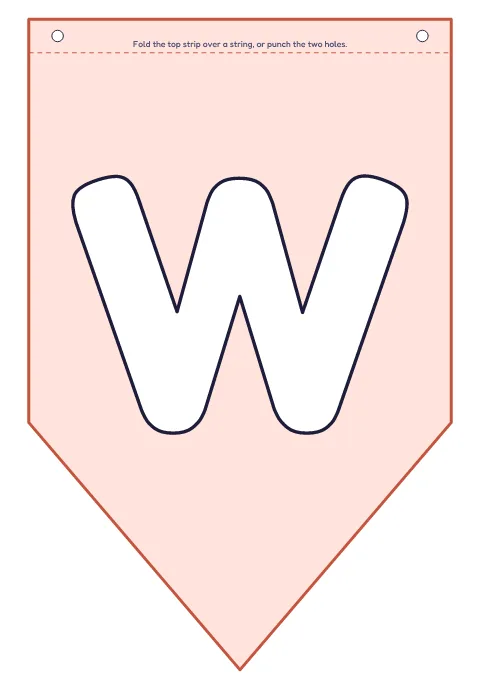
Seven pennants, one big outline letter each, to spell WELCOME across a door or a window. Children colour the letters in the first week, so the welcome display is theirs. In New Zealand, add the Nau mai, haere mai banner.
5. Happy birthday banner
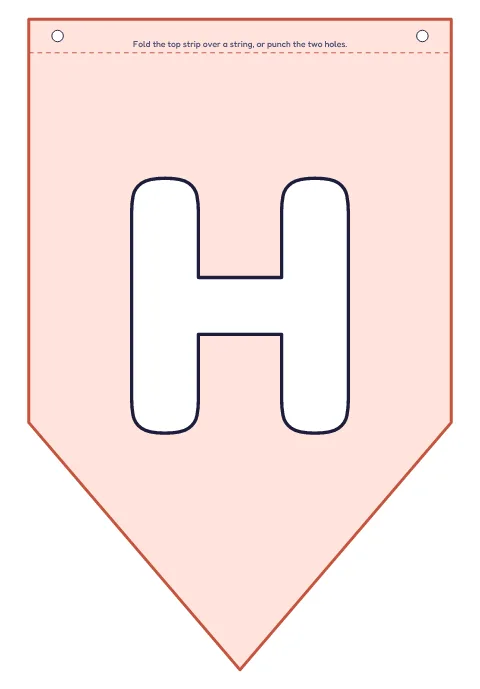
Fourteen pennants spelling HAPPY BIRTHDAY with a star between the words. Colour it as a group once and bring it out for every birthday, so each child gets the same celebration.
6. Birthday chart month cards
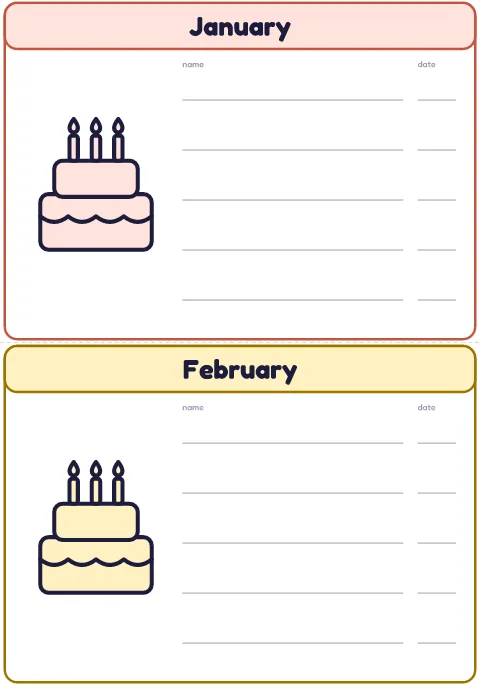
Twelve month cards, two to a page, each with a cake and five lines for names and dates. Put them up in a row or a circle around the room.
7. Birthday chart on one page (southern hemisphere)
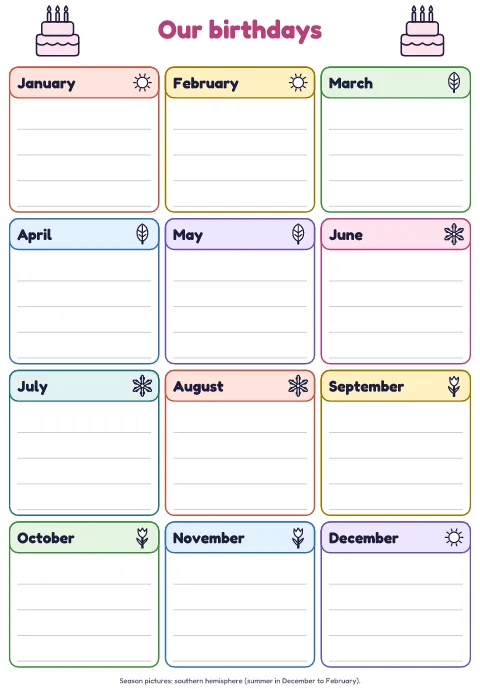
All twelve months on one page with four lines each and a season picture in each month: summer for December to February, as in New Zealand and Australia.
Birthday chart south PDF (A4)Birthday chart south PDF (US Letter)
8. Birthday chart on one page (northern hemisphere)
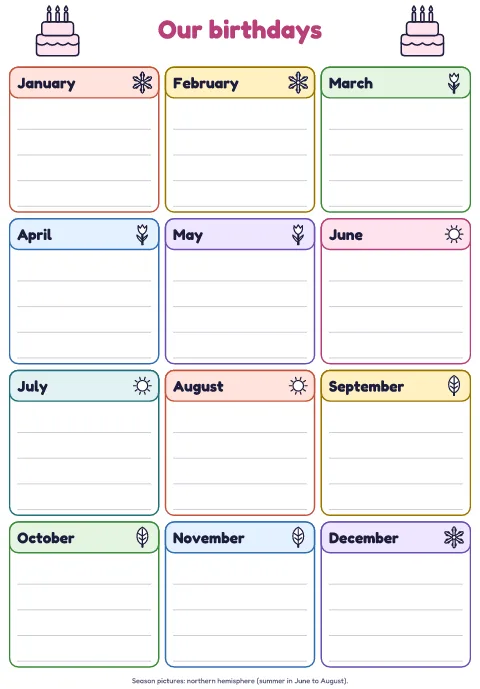
The same chart with summer in June to August, for the UK, Ireland and North America.
Birthday chart north PDF (A4)Birthday chart north PDF (US Letter)
Birthdays without pressure
Not every family celebrates birthdays, and some children’s birthdays fall in the holidays. Ask families before you put a child’s birthday on the wall, celebrate holiday birthdays on the nearest day you are open, and keep the celebration the same for everyone. For the day itself there is a happy birthday certificate, a birthday crown and a birthday hat to make.
The rest of the room set: classroom labels and area signs, calendar and weather board, helper chart and routine charts, te reo Māori classroom displays. For routines and feelings, see the visual timetable; for everything else for ages 0 to 6, early learning by country.
Related sets
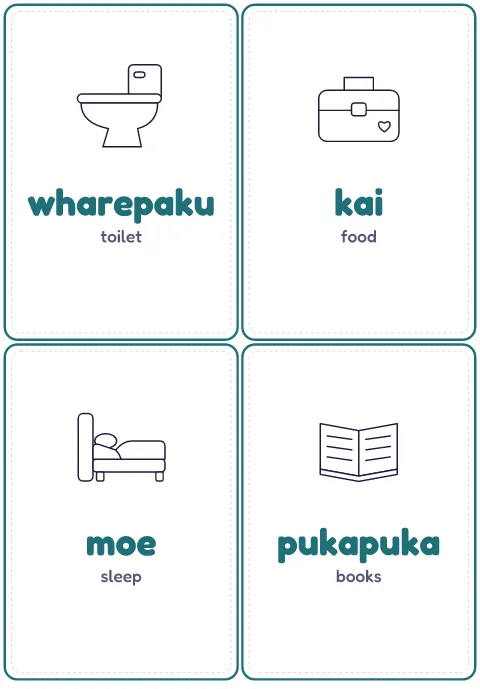 Te reo Māori room labels, greetings, shapes, feelingsDisplays and charts · ages 1–6
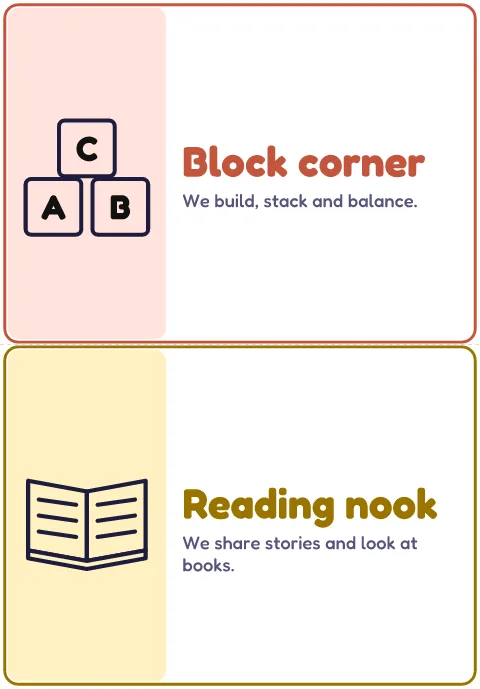 Classroom labels with pictures: area signs, trays, name tagsDisplays and charts · ages 1–6
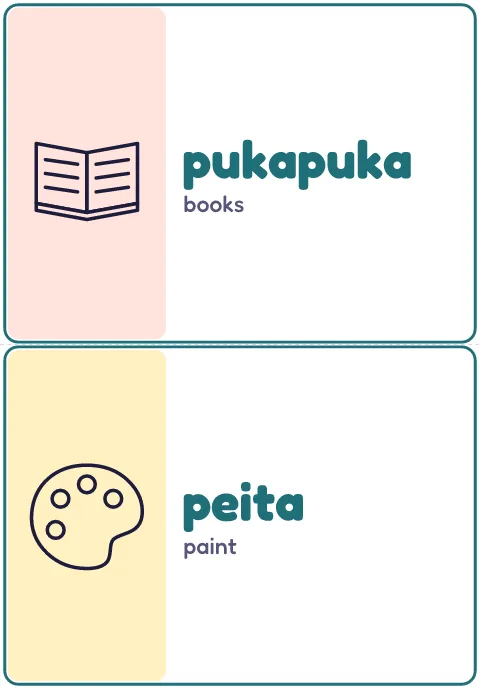 Te reo Māori classroom displays: signs, weather, seasons, birthdaysDisplays and charts · ages 1–6
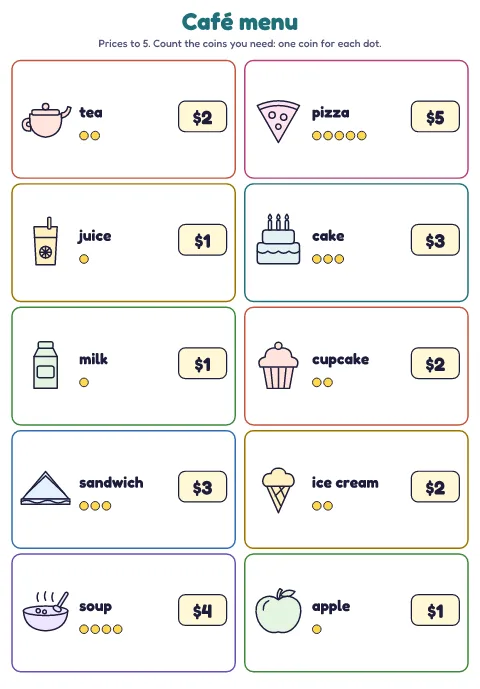 Café role play: menu, order pad, signs, badgesDisplays and charts · ages 2–6
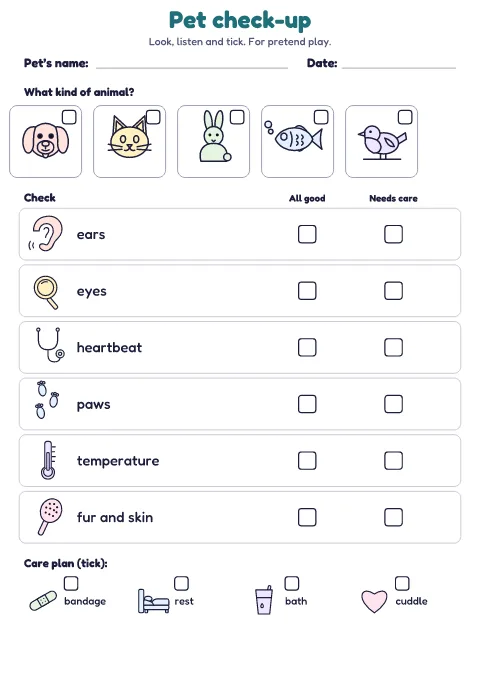 Vet role play: check-up form, appointment cards, signsDisplays and charts · ages 2–6
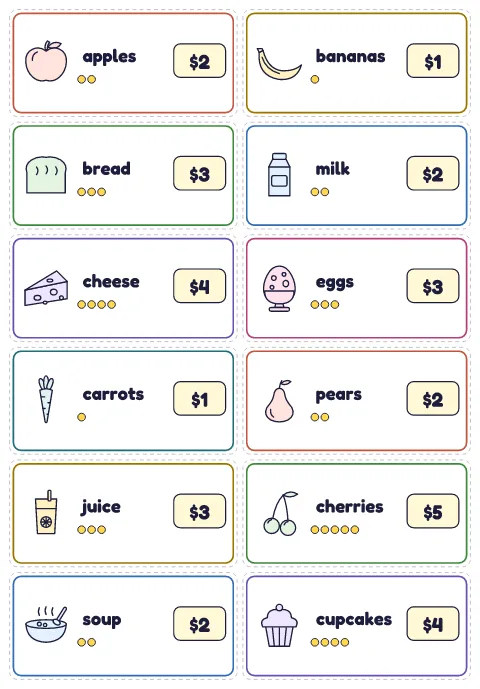 Shop role play: price labels, play money, shopping listsDisplays and charts · ages 2–6
Questions
What is self-registration in EYFS?
Children sign themselves in by moving their own name card (with a photo or symbol) to a “here today” board when they arrive. It builds name recognition and belonging and replaces an adult-only register.
How do I make a birthday chart for my classroom?
Print the twelve month cards (or the one-page chart), write each child’s name and date with their family’s permission, and put them at children’s eye level. Pick the version with the seasons the right way round for your hemisphere.
Can children colour the banners?
Yes. The banner letters are big outlines for children to colour, paint or collage, then string up.
Are these free?
Free for your own centre, kindergarten, school, class and family. Please don’t resell them or upload them to another site.