 Colouring Nest
Classroom helper chart with job cards and routine charts
A free classroom helper chart for preschool, kindy and the early years of school: a header, eighteen job cards with pictures and a one-line description, blank job cards, an “I did it!” chart that celebrates trying, and two routine charts with picture cues. A4 and US Letter PDFs, in colour and ink saver.
Inside this set
- 6 printables
- A4 and US Letter PDFs
- Colour and ink-saver versions
- Free, no sign-up
About this resource
Ages 3–6, prep, what you need and how to use it
- Ages
- 3 to 6 years (preschool, school start)
- Prep
- About 30 minutes to print, cut and laminate the chart and cards.
- You’ll need
- Printer and card
- Scissors
- Laminator
- Pegs, Velcro dots or Blu Tack
- Supports
- Te Whāriki (NZ), EYLF (Australia), EYFS (England), ELOF (US)
How to use it in the room
- Choose four to eight jobs to start.
- Change helpers on the same day each week.
- At mat time, ask last week’s helpers what they did.
Show resources for
Remembered on this device only. It sets A4 or US Letter as the first download.
Jobs that give every child a turn
Classroom jobs give children real responsibility: the room works a little better because they watered the plants or held the door. Rotate the jobs so everyone has a turn, pair a younger child with an older one, and keep the jobs real (a pretend job soon loses its shine). Each card has a picture, the job name, one line saying what the helper does, and a “Helper” box for a name card, a photo or a peg.
What we left out, on purpose
No behaviour clip charts, no traffic-light colours, no moving a child’s name down for all to see, and no stickers that can be taken away. Research on early childhood and most early-years guidance favour noticing effort and helping children manage feelings over public rewards and sanctions. The “I did it!” chart counts tries, never mistakes, and the routine charts are for the group to tick together or for a child who wants to see their day.
Supports:
- Te Whāriki NZ
- Belonging | Mana whenua
- Contribution | Mana tangata
- Wellbeing | Mana atua
- EYLF Australia
- Outcome 1: Children have a strong sense of identity
- Outcome 2: Children are connected with and contribute to their world
- Outcome 3: Children have a strong sense of wellbeing
- EYFS England
- Personal, social and emotional development
- ELOF US
- Social and Emotional Development
- Approaches to Learning
1. Helper chart header
“Our helpers: everyone gets a turn”, one page to go above the job cards.
2. Job cards with pictures (18 jobs)
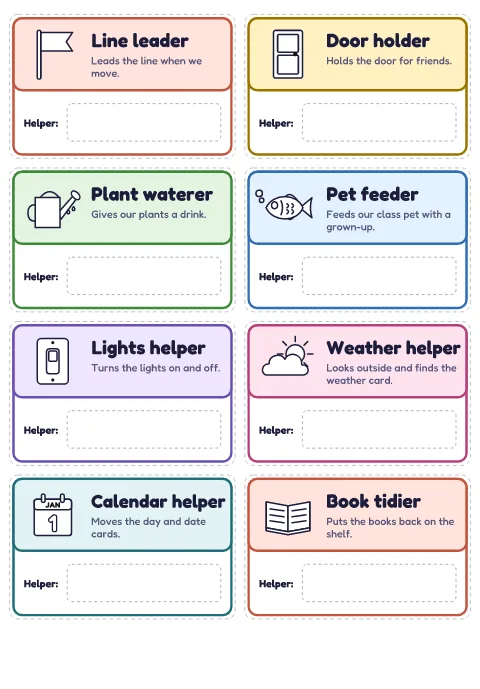
Eight cards to a page: line leader, door holder, plant waterer, pet feeder, lights helper, weather helper, calendar helper, book tidier, snack helper, table wiper, messenger, toy tidier, music helper, paper helper, recycling helper, sweeper, greeter, hand-washing helper. The last page has six blank cards for jobs of your own.
3. Blank job cards
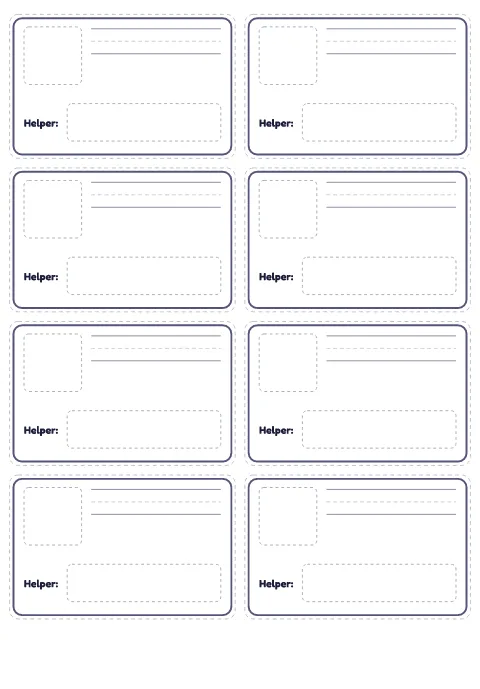
Eight blank cards with a picture box, writing lines and a Helper box, for jobs that only your room has (feeding the worm farm, ringing the tidy-up bell).
Advertisement
4. “I did it!” chart
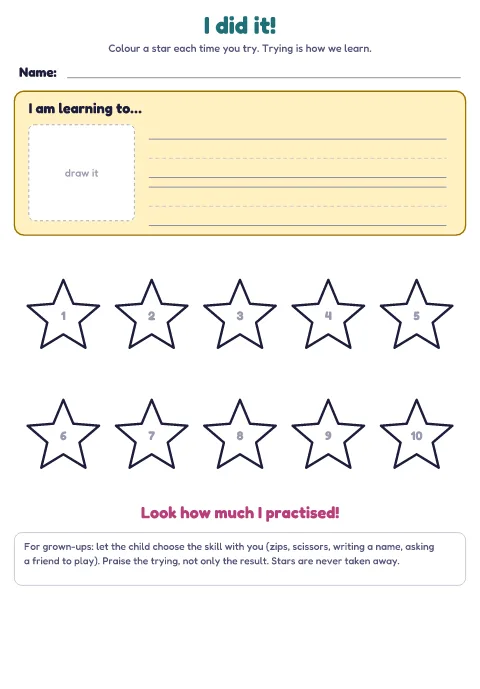
For one skill a child is working on, chosen together: doing up a zip, using scissors, writing their name, asking a friend to play. They draw it, then colour a star each time they try. The note for grown-ups reminds everyone that stars are never taken away.
5. Class routine chart
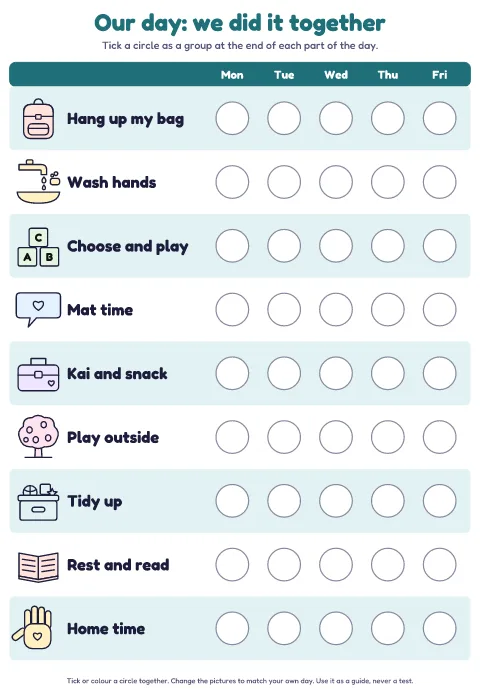
Nine parts of an early-learning day with picture cues (hang up my bag, wash hands, choose and play, mat time, kai and snack, play outside, tidy up, rest and read, home time) and a circle for each weekday to tick as a group. For a full picture timetable with movable cards, see the visual timetable.
Class routine chart PDF (A4)Class routine chart PDF (US Letter)
6. My routine chart
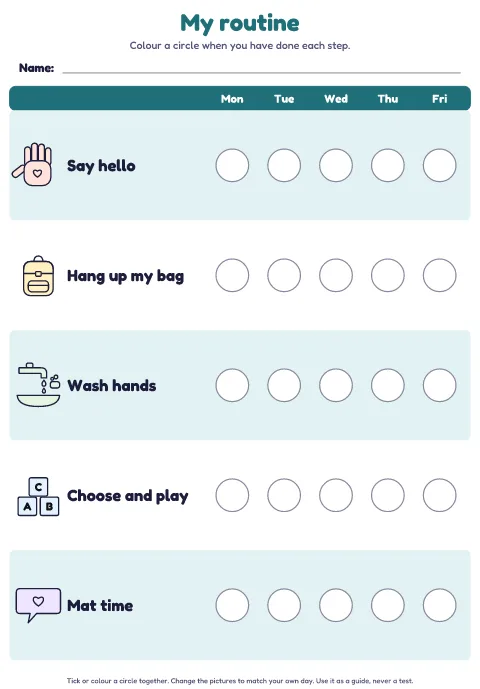
An individual chart for arriving in the morning: say hello, hang up my bag, wash hands, choose and play, mat time. Helpful for a child who is new or finds the start of the day hard; use it as a guide, never a test.
Using a helper chart
- Choose four to eight jobs to start; add more as children ask for them.
- Change helpers on the same day each week, and at mat time ask last week’s helpers what they did.
- Use the children’s name labels with symbols as the name cards.
- The calendar helper and weather helper go together nicely at mat time.
The rest of the room set: classroom labels and area signs, calendar and weather board, self-registration, welcome banner and birthday chart, te reo Māori classroom displays. For routines and feelings, see the visual timetable; for everything else for ages 0 to 6, early learning by country.
Related sets
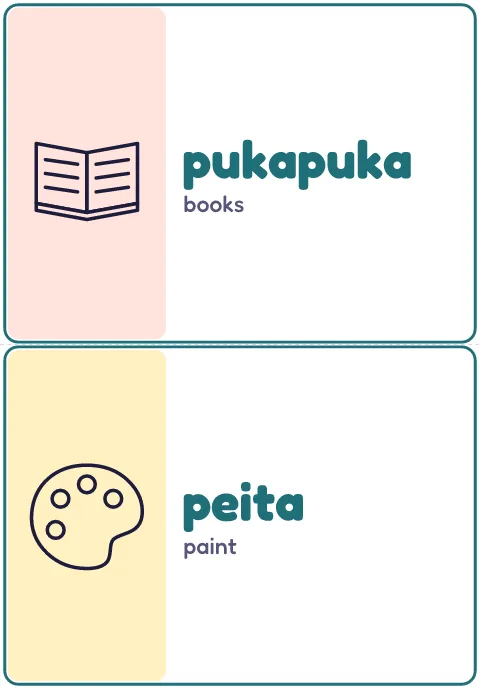 Te reo Māori classroom displays: signs, weather, seasons, birthdaysDisplays and charts · ages 1–6
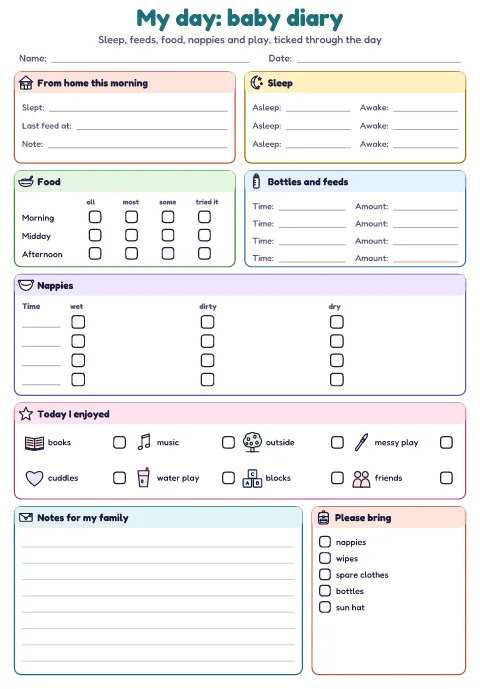 Daily care diary for babies and toddlers, family sheetsTemplates · ages 0–3
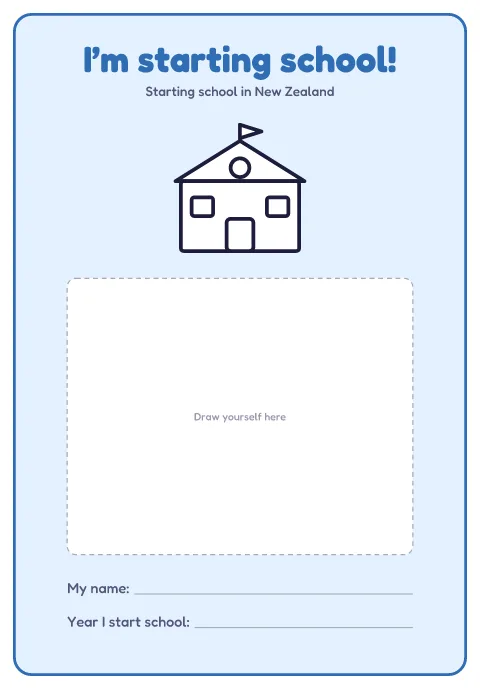 Starting school booklet and all about me for my new teacherTemplates · ages 4–6
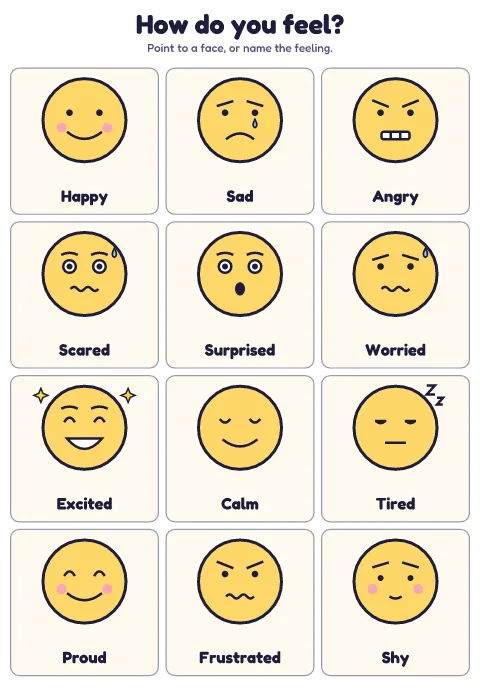 Visual timetable, now and next and feelings chartDisplays and charts · ages 2–6
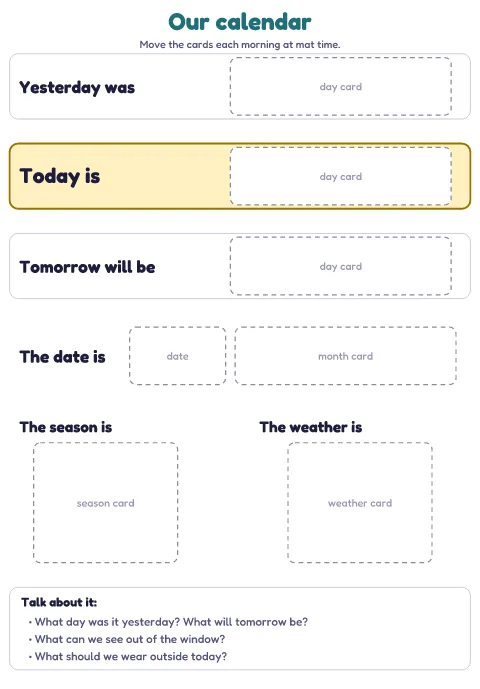 Circle-time calendar and weather boardDisplays and charts · ages 3–6
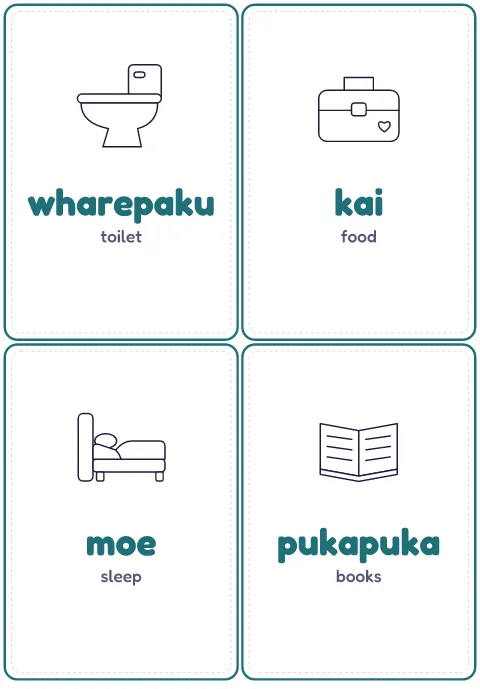 Te reo Māori room labels, greetings, shapes, feelingsDisplays and charts · ages 1–6
Questions
What jobs can preschoolers do in the classroom?
Real, simple jobs: line leader, door holder, plant waterer, pet feeder, lights helper, weather helper, calendar helper, book tidier, snack helper, table wiper and more. Our set has eighteen with pictures, plus blank cards.
How often should classroom helpers change?
Weekly works for most rooms; it gives each child time to learn the job and keeps turns fair. With a small group, change daily.
Is a reward chart a good idea for young children?
Charts that celebrate trying and show the routine can help; charts that take rewards away or display behaviour publicly usually don’t. Our charts count tries and steps done, never mistakes.
Are these free?
Free for your own centre, kindergarten, school, class and family. Please don’t resell them or upload them to another site.