 Colouring Nest
Weather and seasons topic pack with an adult input plan
A free weather and seasons topic pack for preschool, kindy and Reception: a one-page adult input plan with an adult-led and a child-initiated idea for six learning areas, twelve weather and season word cards, a “dress for the weather” cut-and-stick sort with answers, a weather watch sheet for a week, a four seasons wheel in southern and northern hemisphere versions, and an observation prompt sheet. A4 and US Letter PDFs, colour and ink saver; the word cards also come with US words (fall).
Inside this set
- 6 printables
- A4 and US Letter PDFs
- Colour and ink-saver versions
- Free, no sign-up
About this resource
Ages 2–5, prep, what you need and how to use it
- Ages
- 2 to 5 years (toddlers, preschool, school start)
- Prep
- About 20 minutes to print; choose the southern or northern seasons wheel for your hemisphere.
- You’ll need
- Printer and paper (card for the word cards and wheel)
- Scissors and glue sticks for the sort
- A clipboard for the weather watch
- A clear flat-bottomed container to collect rain
- Supports
- Te Whāriki (NZ), EYLF (Australia), EYFS (England), ELOF (US)
How to use it in the room
- Pin up the plan and start with the weather reporter at group time.
- Keep the weather watch on a clipboard by the door and count the days on Friday.
- Use the seasons wheel to talk about what happens in each season where you live.
Show resources for
Remembered on this device only. It sets A4 or US Letter as the first download.
How to use this weather and seasons plan
Weather is the topic you can return to every single day. Children see it, feel it and dress for it, and it changes fast enough to talk about between morning and afternoon. Run this plan for two weeks to start, then keep the weather watch going as part of your daily routine, or come back to the plan for a week each term so children can compare one season with the next.
Seasons are where most free resources go wrong for families south of the equator. In New Zealand and Australia summer is December to February and winter is June to August, so a northern-hemisphere chart tells children it is autumn when the leaves are just coming out. Our seasons wheel comes in a southern and a northern version. In the tropical north of Australia, many communities talk about a wet season and a dry season instead of four; follow the words the children use at home.
Adult-led and child-initiated
The plan gives one short adult-led activity and one child-initiated set-up for each learning area. Use the adult-led ideas at group time or with a few children at a table; leave the child-initiated set-ups out for the whole fortnight so children can return to them on different days and in different weather. If it rains, drop everything and go out in raincoats: puddles teach more about weather than any worksheet.
Supports:
- Te Whāriki NZ
- Exploration | Mana aotūroa
- Communication | Mana reo
- Wellbeing | Mana atua
- EYLF Australia
- Outcome 2: Children are connected with and contribute to their world
- Outcome 4: Children are confident and involved learners
- Outcome 5: Children are effective communicators
- Outcome 3: Children have a strong sense of wellbeing
- EYFS England
- Understanding the world
- Communication and language
- Literacy
- Mathematics
- Expressive arts and design
- Physical development
- ELOF US
- Cognition
- Language and Literacy
- Approaches to Learning
- Perceptual, Motor, and Physical Development
1. Weather and seasons adult input plan
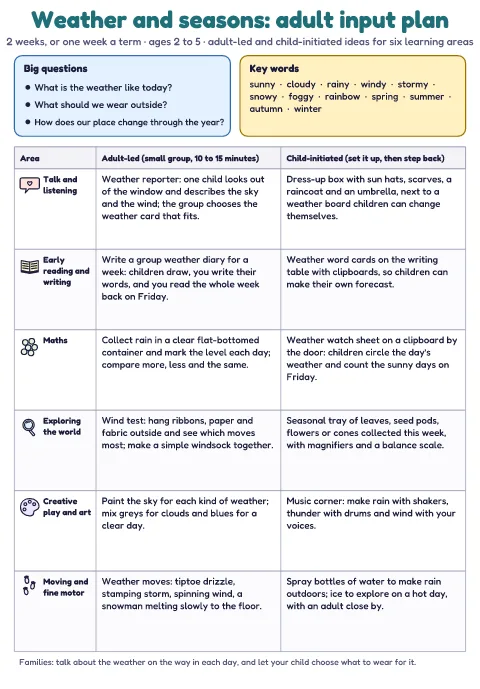
Big questions, key words, and an adult-led and a child-initiated idea for six learning areas on one page.
Weather and seasons adult input plan PDF (A4)Weather and seasons adult input plan PDF (US Letter)
2. Weather and seasons vocabulary cards
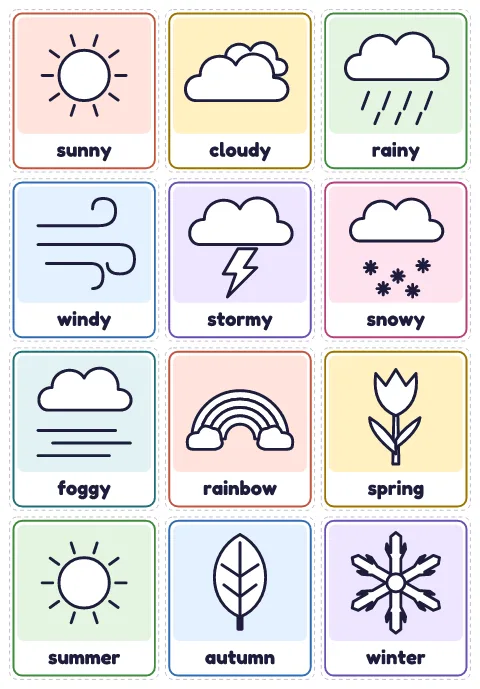
Twelve cards for the weather board, the writing table or a sorting game: eight kinds of weather and the four seasons.
Weather and seasons vocabulary cards PDF, UK, NZ and AU words (A4)Weather and seasons vocabulary cards PDF, UK, NZ and AU words (US Letter)
Ink saver (A4)Ink saver (US Letter)
3. Dress for the weather
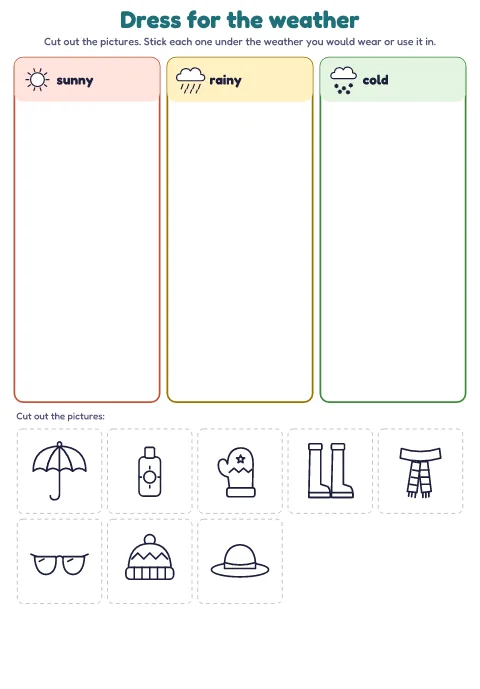
Cut out the sun hat, sunglasses, sunscreen, umbrella, boots, scarf, mittens and beanie, and sort them under sunny, rainy and cold. Answers included.
Dress for the weather PDF (A4)Dress for the weather PDF (US Letter)
Advertisement
4. Weather watch for a week
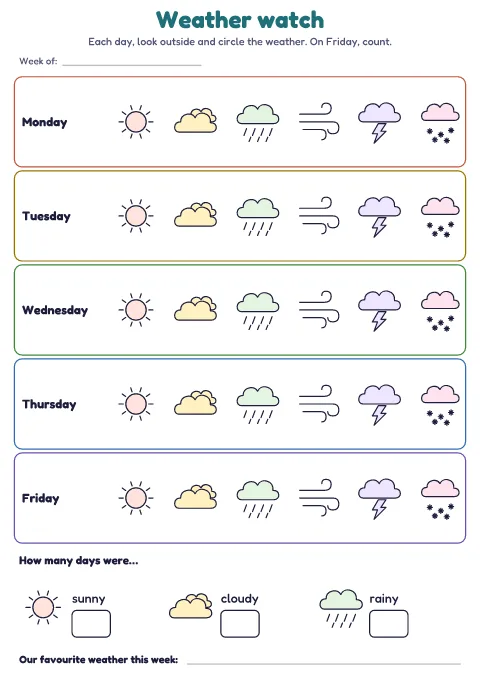
One row a day from Monday to Friday: children circle the weather, then count the sunny, cloudy and rainy days on Friday.
Weather watch for a week PDF (A4)Weather watch for a week PDF (US Letter)
5. Four seasons wheel
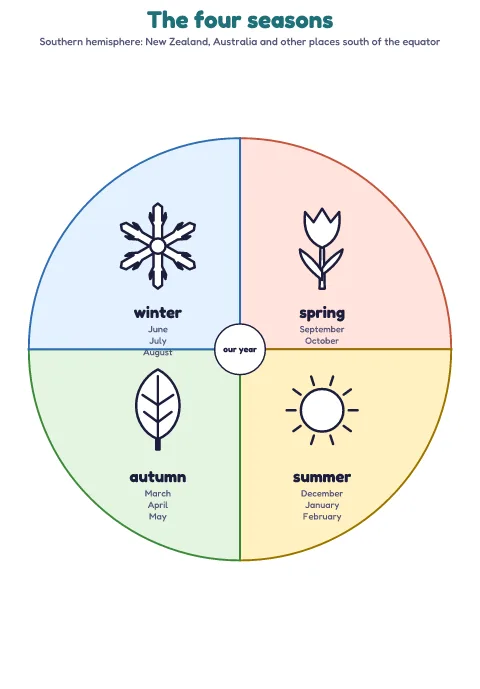
A labelled wheel with the months of each season and a blank wheel for children to draw in. Choose the southern (New Zealand, Australia) or northern (UK, US) version.
Four seasons wheel PDF, Southern hemisphere (A4)Four seasons wheel PDF, Southern hemisphere (US Letter)
Ink saver (A4)Ink saver (US Letter)
Northern hemisphere (A4)Northern hemisphere (US Letter)
Northern hemisphere ink saver (A4)Northern hemisphere ink saver (US Letter)
6. Weather and seasons observation prompts
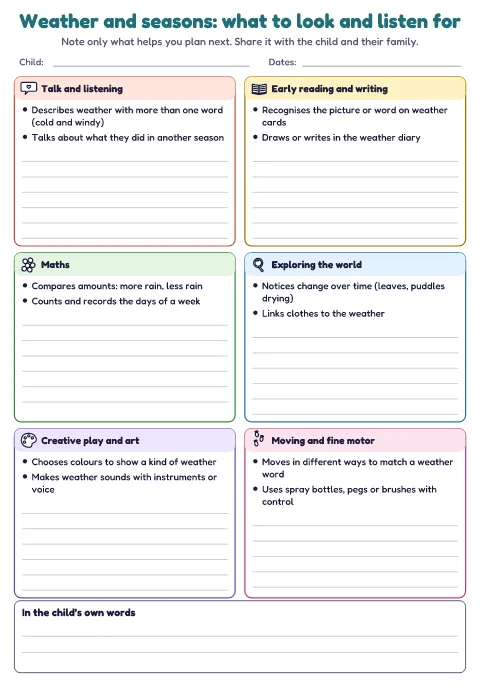
Look-and-listen prompts for weather talk, recording, measuring, art and movement, with space for notes.
Weather and seasons observation prompts PDF (A4)Weather and seasons observation prompts PDF (US Letter)
The plan at a glance
- Talk and listening. Adult-led: Weather reporter: one child looks out of the window and describes the sky and the wind; the group chooses the weather card that fits. Child-initiated: Dress-up box with sun hats, scarves, a raincoat and an umbrella, next to a weather board children can change themselves.
- Early reading and writing. Adult-led: Write a group weather diary for a week: children draw, you write their words, and you read the whole week back on Friday. Child-initiated: Weather word cards on the writing table with clipboards, so children can make their own forecast.
- Maths. Adult-led: Collect rain in a clear flat-bottomed container and mark the level each day; compare more, less and the same. Child-initiated: Weather watch sheet on a clipboard by the door: children circle the day’s weather and count the sunny days on Friday.
- Exploring the world. Adult-led: Wind test: hang ribbons, paper and fabric outside and see which moves most; make a simple windsock together. Child-initiated: Seasonal tray of leaves, seed pods, flowers or cones collected this week, with magnifiers and a balance scale.
- Creative play and art. Adult-led: Paint the sky for each kind of weather; mix greys for clouds and blues for a clear day. Child-initiated: Music corner: make rain with shakers, thunder with drums and wind with your voices.
- Moving and fine motor. Adult-led: Weather moves: tiptoe drizzle, stamping storm, spinning wind, a snowman melting slowly to the floor. Child-initiated: Spray bottles of water to make rain outdoors; ice to explore on a hot day, with an adult close by.
Tips
- Make it daily. Choose the day’s weather card at morning group time and keep the weather watch going after the topic ends.
- Use real words for real weather. Drizzle, gusty, humid and frosty are the words children hear at home; add them to the blank side of a card.
- Measure something. A rain container marked with tape each day gives children their first real data.
- Check the hemisphere. Print the seasons wheel for your side of the equator; families who have moved from the other side will enjoy comparing.
More topic packs: minibeasts and people who help us. For the room, see continuous provision challenge cards, the circle-time calendar and weather board, sequencing cards and early learning by country.
Related sets
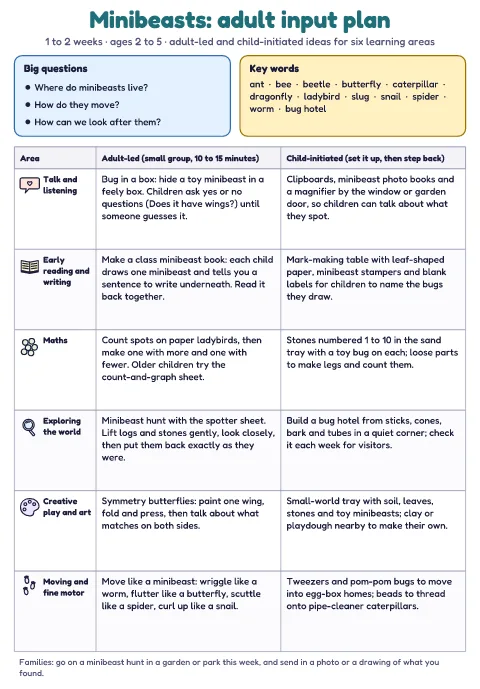 Minibeasts topic pack: adult input plan, word cards, sheetsTemplates · ages 2–5
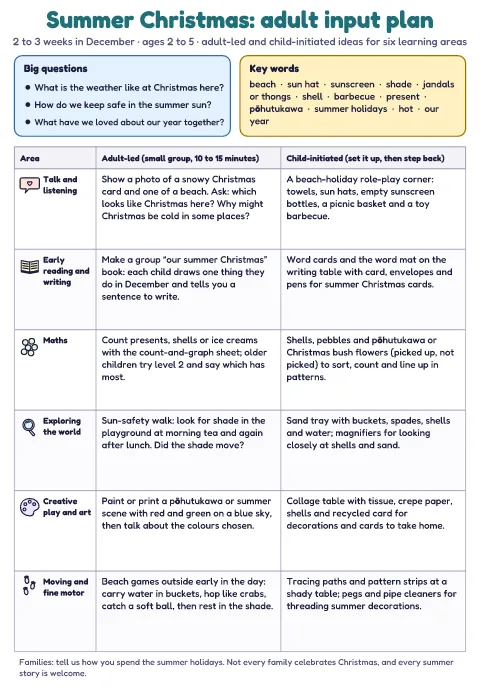 Summer Christmas pack: plan, sun safety, sheets and certificateTemplates · ages 2–6
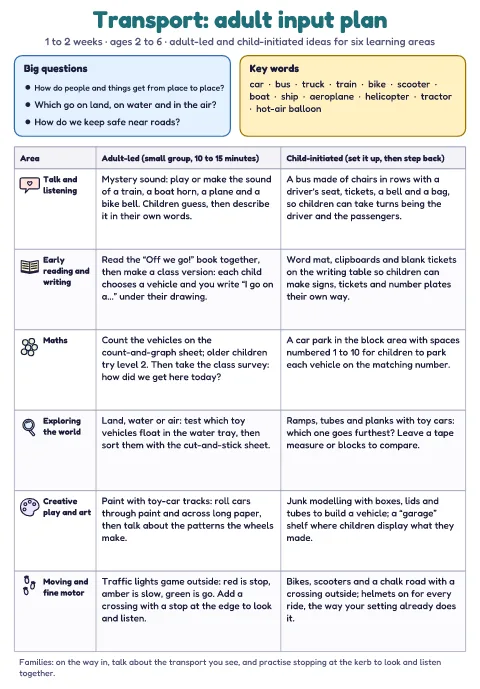 Transport topic pack: plan, word cards, road safety, sortsTemplates · ages 2–6
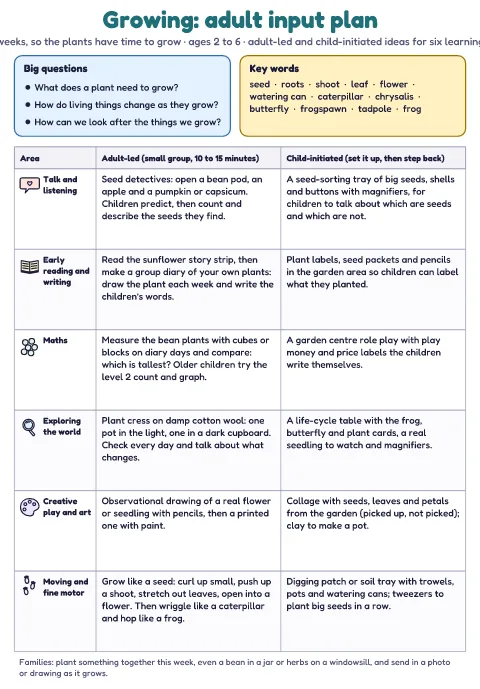 Growing topic pack: plant, butterfly and frog life cyclesTemplates · ages 2–6
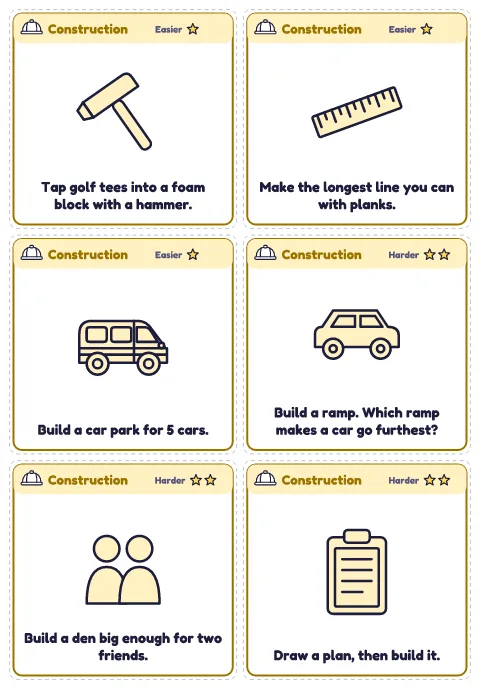 Continuous provision challenge cards for 10 play areasCards · ages 3–5
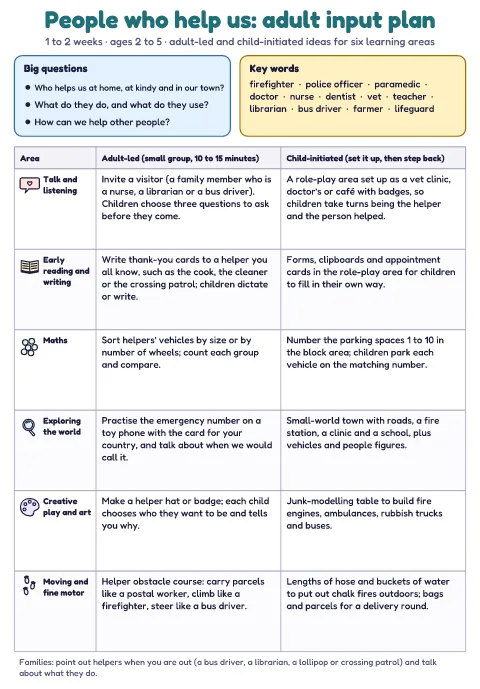 People who help us topic pack and emergency number cardsTemplates · ages 2–5
Questions
What months are the seasons in New Zealand and Australia?
Spring is September to November, summer is December to February, autumn is March to May and winter is June to August. In the UK and US the seasons are the other way round. Our seasons wheel comes in both versions.
How do you teach weather to preschoolers?
Look outside every day, name the weather together, dress for it and talk about how it feels. Then add simple recording, such as circling the weather on a sheet and counting the sunny days at the end of the week.
Is it autumn or fall?
Both are correct. Autumn is used in New Zealand, Australia and the UK; fall is the usual word in the US. Our word cards come in both versions.
Are these free?
Yes. Free for your own centre, kindergarten, school, class and family, with no sign-up. Please don’t resell them or upload them to another site.