 Colouring Nest
People who help us topic pack with an adult input plan
A free people who help us topic pack (community helpers) for preschool, kindy and Reception: a one-page adult input plan with an adult-led and a child-initiated idea for six learning areas, twelve helper vocabulary cards, a “who uses this?” matching sheet at two levels with answers, an emergency number poster and cards for New Zealand (111), Australia (000), the UK (999) and the US (911), an “I can help too” sheet and an observation prompt sheet. A4 and US Letter PDFs, colour and ink saver.
Inside this set
- 6 printables
- A4 and US Letter PDFs
- Colour and ink-saver versions
- Free, no sign-up
About this resource
Ages 2–5, prep, what you need and how to use it
- Ages
- 2 to 5 years (toddlers, preschool, school start)
- Prep
- About 20 minutes to print; pick the emergency number card for your country.
- You’ll need
- Printer and paper (card for the word and emergency cards)
- Pencils for the matching sheet
- A toy phone
- Laminator (optional)
- Supports
- Te Whāriki (NZ), EYLF (Australia), EYFS (England), ELOF (US)
How to use it in the room
- Pin up the plan and invite a family member who is a helper to visit.
- Use the matching sheet at level 1 first, then level 2.
- Practise the emergency number only on a toy phone.
- End the topic with the I can help too sheet.
Show resources for
Remembered on this device only. It sets A4 or US Letter as the first download.
How to use this people who help us plan
People who help us (often called community helpers in the US) is a topic about the adults in children’s lives: the people who keep them safe, healthy and learning, and the people who make the town work. It is a good topic early in the year, when children are still getting to know the adults in the room, and it links easily to role play, small-world play and visits.
Choose helpers your children actually meet. A child in a rural town may know the farmer, the vet and the volunteer fire brigade better than a police officer; a child in a city may see bus drivers and rubbish trucks every day. Families are your best source: ask who works as a helper and would be happy to visit or send a photo. Show helpers of every gender and background, and include helpers in your own setting, such as the cook, the cleaner and the teachers.
The emergency number
The poster and cards come in four versions: 111 for New Zealand, 000 for Australia, 999 for the United Kingdom and 911 for the United States. Practise only on a toy phone or a phone that is switched off, and talk about the difference between an emergency (someone is hurt and needs help now) and a problem an adult nearby can help with. The three things to say (your name, where you are, what has happened) are what a call-taker will ask for first.
Supports:
- Te Whāriki NZ
- Belonging | Mana whenua
- Contribution | Mana tangata
- Communication | Mana reo
- Exploration | Mana aotūroa
- EYLF Australia
- Outcome 1: Children have a strong sense of identity
- Outcome 2: Children are connected with and contribute to their world
- Outcome 5: Children are effective communicators
- Outcome 4: Children are confident and involved learners
- EYFS England
- Personal, social and emotional development
- Communication and language
- Literacy
- Mathematics
- Understanding the world
- Expressive arts and design
- ELOF US
- Social and Emotional Development
- Language and Literacy
- Cognition
- Approaches to Learning
1. People who help us adult input plan
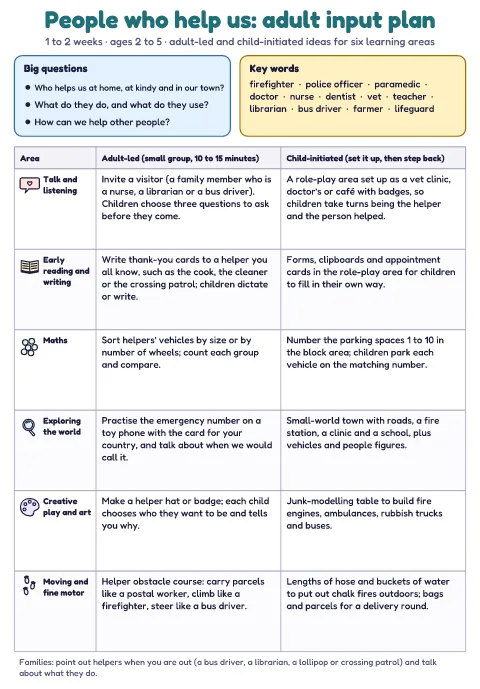
One page for the team: big questions, key words and paired adult-led and child-initiated ideas, with a line for families.
People who help us adult input plan PDF (A4)People who help us adult input plan PDF (US Letter)
2. People who help us vocabulary cards
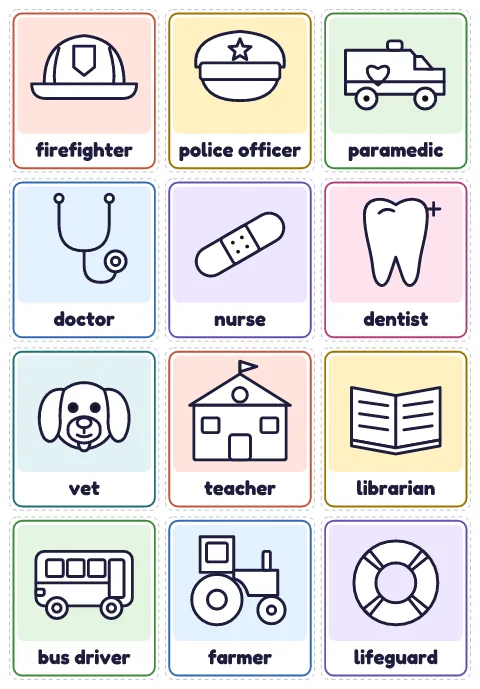
Twelve helper cards. Each shows what the helper uses rather than a person, so every child can imagine being in the role.
People who help us vocabulary cards PDF (A4)People who help us vocabulary cards PDF (US Letter)
3. Who uses this? Matching at two levels, with answers
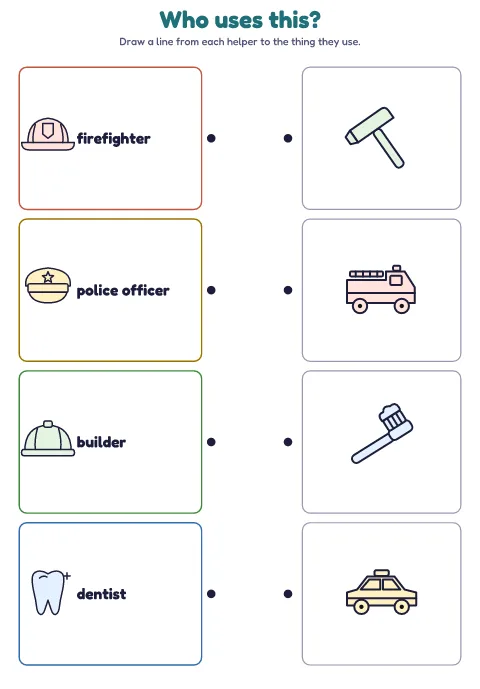
Level 1: four helpers with pictures to join to what they use. Level 2: six helpers as words for a grown-up to read. Answer pages included.
Who uses this? Matching at two levels, with answers PDF (A4)Who uses this? Matching at two levels, with answers PDF (US Letter)
Advertisement
4. Emergency number poster and cards
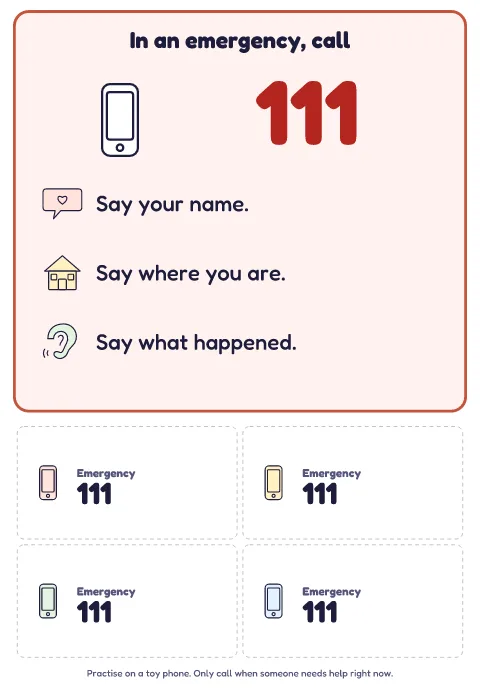
A poster with the number to call and three things to say, plus four small cards to cut out. Choose New Zealand (111), Australia (000), the UK (999) or the US (911).
Emergency number poster and cards PDF, New Zealand 111 (A4)Emergency number poster and cards PDF, New Zealand 111 (US Letter)
Ink saver (A4)Ink saver (US Letter)
Australia 000 (A4)Australia 000 (US Letter)
Australia 000 ink saver (A4)Australia 000 ink saver (US Letter)
United Kingdom 999 (A4)United Kingdom 999 (US Letter)
United Kingdom 999 ink saver (A4)United Kingdom 999 ink saver (US Letter)
United States 911 (A4)United States 911 (US Letter)
United States 911 ink saver (A4)United States 911 ink saver (US Letter)
5. I can help too
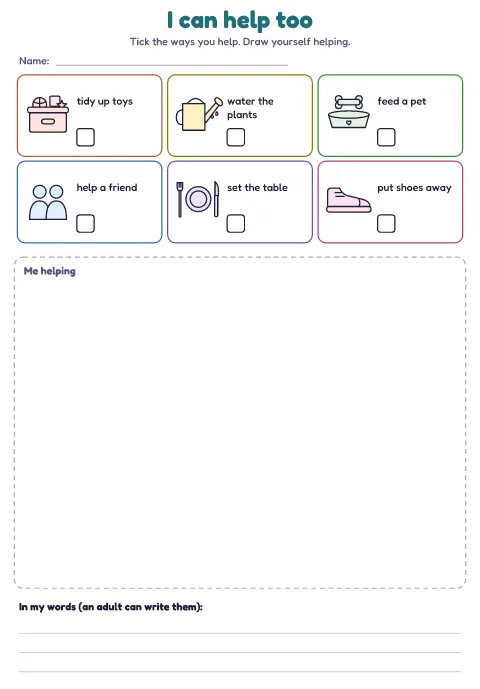
Six ways to help to tick, a box to draw yourself helping and lines for an adult to write the child’s words.
6. People who help us observation prompts
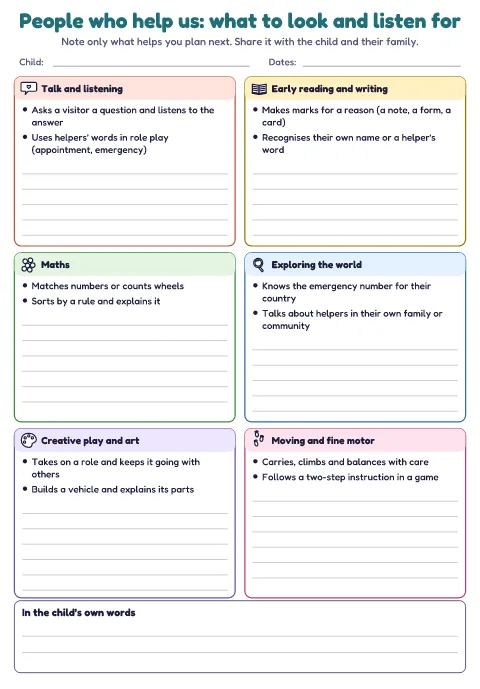
Look-and-listen prompts for each learning area during the topic, with space for notes and the child’s voice.
People who help us observation prompts PDF (A4)People who help us observation prompts PDF (US Letter)
The plan at a glance
- Talk and listening. Adult-led: Invite a visitor (a family member who is a nurse, a librarian or a bus driver). Children choose three questions to ask before they come. Child-initiated: A role-play area set up as a vet clinic, doctor’s or café with badges, so children take turns being the helper and the person helped.
- Early reading and writing. Adult-led: Write thank-you cards to a helper you all know, such as the cook, the cleaner or the crossing patrol; children dictate or write. Child-initiated: Forms, clipboards and appointment cards in the role-play area for children to fill in their own way.
- Maths. Adult-led: Sort helpers’ vehicles by size or by number of wheels; count each group and compare. Child-initiated: Number the parking spaces 1 to 10 in the block area; children park each vehicle on the matching number.
- Exploring the world. Adult-led: Practise the emergency number on a toy phone with the card for your country, and talk about when we would call it. Child-initiated: Small-world town with roads, a fire station, a clinic and a school, plus vehicles and people figures.
- Creative play and art. Adult-led: Make a helper hat or badge; each child chooses who they want to be and tells you why. Child-initiated: Junk-modelling table to build fire engines, ambulances, rubbish trucks and buses.
- Moving and fine motor. Adult-led: Helper obstacle course: carry parcels like a postal worker, climb like a firefighter, steer like a bus driver. Child-initiated: Lengths of hose and buckets of water to put out chalk fires outdoors; bags and parcels for a delivery round.
Tips
- Real visitors beat pictures. One family member talking about their job for ten minutes is the highlight of the topic.
- Pictures show the job, not a person. Our cards show what each helper uses (a helmet, a stethoscope, a tractor), so every child can picture themselves in the role.
- Link it to role play. The vet and doctor’s role-play packs fit straight into this topic.
- End with helping. The “I can help too” sheet turns the topic back to what children can do for each other.
More topic packs: minibeasts and weather and seasons. For the room, see continuous provision challenge cards, the circle-time calendar and weather board, sequencing cards and early learning by country.
Related sets
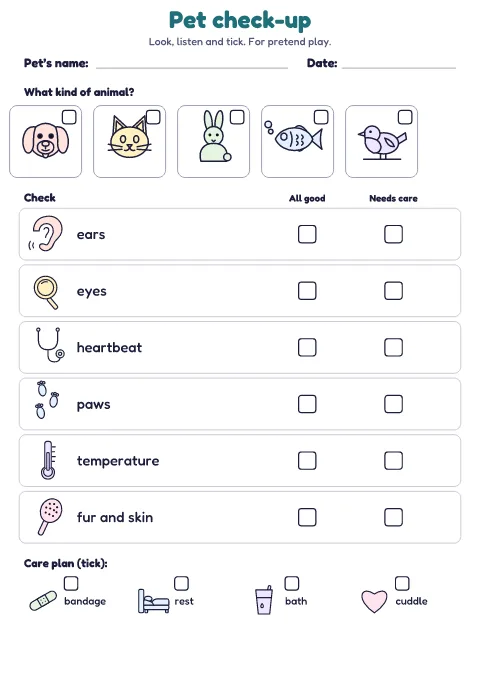 Vet role play: check-up form, appointment cards, signsDisplays and charts · ages 2–6
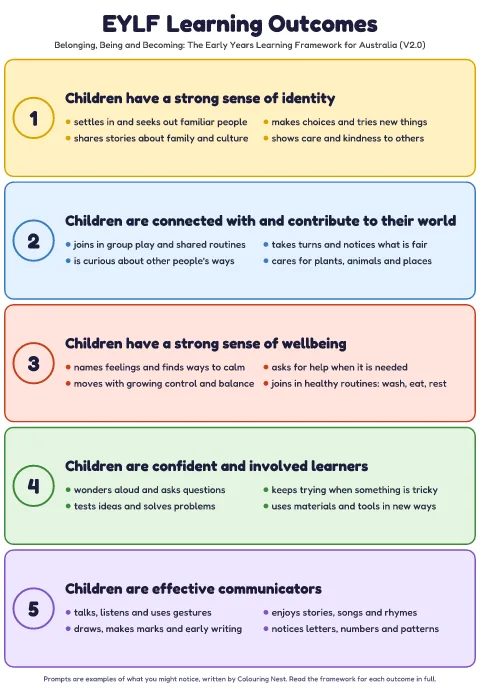 EYLF outcomes poster, cards and templatesTemplates · ages 1–5
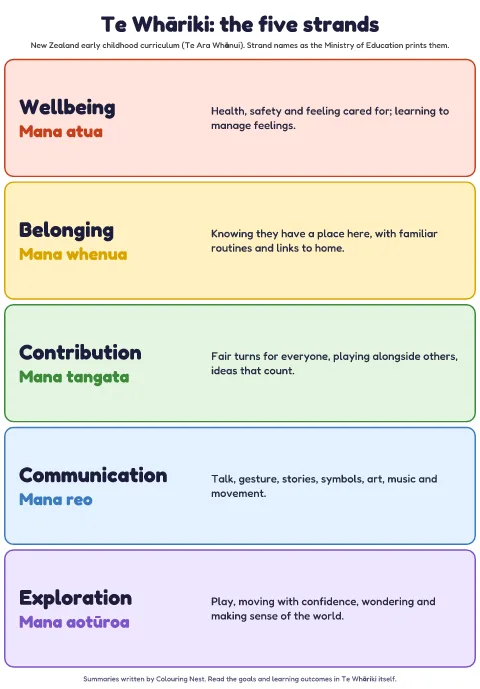 Te Whāriki learning story templatesTemplates · ages 1–5
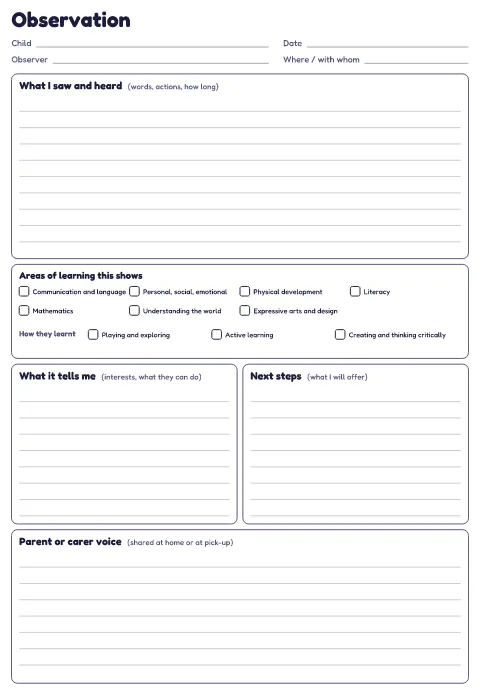 EYFS observation templates and ELG posterTemplates · ages 1–5
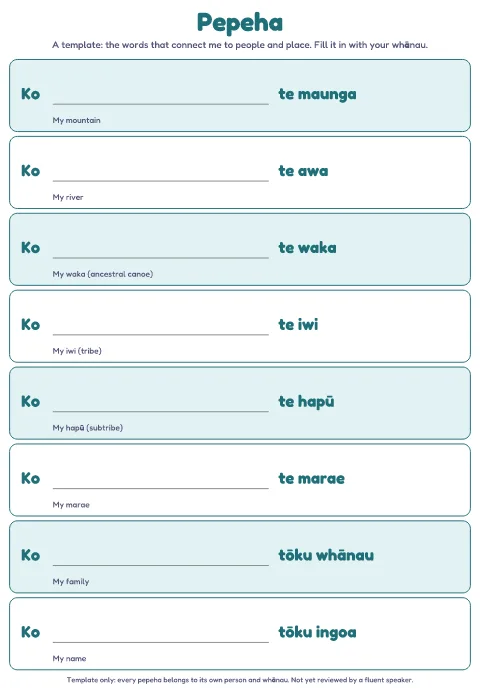 Pepeha template and mihi promptsTemplates · ages 3–6
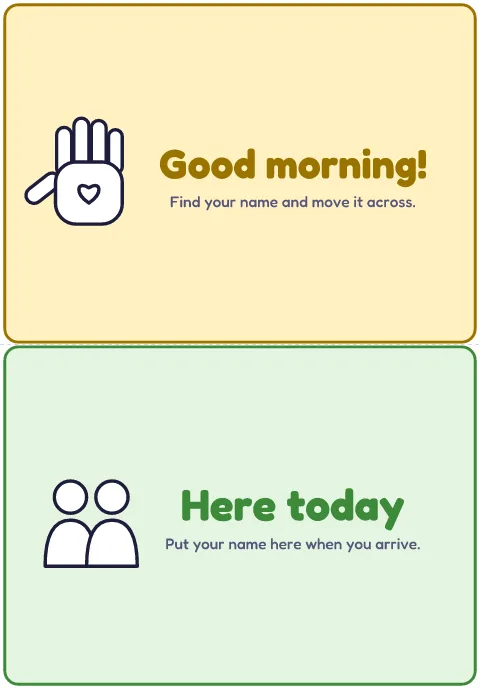 Self-registration, welcome banner and birthday chartDisplays and charts · ages 2–6
Questions
Who are the people who help us?
The adults who keep a community safe, healthy and running: firefighters, police officers, paramedics, doctors, nurses, dentists, vets, teachers, librarians, bus drivers, farmers, lifeguards, and the cooks, cleaners and teachers in your own setting.
What is the emergency number for my country?
111 in New Zealand, 000 in Australia, 999 in the United Kingdom and 911 in the United States. Our poster and cards come in all four versions.
Is “people who help us” the same as “community helpers”?
Yes. People who help us is the usual name in the UK, New Zealand and Australia; community helpers is the usual name in the US. The pack works for both.
Are these free?
Yes. Free for your own centre, kindergarten, school, class and family, with no sign-up. Please don’t resell them or upload them to another site.