 Colouring Nest
Growing topic pack: plants and life cycles
A free growing topic pack for preschool, kindy, nursery and Reception: a one-page adult input plan with an adult-led and a child-initiated idea for six learning areas, twelve vocabulary cards and a twenty-word mat, a count-and-graph sheet at two levels, a living or not living sort, life cycles of a plant, a butterfly and a frog (each a poster and a cut-and-stick mat), a “what does a plant need?” poster with a cress test, a plant diary by day, a sunflower story strip, tracing paths, a garden centre role-play set-up with signs, and an observation prompt sheet. Answer pages are included. Written for both hemispheres. A4 and US Letter PDFs, colour and ink saver; the cards, mat and frog cycle also come with US words (frog eggs).
Inside this set
- 14 printables
- A4 and US Letter PDFs
- Colour and ink-saver versions
- Free, no sign-up
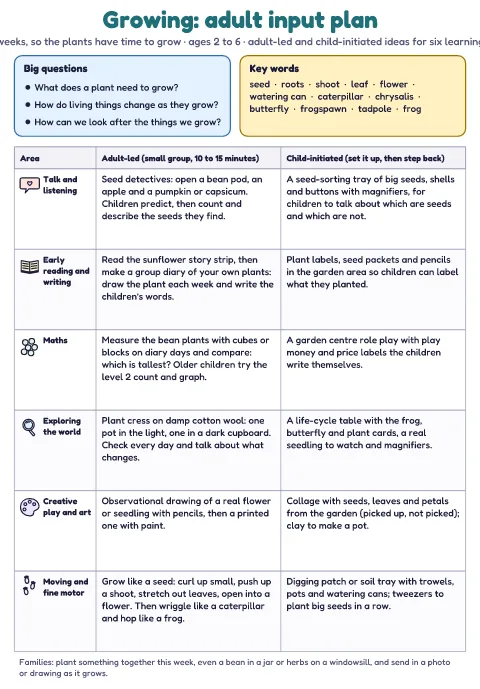 Growing adult input plan
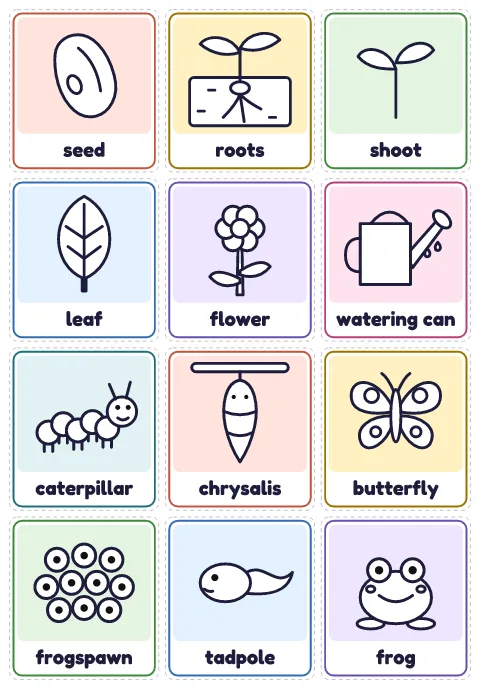 Growing vocabulary cards
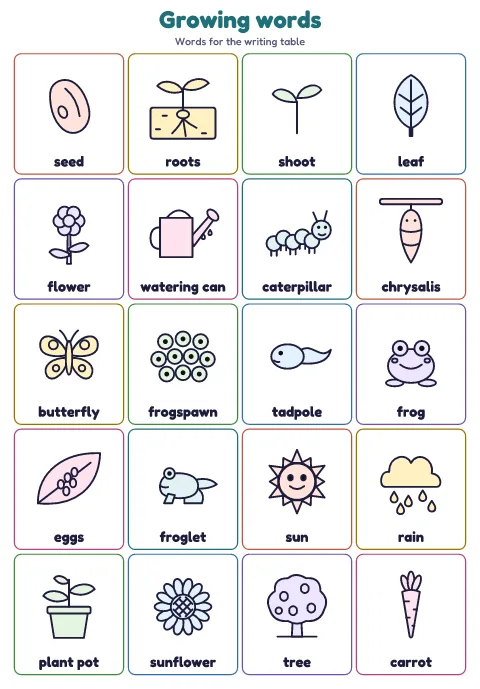 Growing word mat
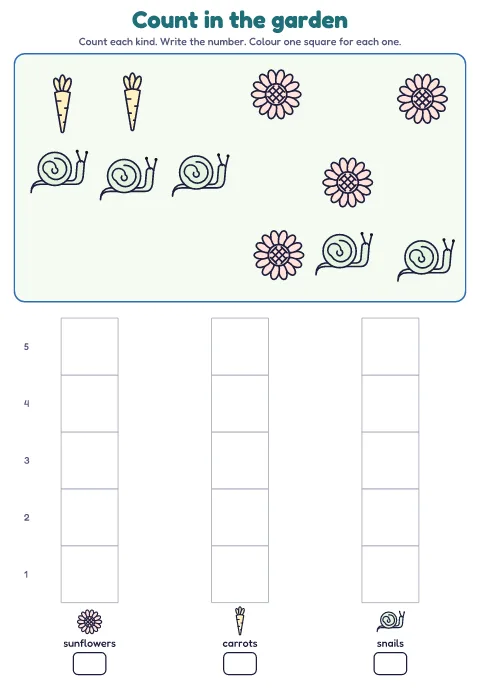 Count in the garden and graph it
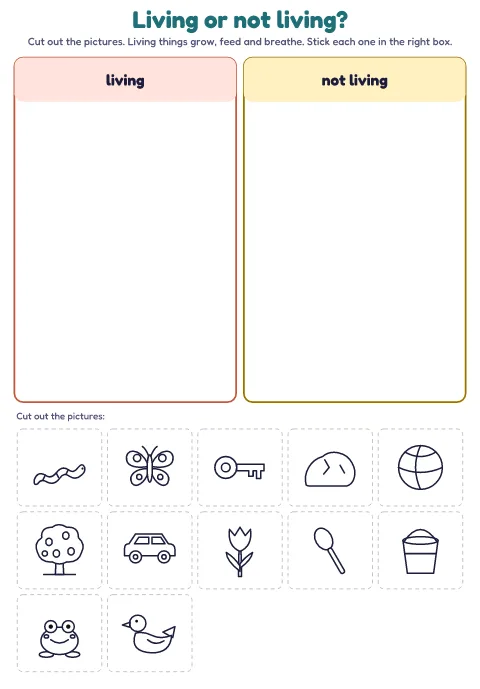 Living or not living? Cut-and-stick sort with answers
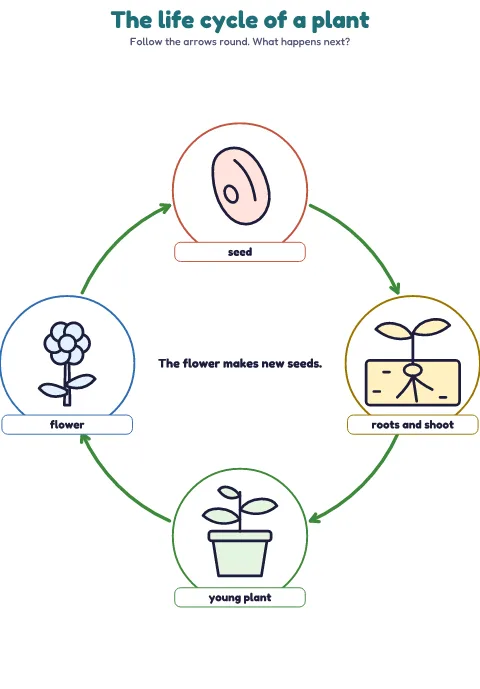 Plant life cycle
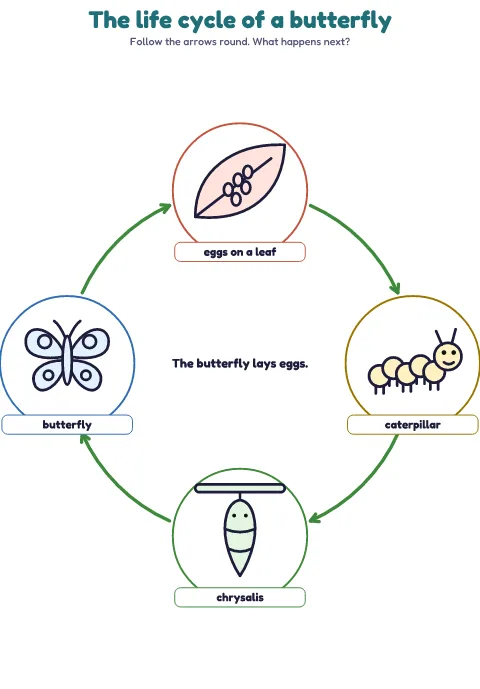 Butterfly life cycle
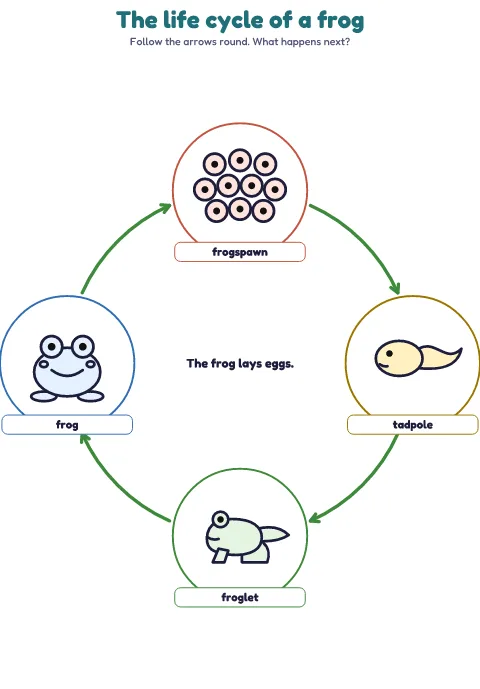 Frog life cycle
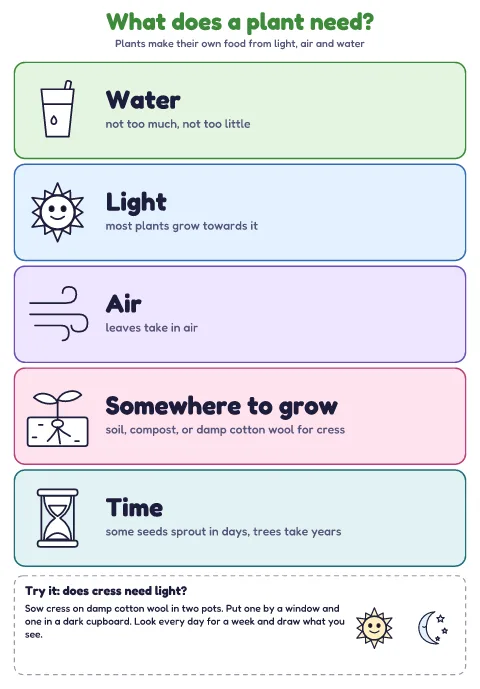 What does a plant need? Poster with a cress test
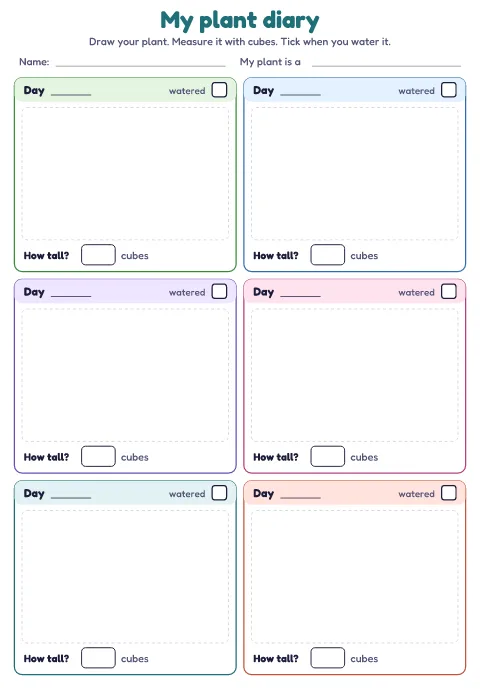 My plant diary
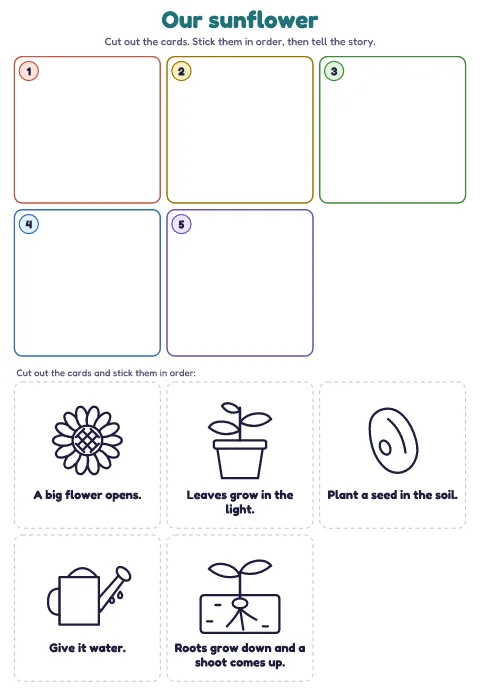 Our sunflower
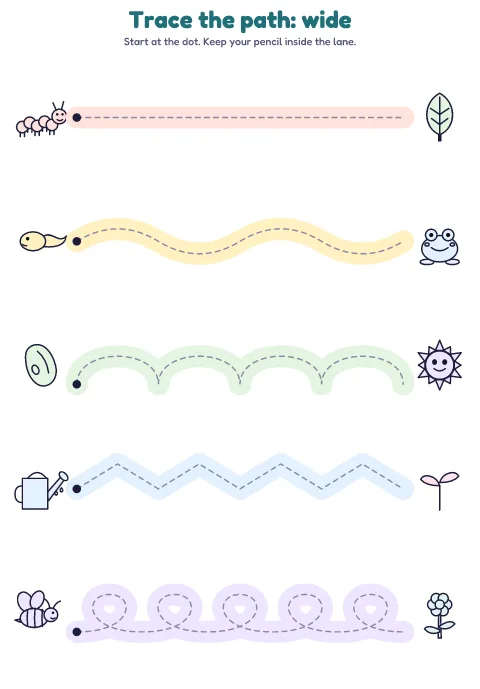 Growing tracing paths
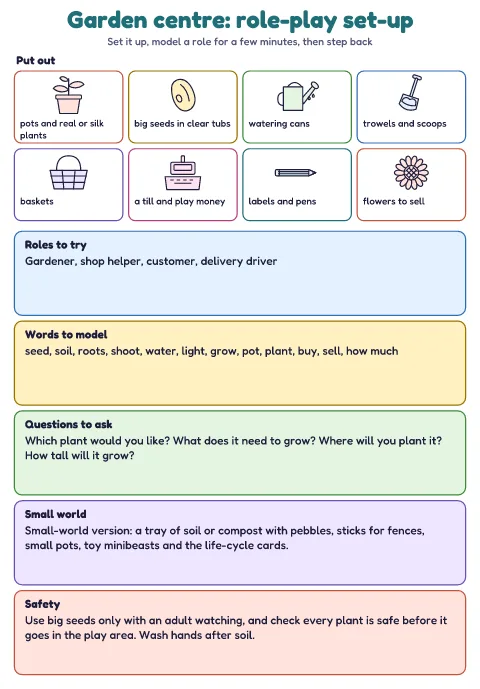 Garden centre role play
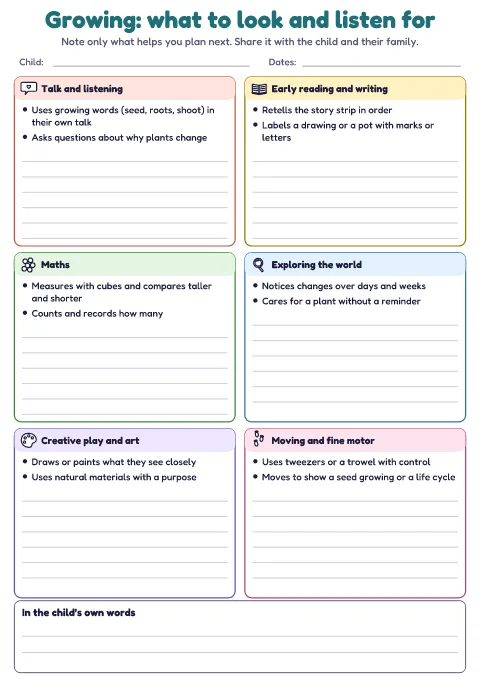 Growing observation prompts
About this resource
Ages 2–6, prep, what you need and how to use it
- Ages
- 2 to 6 years (toddlers, preschool, school start)
- Prep
- Plant beans or cress on the first day; five minutes to print the plan, posters and diary, fifteen to cut the life-cycle and story cards.
- You’ll need
- Printer, paper and thin card
- Scissors, glue and crayons
- Big seeds (beans, peas or sunflowers), cress, cups and compost or cotton wool
- Cubes or blocks for measuring
- Supports
- Te Whāriki (NZ), EYLF (Australia), EYFS (England), ELOF (US)
How to use it in the room
- Grow something real and fill in the plant diary on the days you check it.
- Put the life-cycle posters on the science table and use the mats as a cut-and-stick task.
- Watch caterpillars and tadpoles where they live, and check local rules before collecting any.
Show resources for
Remembered on this device only. It sets A4 or US Letter as the first download.
How to use this growing plan
Growing works best when something real is growing in the room from the first day. Plant big seeds such as beans, peas, sunflowers or nasturtiums in clear cups so the roots show, put cress on damp cotton wool for quick results, and then use the sheets alongside the plants rather than instead of them. Give the topic two to four weeks: a bean usually shows a shoot within a week or two in a warm room, and the plant diary needs several entries to show change.
The plan pairs a short adult-led activity with a child-initiated set-up in each of six learning areas. The adult-led ideas (seed detectives, measuring with cubes, the cress test in the light and the dark) are where you model words like roots, shoot and predict. The set-ups (a life-cycle table, a digging patch, a garden centre) stay out for the whole topic so children can check on what they planted and play out what they have seen.
Both hemispheres
Spring is the easiest time to plant outdoors: September to November in New Zealand and Australia, March to May in the UK and US. Nothing in this pack names a month or a season, so it works whenever you run it. The plant diary counts days, not dates, and cress or beans on a sunny windowsill grow indoors at any time of year. Caterpillars and tadpoles follow your local spring and summer, so plan the butterfly and frog parts for when you can see them outside.
Life cycles, honestly
The three life cycles keep to four stages a four-year-old can see: seed, roots and shoot, young plant, flower; eggs, caterpillar, chrysalis, butterfly; frogspawn, tadpole, froglet, frog. The posters double as answer pages for the cut-and-stick mats. Not every animal follows the textbook: New Zealand’s native frogs skip the swimming tadpole stage, and the tiny froglets hatch straight from the egg, so a New Zealand group can compare them with the introduced frogs found in garden ponds. Many settings raise monarch caterpillars on swan plants in New Zealand and Australia, on milkweed in the US, or painted ladies from a kit in the UK. In many places native frogs and their tadpoles are protected, so check your local rules, watch them in a pond rather than bringing them inside, and never move frogspawn or tadpoles between ponds, because it can spread disease.
Supports:
- Te Whāriki NZ
- Exploration | Mana aotūroa
- Communication | Mana reo
- Wellbeing | Mana atua
- EYLF Australia
- Outcome 2: Children are connected with and contribute to their world
- Outcome 4: Children are confident and involved learners
- Outcome 5: Children are effective communicators
- Outcome 3: Children have a strong sense of wellbeing
- EYFS England
- Understanding the world
- Communication and language
- Literacy
- Mathematics
- Expressive arts and design
- Physical development
- ELOF US
- Cognition
- Language and Literacy
- Approaches to Learning
- Perceptual, Motor, and Physical Development
1. Growing adult input plan
One page for the team: big questions, key words and paired adult-led and child-initiated ideas for six learning areas, with a line for families.
Growing adult input plan PDF (A4)Growing adult input plan PDF (US Letter)
2. Growing vocabulary cards
Twelve cards that cover all three life cycles: seed, roots, shoot, leaf and flower; caterpillar, chrysalis and butterfly; frogspawn, tadpole and frog. The US version says frog eggs.
Growing vocabulary cards PDF, UK, NZ and AU words (A4)Growing vocabulary cards PDF, UK, NZ and AU words (US Letter)
Ink saver (A4)Ink saver (US Letter)
US words (frog eggs) (A4)US words (frog eggs) (US Letter)
US words (frog eggs) ink saver (A4)US words (frog eggs) ink saver (US Letter)
3. Growing word mat
Twenty growing words with pictures, adding eggs on a leaf, a froglet, sun, rain, a plant pot, a sunflower, a tree and a carrot to the twelve on the cards.
Growing word mat PDF, UK, NZ and AU words (A4)Growing word mat PDF, UK, NZ and AU words (US Letter)
Ink saver (A4)Ink saver (US Letter)
4. Count in the garden and graph it
Level 1: count sunflowers, carrots and snails up to 5 and colour the graph. Level 2: four kinds up to 10 and say which has most. Each level has an answer page.
Count in the garden and graph it PDF (A4)Count in the garden and graph it PDF (US Letter)
Advertisement
5. Living or not living? Cut-and-stick sort with answers
Twelve pictures to cut out and sort into living and not living, with clear examples on both sides (a tree and a frog; a rock and a spoon). The answer page shows each group.
Living or not living? Cut-and-stick sort with answers PDF (A4)Living or not living? Cut-and-stick sort with answers PDF (US Letter)
6. Plant life cycle
A poster with four stages round a circle of arrows (seed, roots and shoot, young plant, flower) and a mat with numbered spaces and pictures to cut out and stick in order.
7. Butterfly life cycle
Eggs on a leaf, caterpillar, chrysalis and butterfly as a poster and a cut-and-stick mat. Use it alongside a caterpillar kit or a swan plant or milkweed in the garden.
Butterfly life cycle PDF (A4)Butterfly life cycle PDF (US Letter)
8. Frog life cycle
Frogspawn, tadpole, froglet and frog as a poster and a cut-and-stick mat. The US version says frog eggs.
Frog life cycle PDF, UK, NZ and AU words (frogspawn) (A4)Frog life cycle PDF, UK, NZ and AU words (frogspawn) (US Letter)
Ink saver (A4)Ink saver (US Letter)
US words (frog eggs) (A4)US words (frog eggs) (US Letter)
US words (frog eggs) ink saver (A4)US words (frog eggs) ink saver (US Letter)
9. What does a plant need? Poster with a cress test
Five things a plant needs in big pictures (water, light, air, somewhere to grow and time), with a cress test to try: one pot in the light, one in the dark.
What does a plant need? Poster with a cress test PDF (A4)What does a plant need? Poster with a cress test PDF (US Letter)
10. My plant diary
Six boxes to fill in on the days you check your plant: draw it, measure it in cubes and tick when it was watered. Days, not dates, so it works in any season.
Advertisement
11. Our sunflower
Five story cards to cut out and put in order (plant a seed, water it, roots and a shoot, leaves, a big flower), then retell. The answer page shows the order.
12. Growing tracing paths
Five lanes from one growing picture to another, from a caterpillar to a leaf and a tadpole to a frog, in wide and narrow versions.
Growing tracing paths PDF (A4)Growing tracing paths PDF (US Letter)
13. Garden centre role play
A one-page set-up for a garden centre with what to put out, roles, words, questions, a small-world tray version and safety notes, followed by six signs to cut out.
Garden centre role play PDF (A4)Garden centre role play PDF (US Letter)
14. Growing observation prompts
Look-and-listen prompts for each learning area during the topic, with space for notes and the child’s voice.
Growing observation prompts PDF (A4)Growing observation prompts PDF (US Letter)
The plan at a glance
- Talk and listening. Adult-led: Seed detectives: open a bean pod, an apple and a pumpkin or capsicum. Children predict, then count and describe the seeds they find. Child-initiated: A seed-sorting tray of big seeds, shells and buttons with magnifiers, for children to talk about which are seeds and which are not.
- Early reading and writing. Adult-led: Read the sunflower story strip, then make a group diary of your own plants: draw the plant each week and write the children’s words. Child-initiated: Plant labels, seed packets and pencils in the garden area so children can label what they planted.
- Maths. Adult-led: Measure the bean plants with cubes or blocks on diary days and compare: which is tallest? Older children try the level 2 count and graph. Child-initiated: A garden centre role play with play money and price labels the children write themselves.
- Exploring the world. Adult-led: Plant cress on damp cotton wool: one pot in the light, one in a dark cupboard. Check every day and talk about what changes. Child-initiated: A life-cycle table with the frog, butterfly and plant cards, a real seedling to watch and magnifiers.
- Creative play and art. Adult-led: Observational drawing of a real flower or seedling with pencils, then a printed one with paint. Child-initiated: Collage with seeds, leaves and petals from the garden (picked up, not picked); clay to make a pot.
- Moving and fine motor. Adult-led: Grow like a seed: curl up small, push up a shoot, stretch out leaves, open into a flower. Then wriggle like a caterpillar and hop like a frog. Child-initiated: Digging patch or soil tray with trowels, pots and watering cans; tweezers to plant big seeds in a row.
Tips
- Grow something on day one. Beans in clear cups show roots and shoots within days, and give every sheet in the pack something real to point at.
- Measure with cubes. Children understand “six cubes tall” long before centimetres; the plant diary asks for cubes for that reason.
- Talk about the tricky ones. Is a seed living? Is a leaf on the ground? The living or not living sort keeps to clear examples, and the questions at the edges are where the best talk happens.
- Watch, don’t collect. Visit a pond for tadpoles and a garden for caterpillars, and bring the life-cycle cards with you.
- Send a seed home. A bean in a jar with damp paper towel is a family project that costs almost nothing.
More topic packs: transport, minibeasts, weather and seasons and people who help us. For the room, see sequencing cards, fine motor activities, continuous provision challenge cards and early learning by country.
Related sets
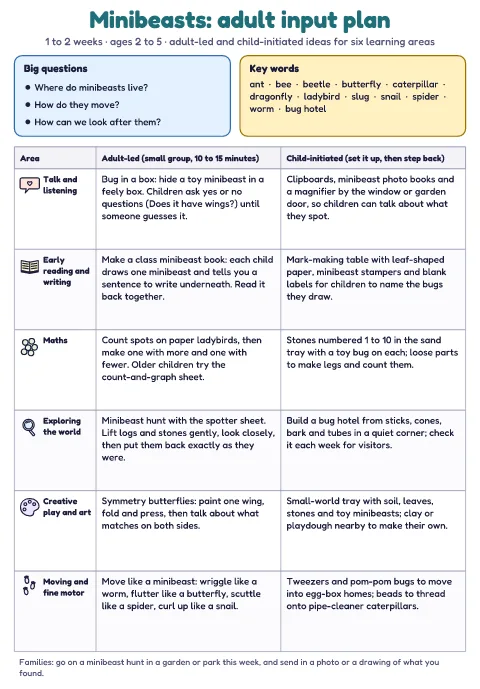 Minibeasts topic pack: adult input plan, word cards, sheetsTemplates · ages 2–5
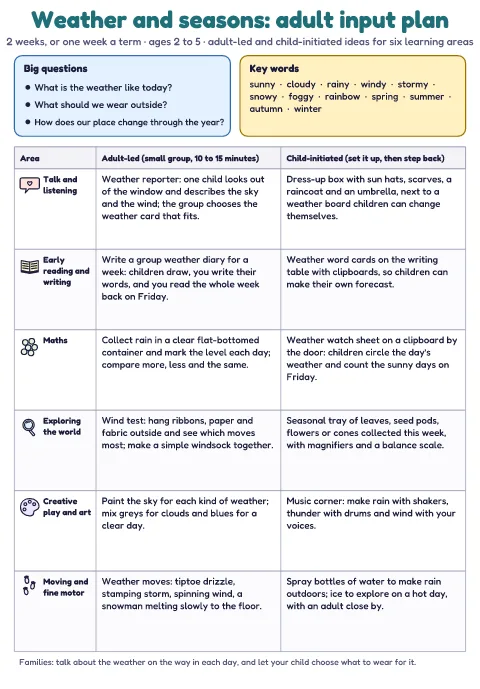 Weather and seasons topic pack (both hemispheres)Templates · ages 2–5
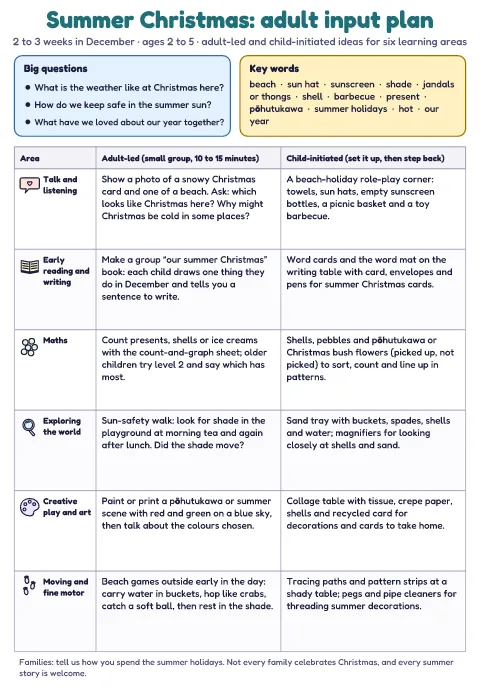 Summer Christmas pack: plan, sun safety, sheets and certificateTemplates · ages 2–6
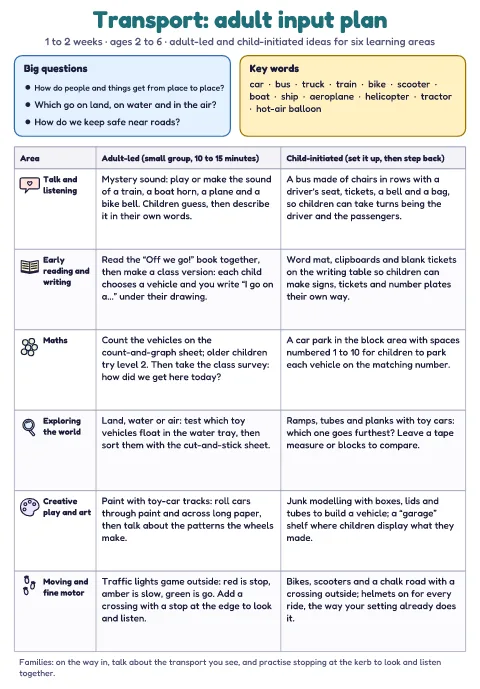 Transport topic pack: plan, word cards, road safety, sortsTemplates · ages 2–6
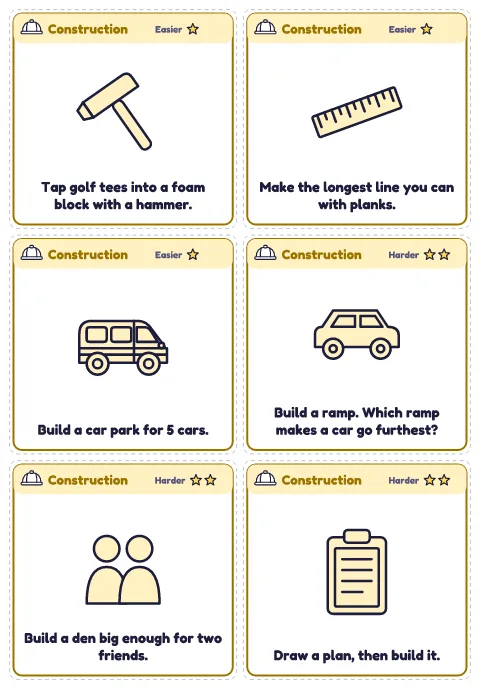 Continuous provision challenge cards for 10 play areasCards · ages 3–5
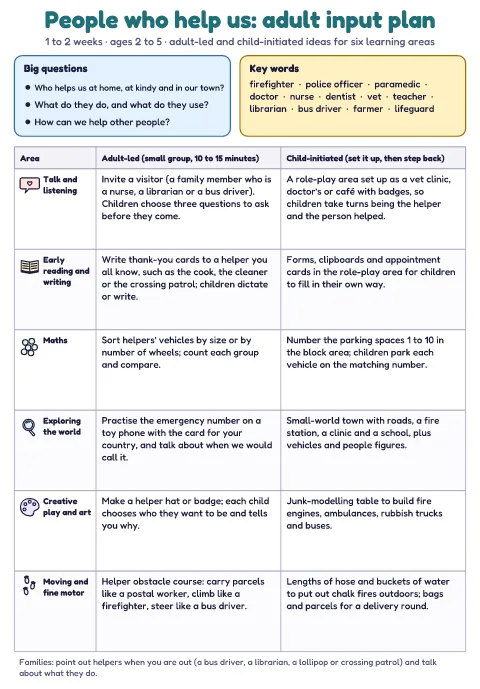 People who help us topic pack and emergency number cardsTemplates · ages 2–5
Questions
What are the stages of a plant life cycle for preschoolers?
Four stages are enough: a seed, then roots and a shoot, then a young plant with leaves, then a flower, which makes new seeds. Our poster shows them round a circle so children see that it starts again.
What are the stages of a frog’s life cycle?
Frogspawn (frog eggs), tadpole, froglet and frog. In New Zealand, the native frogs are different: the froglets hatch straight from the egg without a swimming tadpole stage.
When should we do a growing topic?
In spring, if you want to plant outside: September to November in New Zealand and Australia, March to May in the UK and US. Cress and beans grow indoors on a sunny windowsill at any time of year, and nothing in this pack names a month.
Is it frogspawn or frog eggs?
Both mean the same thing. Frogspawn is the usual word in the UK, New Zealand and Australia; frog eggs is more common in the US. The word cards, word mat and frog life cycle come in both versions.
Are these free?
Yes. Free for your own centre, kindergarten, school, class and family, with no sign-up. Please don’t resell them or upload them to another site.