 Colouring Nest
Sorting and matching cards for early years
Free sorting and matching printables for toddlers, preschool and Reception: colour sorting mats with picture cards, shape sorting mats with shape cards, size ordering cards in sets of three and five, matching pairs memory cards, shadow matching sheets and odd one out at three levels. A4 and US Letter PDFs, with answers, in colour and ink saver (except the colour sorting set, where colour is the point).
Inside this set
- 6 printables
- A4 and US Letter PDFs
- Colour and ink-saver versions
- Free, no sign-up
About this resource
Ages 2–5, what you need and how to use it
- Ages
- 2 to 5 years (toddlers, preschool, school start)
- You’ll need
- Printer and thin card
- Scissors or a guillotine
- Laminator (optional)
- Supports
- Te Whāriki (NZ), EYLF (Australia), EYFS (England), ELOF (US)
How to use it in the room
- Print at 100% on card.
- Cut the cards apart and laminate them if they will be used often.
- Start with a few cards and add more as children get to know them.
Show resources for
Remembered on this device only. It sets A4 or US Letter as the first download.
Why sorting and matching matter
Before children count, they compare: same or different, which goes with which, bigger or smaller. Sorting by colour, shape or size, matching a picture to its pair or its shadow, and spotting the odd one out all build the habits maths needs: looking closely, noticing a rule and explaining it. Ask “how did you sort them?” and “why does that one not belong?”, and accept any answer a child can explain.
Go from easy to hard: sort by one thing at a time (colour, then shape, then size), match identical pictures before shadows, and start odd one out with three of the same picture before moving to “which is not an animal?”.
Supports: Exploration | Mana aotūroa, Communication | Mana reo (Te Whāriki) · Outcome 4, Outcome 5 (EYLF) · Mathematics, Communication and language, Literacy (EYFS) · Cognition, Language and Literacy (ELOF).
1. Colour sorting mats
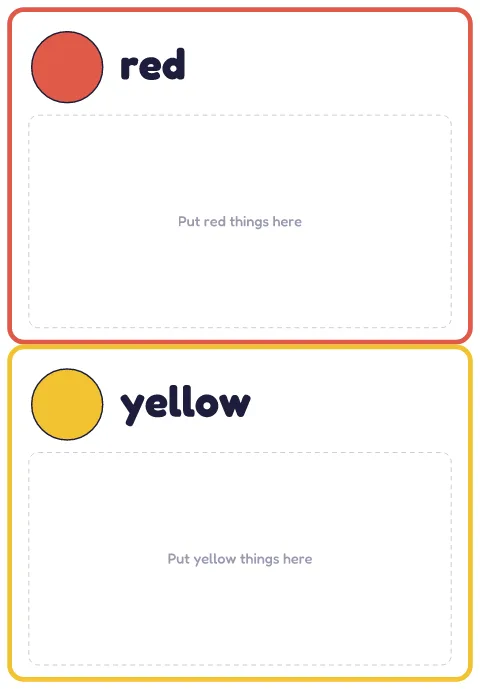
Six mats, two to a page (red, yellow, blue, green, orange and purple), each with a colour circle, the colour word and a space to sort into, plus 24 picture cards to sort. Real objects from the room work too.
2. Shape sorting mats
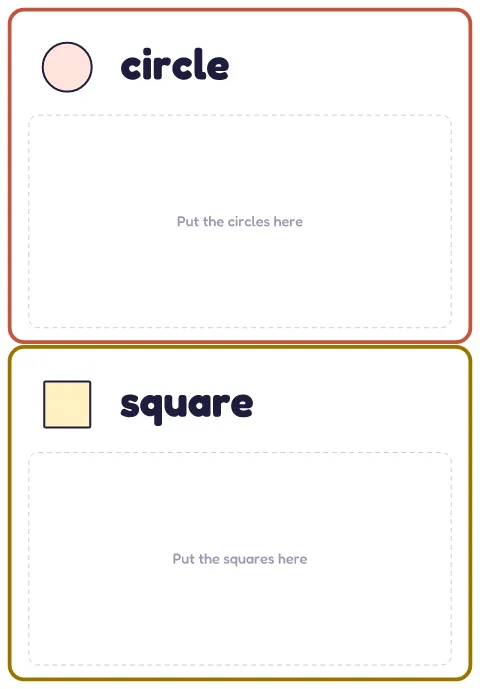
Four mats (circle, square, triangle, rectangle) and 24 shape cards in different sizes, some turned, so children learn that a turned square is still a square. For a cut-and-paste version that sorts by sides, see sorting shapes.
3. Size ordering cards
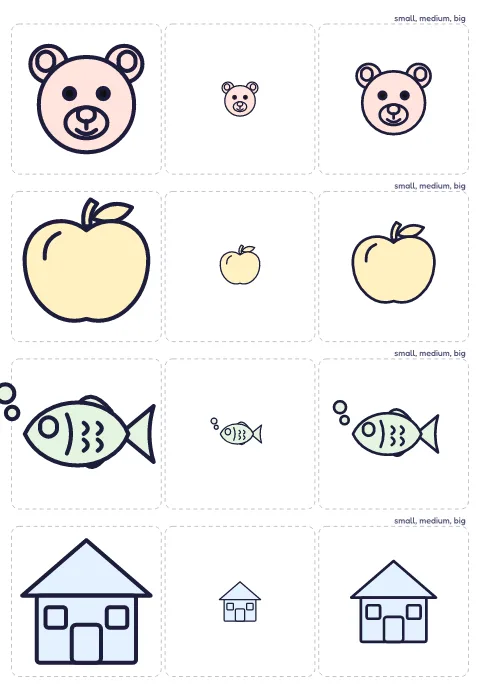
Four sets of three (small, medium, big) and three sets of five (smallest to biggest), mixed up on the page to cut out, plus a step mat to order them on.
Advertisement
4. Matching pairs memory cards
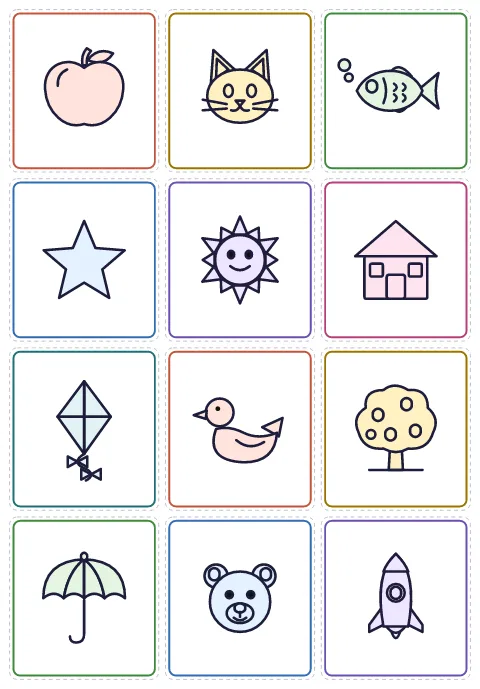
Twenty-four cards, twelve pairs. Start face up and match; then play memory face down with four or five pairs, adding more as children get better.
5. Shadow matching
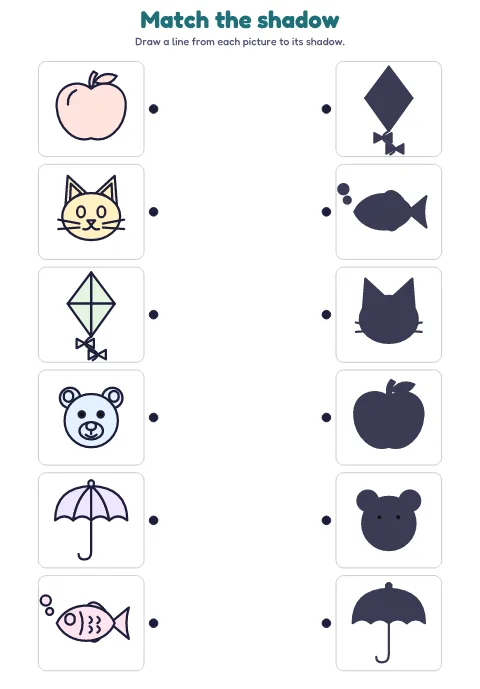
Two sheets: six pictures and their shadows in a different order. Children draw a line from each picture to its shadow. The second sheet has shapes that are harder to tell apart. Answers included.
6. Odd one out (three levels)
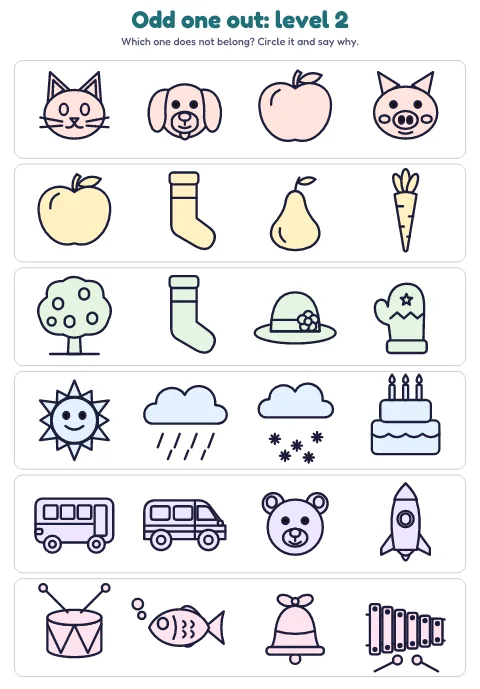
Eighteen rows of four pictures. Level 1: three the same and one different. Level 2: one is a different kind of thing (not an animal, not food, not clothes). Level 3: a subtler rule (can’t fly, doesn’t live in the sea, not red). The answer pages give the reason for each.
Make it hands-on
- Sort the toy box: cars here, animals there, then sort again a different way.
- Laundry pairs: match socks, then order them from smallest to biggest.
- Shadow hunt outside on a sunny day: whose shadow is longest?
More: colour flash cards, shape flash cards and memory and matching games to play on screen.
More early literacy and maths: letter of the week packs, phase 1 phonics and listening activities, counting mats and number formation rhymes, number tracks and subitising cards, pattern cards. Everything for ages 0 to 6 is on early learning by country.
Related sets
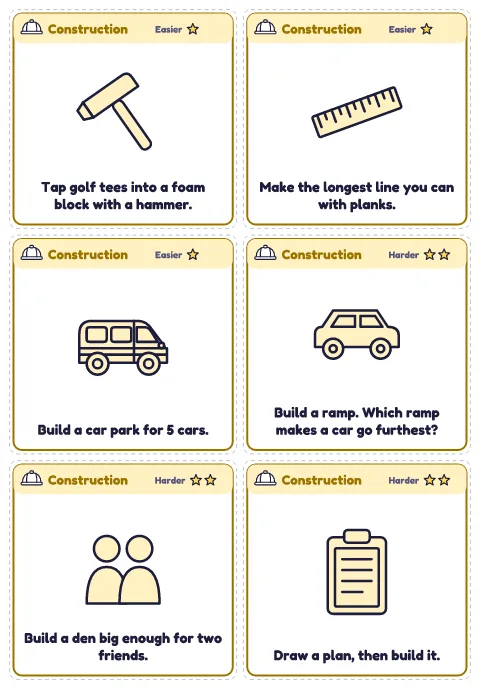 Continuous provision challenge cards for 10 play areasCards · ages 3–5
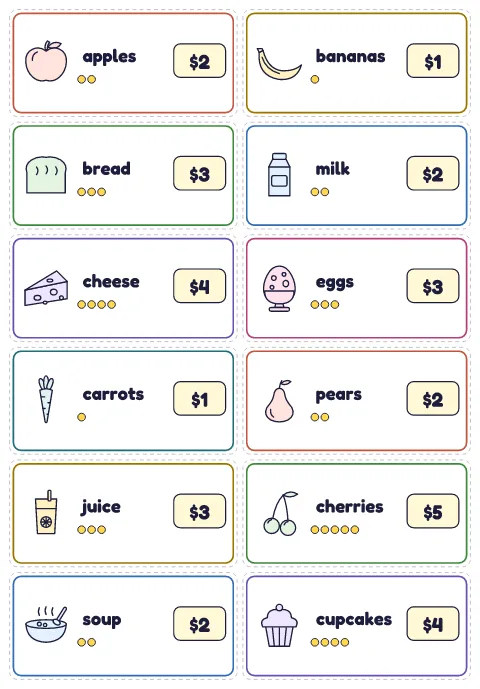 Shop role play: price labels, play money, shopping listsDisplays and charts · ages 2–6
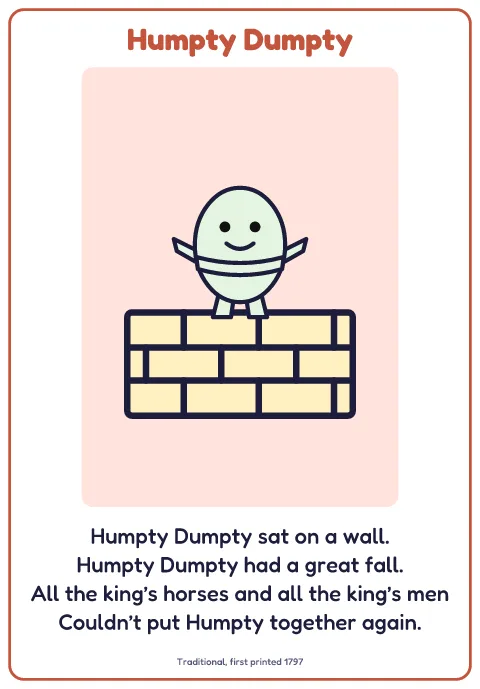 Nursery rhymes: posters, sequencing, actions, rhyming and countingCards · ages 1–6
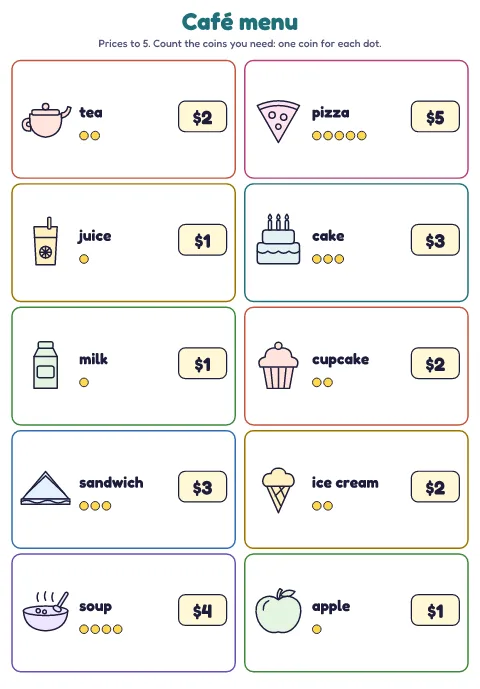 Café role play: menu, order pad, signs, badgesDisplays and charts · ages 2–6
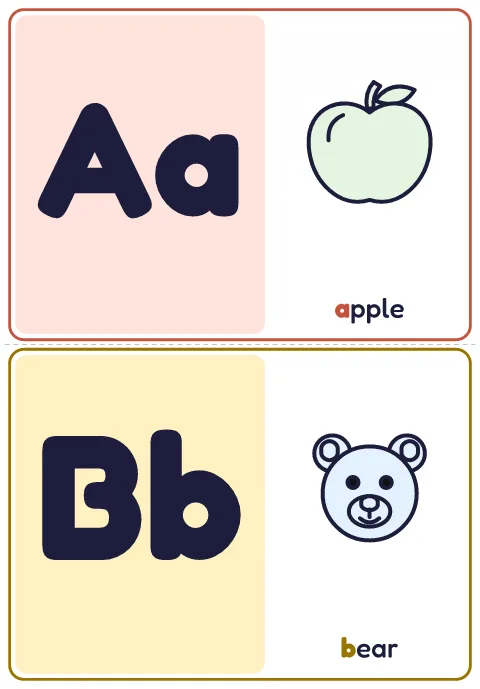 Alphabet frieze (8 handwriting styles) and number frieze 0–20Displays and charts · ages 3–6
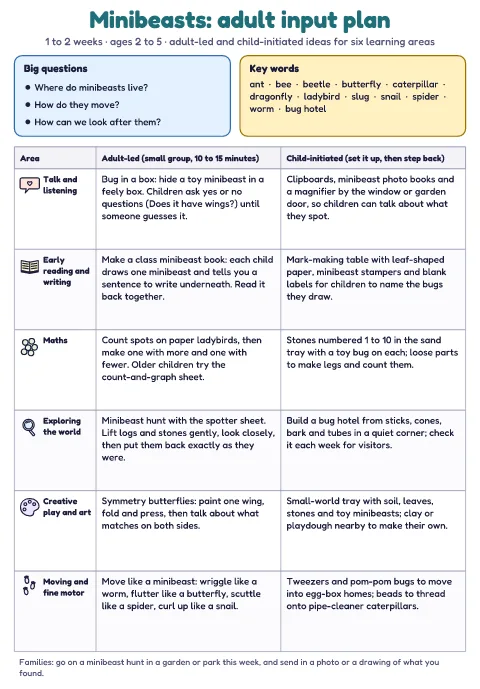 Minibeasts topic pack: adult input plan, word cards, sheetsTemplates · ages 2–5
Questions
What sorting activities suit preschoolers?
Sorting by one feature at a time: colour first, then shape, then size. Use mats like ours with real objects or picture cards, and ask children to explain their sort.
How do I make odd one out easier or harder?
Easier: three identical pictures and one different. Harder: a rule about what things are or do, such as things that fly. Our sheets go from one to the other in three levels.
What is shadow matching good for?
It trains children to look at outline and shape, not colour or detail, which helps with recognising letters and numbers later.
Are these free?
Yes. Free for your own centre, kindergarten, school, class and family, with no sign-up. Please don’t resell them or upload them to another site.