 Colouring Nest
Number tracks, subitising cards and one more one less
Free number tracks and early number sense cards for preschool, Reception and kindergarten: number tracks from 1 to 10, 0 to 10 and 1 to 20, a race-to-20 board game, subitising cards for 1 to 5 and for 6 to 10, one more and one less sheets, and “which has more?” sheets at two levels. A4 and US Letter PDFs with answers, in colour and ink saver.
Inside this set
- 7 printables
- A4 and US Letter PDFs
- Colour and ink-saver versions
- Free, no sign-up
About this resource
Ages 3–6, what you need and how to use it
- Ages
- 3 to 6 years (preschool, school start)
- You’ll need
- Printer and thin card
- Scissors or a guillotine
- Laminator (optional)
- Supports
- Te Whāriki (NZ), EYLF (Australia), EYFS (England), ELOF (US)
How to use it in the room
- Print at 100% on card.
- Cut the cards apart and laminate them if they will be used often.
- Start with a few cards and add more as children get to know them.
Show resources for
Remembered on this device only. It sets A4 or US Letter as the first download.
Number track or number line?
A number track is a row of boxes, one number in each, so children count the boxes the way they count objects: one box is one. A number line marks numbers as points on a line, so you count the jumps between them. Young children find tracks easier, which is why early years settings use tracks first and lines later. When you are ready for lines, use our number line 0 to 10 and number line 0 to 20.
Subitising
Subitising means seeing how many at a glance, without counting one by one. Most children can do this for up to 3 or 4; for bigger numbers they learn to see parts, such as “five and two”. That is why our 6 to 10 cards draw five dots in one colour and the rest in another (or, in the ink-saver version, filled and open dots), in a ten frame, as two dice and as two groups. Flash a card for two seconds, then ask “how many, and how did you see it?”.
Supports: Exploration | Mana aotūroa, Communication | Mana reo (Te Whāriki) · Outcome 4, Outcome 5 (EYLF) · Mathematics (EYFS) · Cognition (ELOF).
1. Number tracks to 10
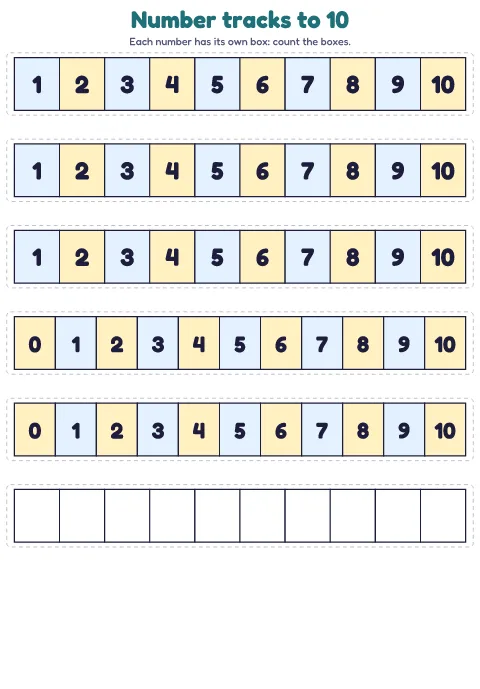
Strips to cut out: three tracks from 1 to 10, two from 0 to 10 for counting back to zero, and a blank one for children to fill in. Alternating colours help children keep their place.
2. Number track 1 to 20
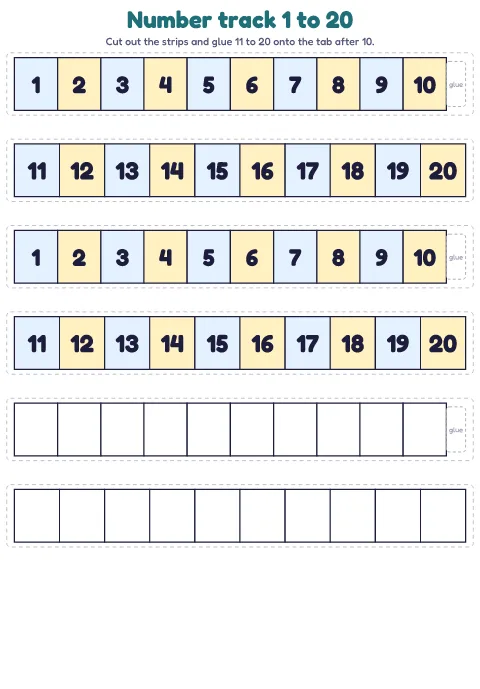
Two strips of ten that join with a glue tab, so 11 sits straight after 10 and children see the second ten start. A blank track to fill and a 0 to 20 version are included.
3. Race to 20 board game
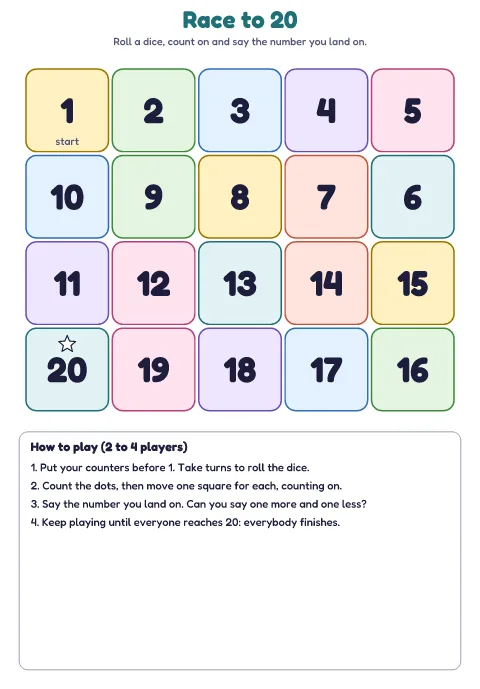
A winding track from 1 to 20 for two to four players with a dice: roll, count on, and say the number you land on. Everybody keeps playing until they reach 20, so no one is knocked out. Add a challenge for older children: say one more and one less than your number.
Advertisement
4. Subitising cards 1 to 5
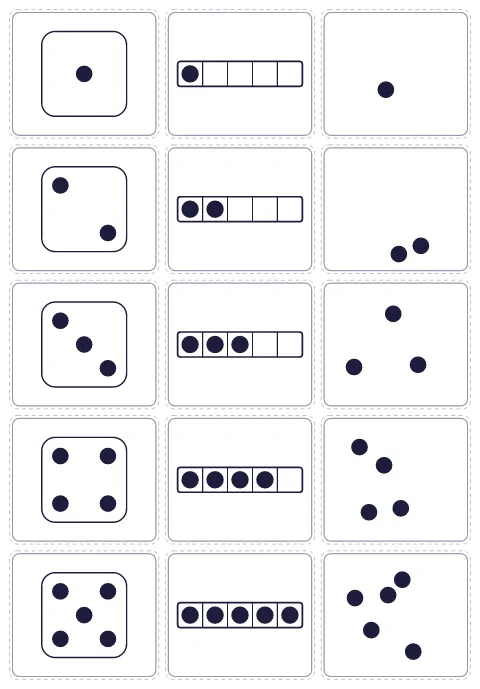
Thirty cards: each number from 1 to 5 as dice dots, in a five frame and scattered, plus numeral, word and dots-in-a-line cards to match. Play snap or pairs, or flash a dot card and find its numeral.
5. Subitising cards 6 to 10: five and some more
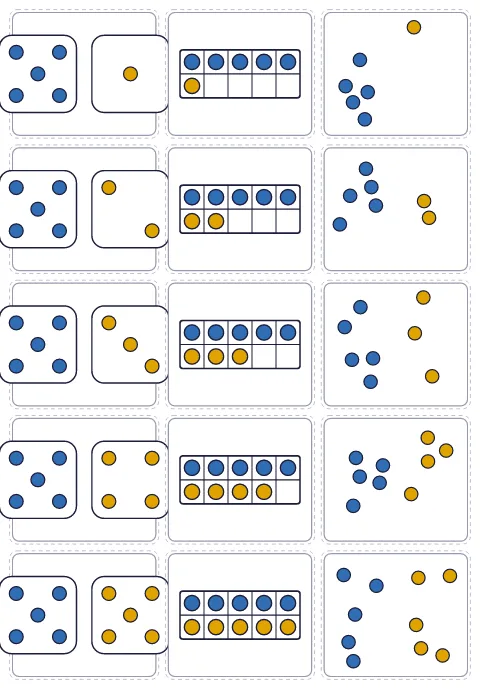
Thirty cards showing 6 to 10 as five and some more in two colours: two dice, a ten frame and two groups, plus numeral, word and “5 and 3” cards. We also have subitizing dot cards 1 to 10 in one colour with the numeral on the back.
6. One more, one less
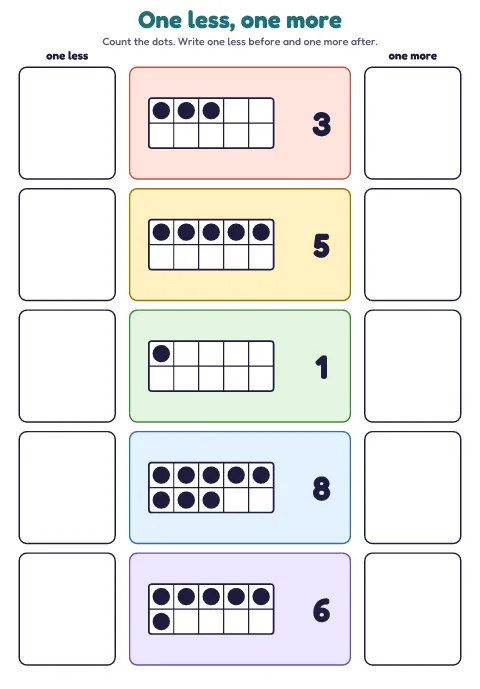
Three sheets: numbers 1 to 10 with a ten frame of dots to help, and 11 to 20 as numerals only. Children write one less in the left box and one more in the right. Answers are on the last pages. Use the number track alongside.
7. Which has more?
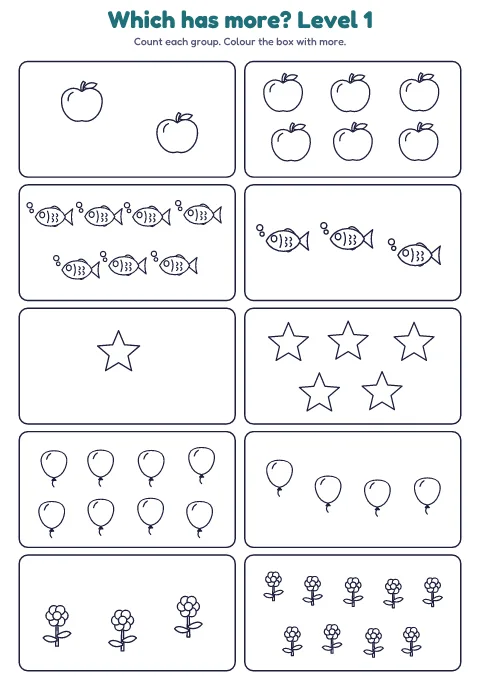
Two levels of comparing groups: level 1 groups differ by 3 or more, level 2 by just one, and sometimes the bigger group has smaller pictures, so children have to count rather than judge by size. Answers included.
Five-minute number games
- What’s missing? Cover a number on the track with a counter; children say which one is hidden.
- Jump along: a toy hops along the track; children say the number it lands on and one more.
- Quick look: flash a subitising card; whoever says the number first holds the next card.
- Make it match: put out counters to match a dot card, then check with the ten frame.
More: ten frame cards 0 to 10, counting worksheets, number bonds and number flash cards 0 to 20.
More early literacy and maths: letter of the week packs, phase 1 phonics and listening activities, counting mats and number formation rhymes, pattern cards, sorting and matching cards. Everything for ages 0 to 6 is on early learning by country.
Related sets
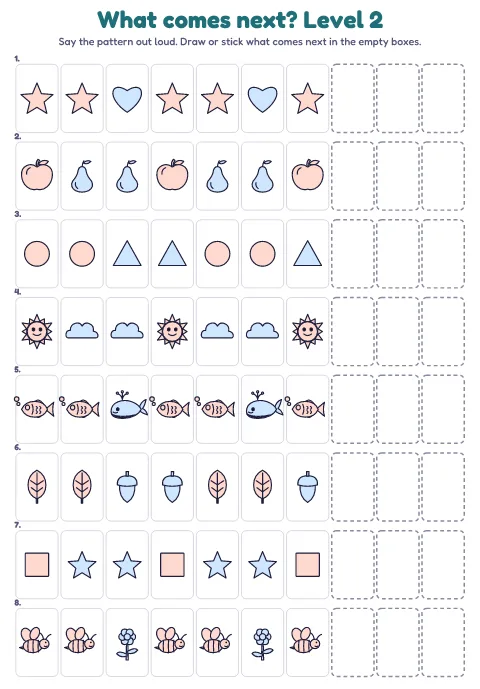 Pattern cards: AB, ABB and ABC strips, cube cardsCards · ages 3–6
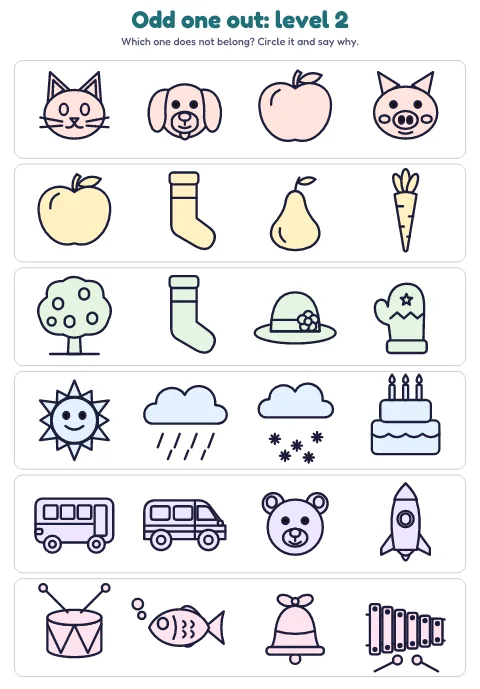 Sorting mats, matching pairs, shadow matching, odd one outCards · ages 2–5
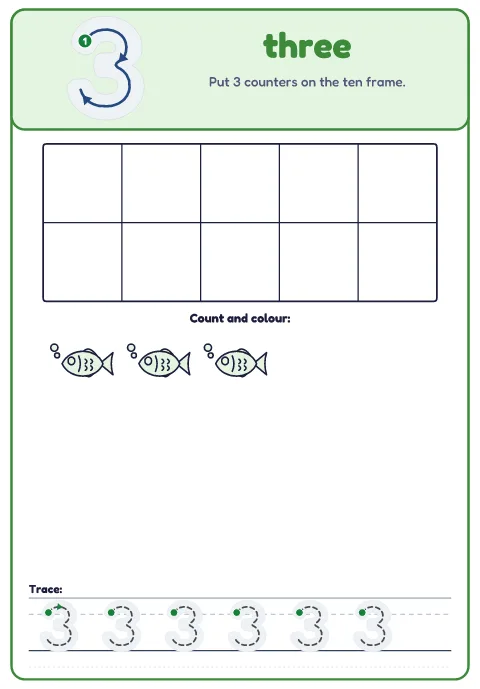 Counting mats 1 to 20 and number formation rhymesWorksheets · ages 3–6
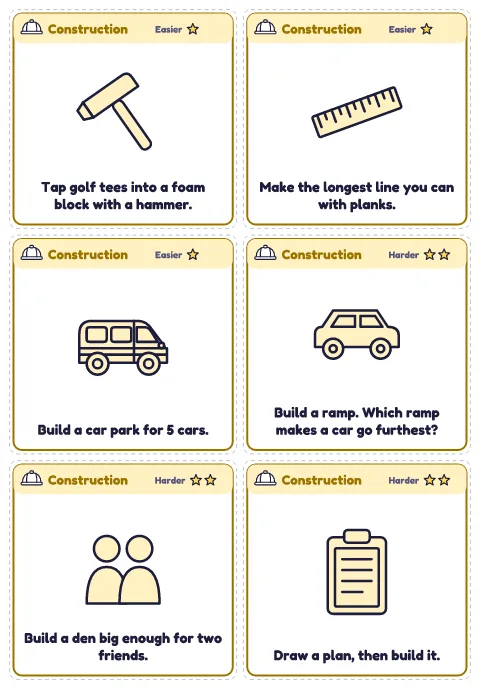 Continuous provision challenge cards for 10 play areasCards · ages 3–5
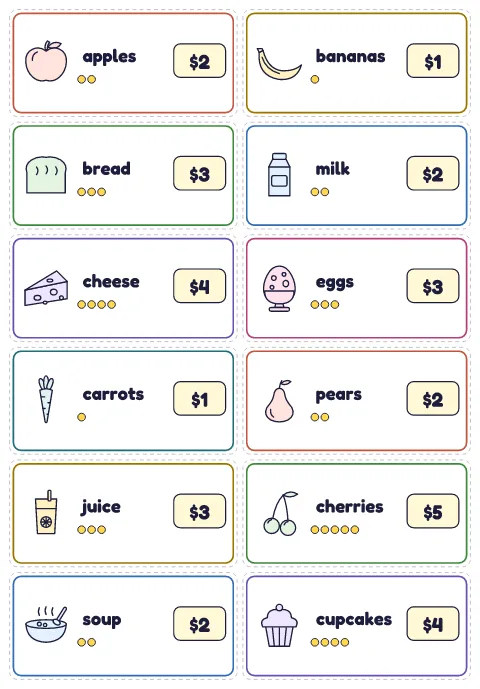 Shop role play: price labels, play money, shopping listsDisplays and charts · ages 2–6
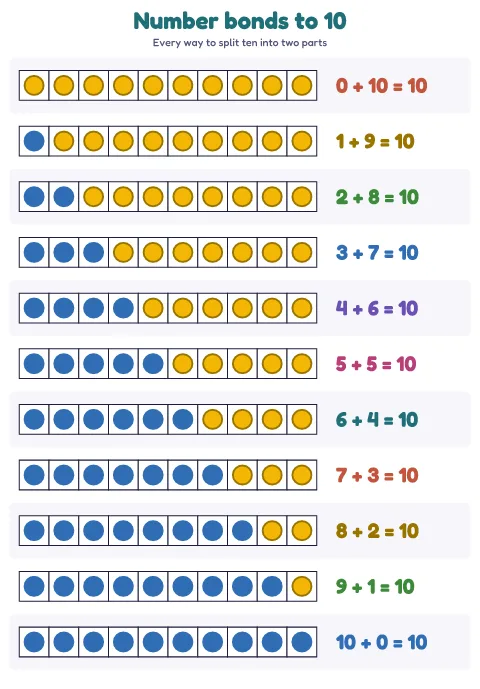 Number bond games, part-whole mats and postersGames · ages 4–6
Questions
What is a number track?
A row of numbered boxes, one number in each, used to count, order numbers and count on. Unlike a number line, each number fills a space, so children can count the boxes.
What is subitising?
Knowing how many there are at a glance without counting, as you do with dice dots. Children build it by seeing small groups and then larger numbers as parts, such as five and three.
How do I teach one more and one less?
Start with objects: make a group, add one, and count again. Then use a number track: one more is the next box, one less is the box before.
Are these free?
Yes. Free for your own centre, kindergarten, school, class and family, with no sign-up. Please don’t resell them or upload them to another site.