 Colouring Nest
Phase 1 phonics and listening activities
Free phase 1 phonics and listening activities for nursery, preschool and Reception: listening walk sheets for outside and inside, 12 pairs of rhyming picture cards, syllable clapping cards from one to four claps, initial sound sorting cards for every letter and sound talk cards for oral blending. A4 and US Letter PDFs, in colour and ink saver, with answer pages.
Inside this set
- 5 printables
- A4 and US Letter PDFs
- Colour and ink-saver versions
- Free, no sign-up
About this resource
Ages 2–5, what you need and how to use it
- Ages
- 2 to 5 years (toddlers, preschool, school start)
- You’ll need
- Printer and thin card
- Scissors or a guillotine
- Laminator (optional)
- Supports
- Te Whāriki (NZ), EYLF (Australia), EYFS (England), ELOF (US)
How to use it in the room
- Print at 100% on card.
- Cut the cards apart and laminate them if they will be used often.
- Start with a few cards and add more as children get to know them.
Show resources for
Remembered on this device only. It sets A4 or US Letter as the first download.
What phase 1 phonics is
Before children match letters to sounds, they need to hear sounds: to notice and tell apart the noises around them, to hear when words rhyme, to clap the beats in a word and to hear the first sound in it. In England this listening stage is called phase 1, from the Letters and Sounds programme (2007); in New Zealand, Australia and the US it is usually called phonological awareness. It is mostly talk and games, so these printables are props for games, not worksheets to finish.
A rough order: listening to everyday sounds, then rhythm and rhyme, then syllables, then the first sound in a word, and finally oral blending, hearing “c-a-t” and saying “cat”. Little and often works best: five minutes, several times a day, as part of play and stories.
Supports: Communication | Mana reo, Exploration | Mana aotūroa (Te Whāriki) · Outcome 5, Outcome 2, Outcome 4 (EYLF) · Communication and language, Literacy, Understanding the world (EYFS) · Language and Literacy, Cognition (ELOF).
1. Listening walk sheets
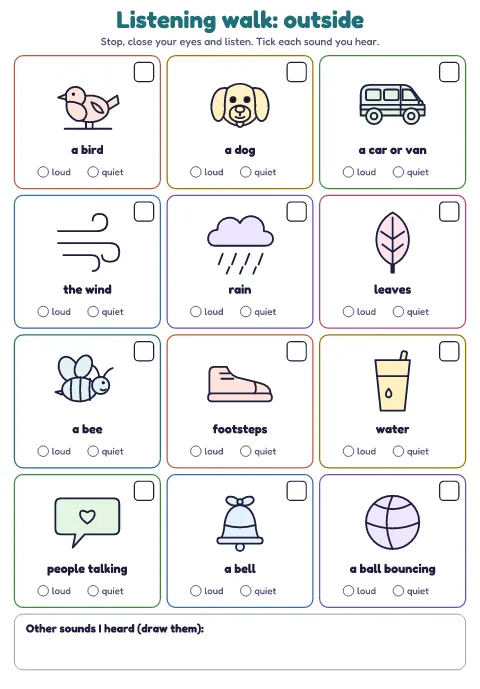
Two sheets, outside and inside, each with twelve sounds to listen for (a bird, the wind, footsteps, a tap, music, someone laughing), a tick box and “loud or quiet?” circles, and a box to draw sounds that are not on the sheet. Stop, close your eyes and count to ten together before ticking.
2. Rhyming picture cards (12 pairs)
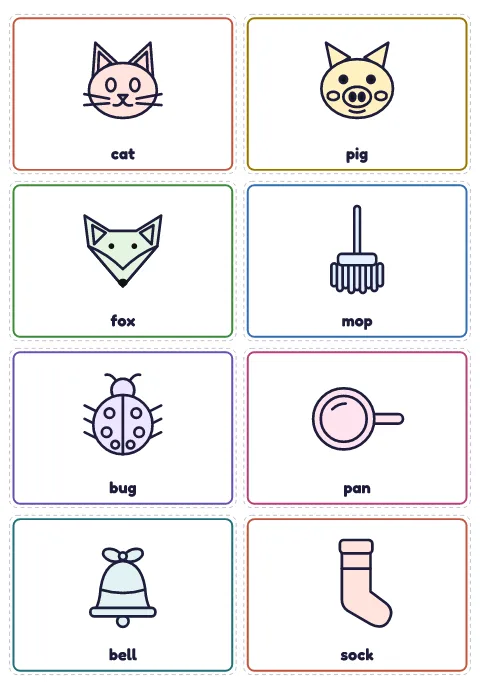
Twenty-four cards to cut out: cat and hat, pig and wig, fox and box, mop and top, bug and rug, pan and fan, bell and shell, sock and clock, cake and rake, bee and tree, snail and whale, bear and chair. Every pair rhymes in New Zealand, Australian, British and American English. Play snap, pairs or “find your rhyming partner”, and use the answer page to check.
Advertisement
3. Syllable clapping cards
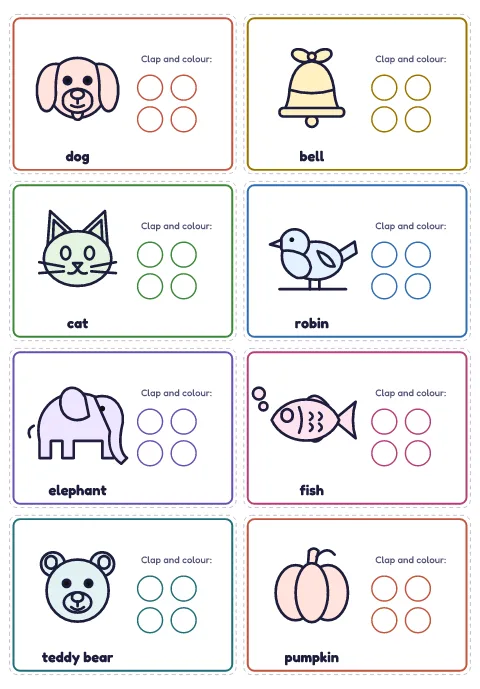
Twenty-four pictures from one clap (cat, sun) to four (caterpillar, thermometer, watering can). Say the word, clap each part and colour a circle for each clap. Children can then sort the cards into piles by claps. The last page lists the answers.
4. Initial sound sorting cards A to Z
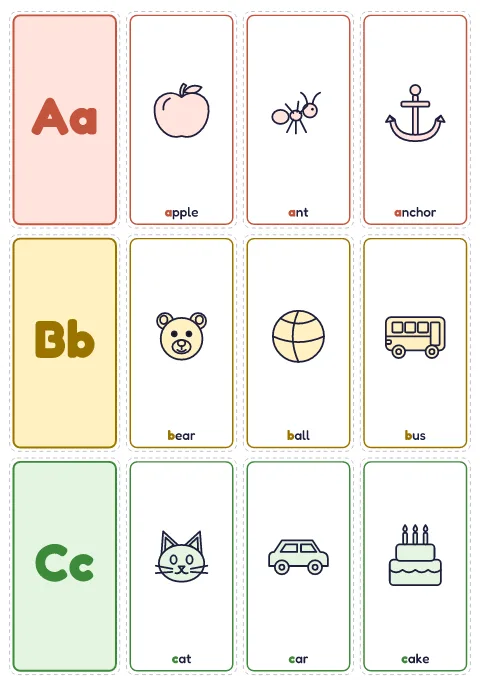
A letter card and three picture cards for each letter (two for q and y, with a blank to draw your own), so children can sort pictures by their first sound. Start with a few sounds that look and sound different (s, m, t), not the whole alphabet. The same pictures are in the letter of the week packs, so the two work together.
Initial sound cards PDF (A4)Initial sound cards PDF (US Letter)
5. Sound talk cards for oral blending
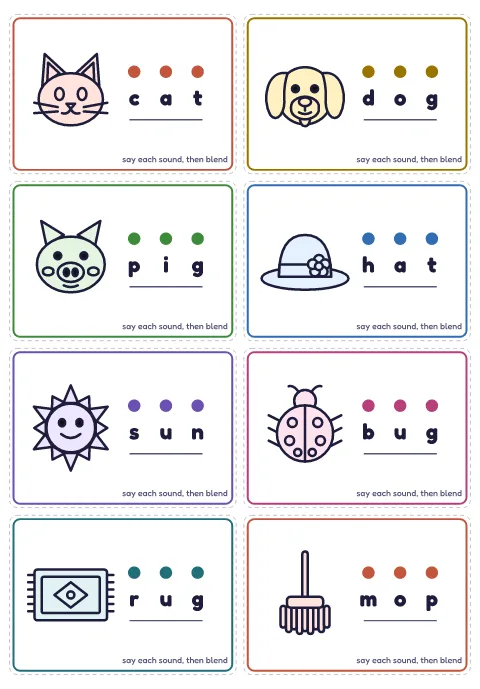
Twenty-four CVC pictures (cat, dog, bus, sock) with a dot for each sound. Say the sounds one by one as you touch the dots, “d-o-g”, and let children shout the word. Sock and duck show that “ck” is one sound with one dot. Turn it round once they can: you say the word and they say the sounds.
Five quick listening games (no printing needed)
- Sound in a bag: shake a hidden object (keys, a rattle, rice in a tub) and guess what it is.
- Copy my clap: clap a short rhythm and children clap it back; let a child lead.
- Silly soup: put things that start with the same sound in a pot (“a sock, a sun, a spoon…”).
- Robot talk: give instructions in sounds: “touch your h-ea-d”.
- Odd one out rhymes: “cat, hat, dog: which one doesn’t rhyme?”
Next steps: letters and sounds with the letter of the week packs, then phonics worksheets for beginning sounds and CVC words. For pictures to talk about, see the beginning sounds picture cards.
More early literacy and maths: letter of the week packs, counting mats and number formation rhymes, number tracks and subitising cards, pattern cards, sorting and matching cards. Everything for ages 0 to 6 is on early learning by country.
Related sets
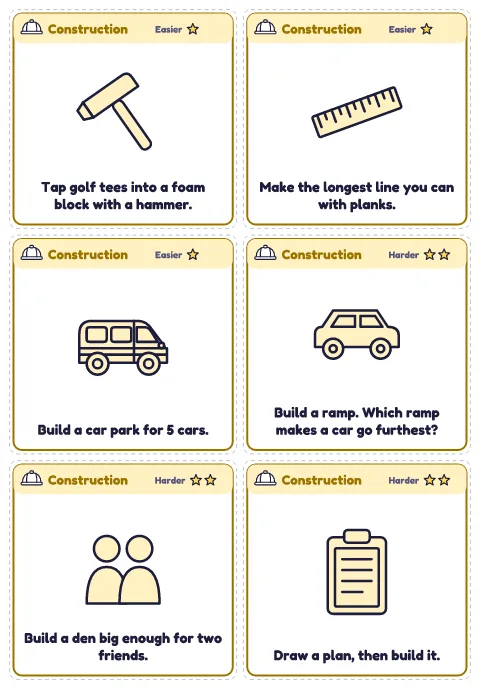 Continuous provision challenge cards for 10 play areasCards · ages 3–5
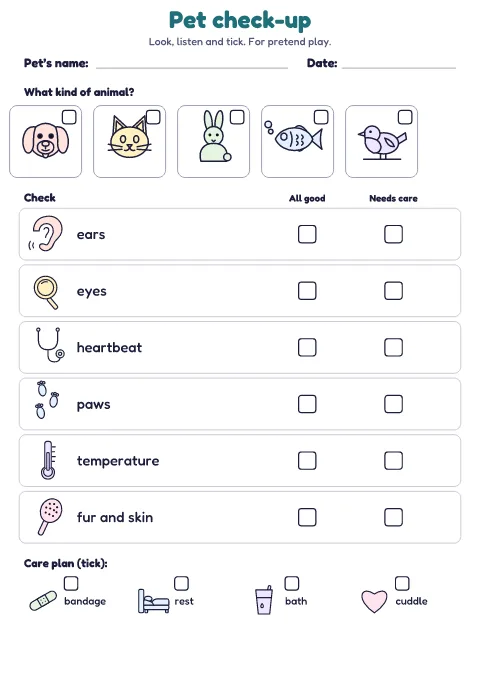 Vet role play: check-up form, appointment cards, signsDisplays and charts · ages 2–6
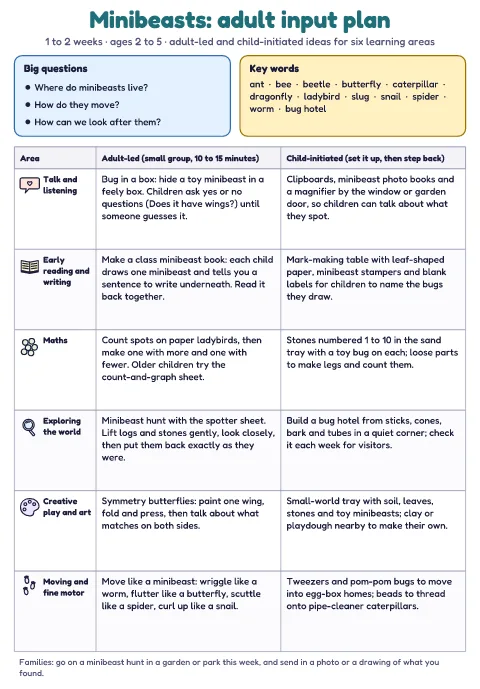 Minibeasts topic pack: adult input plan, word cards, sheetsTemplates · ages 2–5
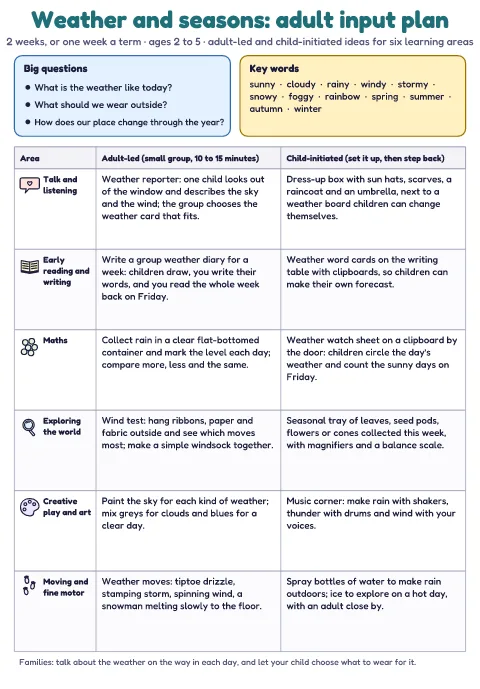 Weather and seasons topic pack (both hemispheres)Templates · ages 2–5
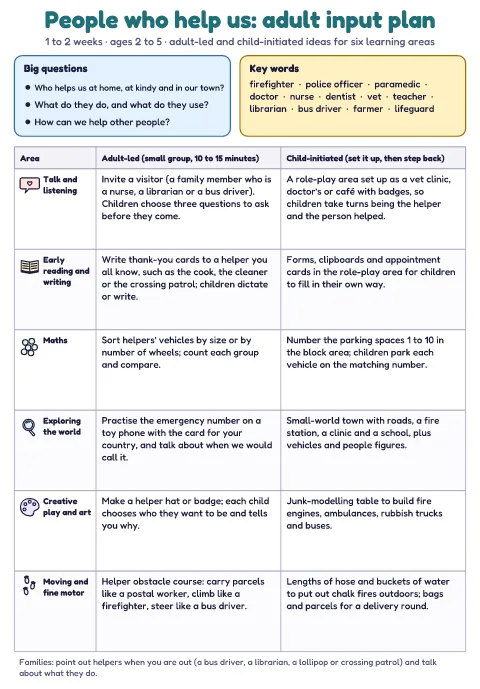 People who help us topic pack and emergency number cardsTemplates · ages 2–5
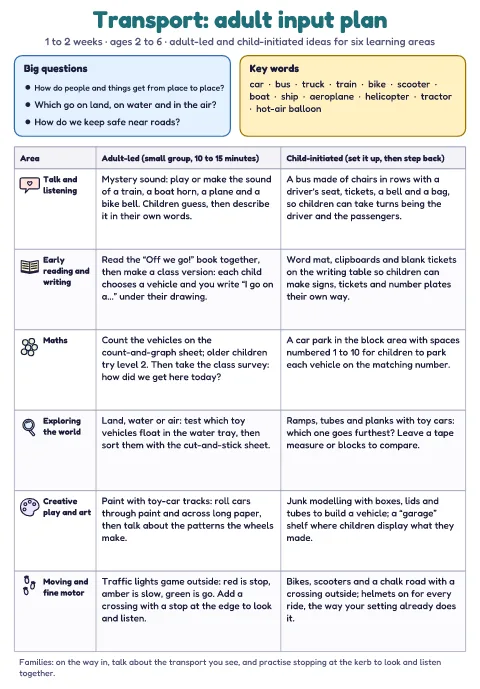 Transport topic pack: plan, word cards, road safety, sortsTemplates · ages 2–6
Questions
What are the 7 aspects of phase 1 phonics?
In Letters and Sounds (2007) they are environmental sounds, instrumental sounds, body percussion, rhythm and rhyme, alliteration, voice sounds, and oral blending and segmenting. Our cards cover listening, rhyme, syllables, first sounds and oral blending.
What age is phase 1 phonics for?
It starts in nursery (about 3) and carries on alongside letter sounds in Reception and the first year of school. Listening games suit two-year-olds too.
Is phase 1 phonics the same as phonological awareness?
Very nearly. Phonological awareness is the wider term used in New Zealand, Australia and the US for hearing rhyme, syllables and sounds in words.
How do I teach oral blending?
Say the sounds of a short word slowly, touching a dot for each (“s-u-n”), and ask children what the word is. Start with words they know and a picture to help, like our sound talk cards.
Are these free?
Yes. Free for your own centre, kindergarten, school, class and family, with no sign-up. Please don’t resell them or upload them to another site.