 Colouring Nest
Tracing lines and pre-writing patterns
Free tracing lines worksheets for pre-writing practice: nine patterns (lines down, lines across, circles, crosses, slopes, zigzags, waves, loops, squares and triangles), each in a big version with wide lanes for beginners and a smaller version for children who are nearly ready to write letters. Two PDFs of nine pages, in A4 and US Letter.
Inside this set
- 2 printables
- A4 and US Letter PDFs
- Free, no sign-up
About this resource
Ages 3–6, prep, what you need and how to use it
- Ages
- 3 to 6 years (preschool, school start)
- Prep
- Print and go; laminate or use plastic sleeves to reuse them.
- You’ll need
- Printer and paper
- Pencils or crayons
- Plastic sleeves and whiteboard pens (optional)
- Supports
- EYFS (England), EYLF (Australia), Te Whāriki (NZ), ELOF (US)
How to use it in the room
- Draw the pattern in the air, then in sand, then on the page.
- Say the movement out loud: “down, stop, across”.
- Go slowly: staying in the lane matters more than speed.
Show resources for
Remembered on this device only. It sets A4 or US Letter as the first download.
Why these nine patterns
Almost every letter and number is made of a few strokes: straight down, straight across, round, slanted, and a change of direction at a point. Children usually manage them in roughly this order: down, across, a circle, a cross, slopes, then shapes with corners. A child who can draw a cross, a circle and a square comfortably has the movements for most capital letters. So the pages practise the movement, not the letter, and the dot on every line shows where to start: top for lines down, left for lines across, the top of each circle.
| Page | Pattern | Tip |
|---|---|---|
| 1 | Lines down | Start at the dot at the top and pull down. |
| 2 | Lines across | Start at the dot on the left and go across. |
| 3 | Circles | Start at the top and go round to the left, like the start of a c. |
| 4 | Crosses | Down first, then across. |
| 5 | Slopes | Slide down the slope from the dot. |
| 6 | Zigzags | Up and down the mountains, stopping at each point. |
| 7 | Waves | Smooth waves with no stops. |
| 8 | Loops | Round and over, round and over. |
| 9 | Squares and triangles | Stop at every corner, then change direction. |
Big lines (beginners)
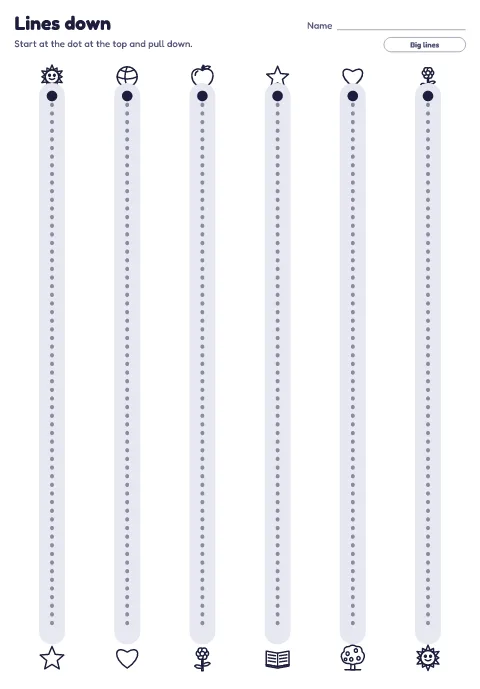
Wide grey lanes and big dots, a picture at each end of the line, and only four to six lines a page. Use a chunky crayon or a thick felt pen, or trace with a finger first, then a toy car along the lane.
Advertisement
Smaller lines (ready for letters)
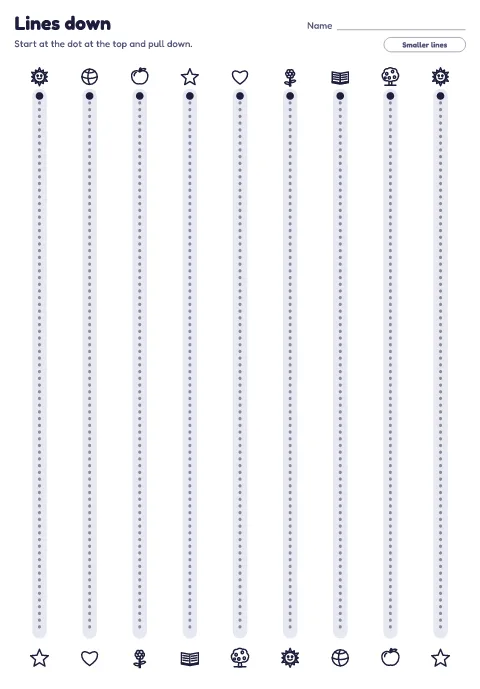
Narrower lanes, more lines per page and smaller start dots. Use a pencil or thin felt pen. When these are easy, move on to letter tracing in your country’s handwriting style.
Getting the most from a tracing page
- Big before small: draw the pattern in the air, then in sand or shaving foam, then on the page.
- Talk it through: “down, stop, across”, “round and back to the top”, “up the mountain, down the mountain”. Words help the movement stick.
- Slow is good: staying in the lane matters more than speed. Let children colour the pictures afterwards as a reward.
- Reuse: put the pages in a plastic sleeve or laminate them and use whiteboard pens.
Supports:
- EYFS England
- Physical development
- Communication and language
- Literacy
- EYLF Australia
- Outcome 3: Children have a strong sense of wellbeing
- Outcome 5: Children are effective communicators
- Te Whāriki NZ
- Exploration | Mana aotūroa
- Wellbeing | Mana atua
- Communication | Mana reo
- ELOF US
- Perceptual, Motor, and Physical Development
- Language and Literacy
More fine motor printables: cutting practice in five levels, playdough mats, letter and number tracing, dot to dot, handwriting paper, and the fine motor guide.
Related sets
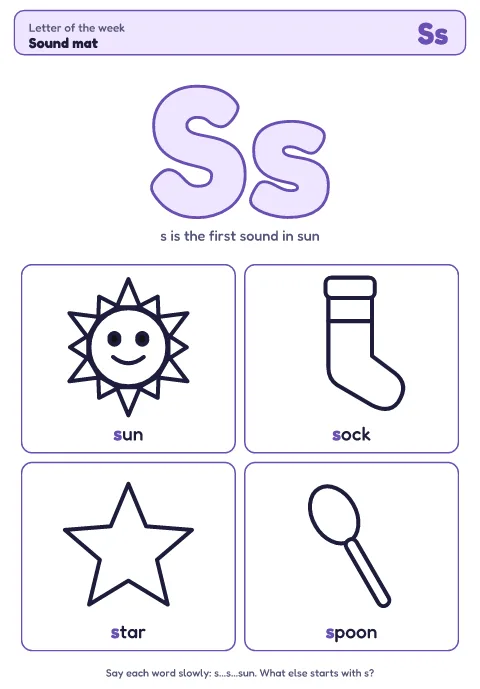 Letter of the week packs A to Z with letter formationWorksheets · ages 3–6
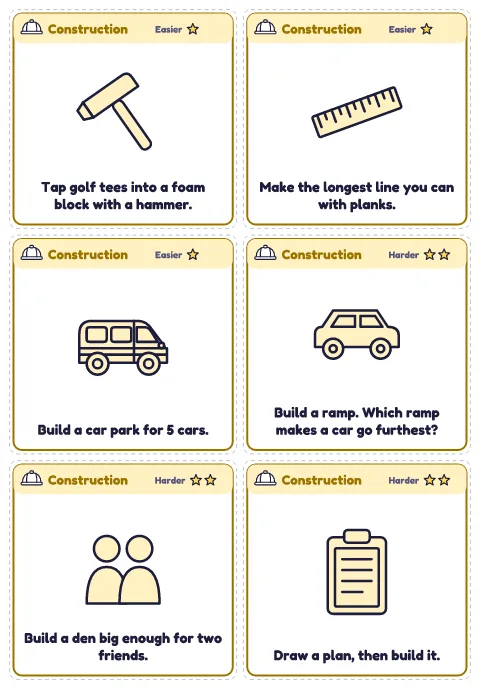 Continuous provision challenge cards for 10 play areasCards · ages 3–5
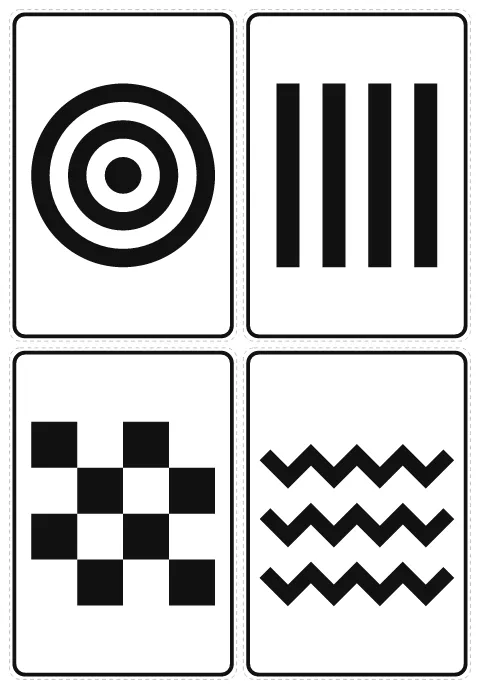 High-contrast cards for babies and first words cardsCards · ages 0–2
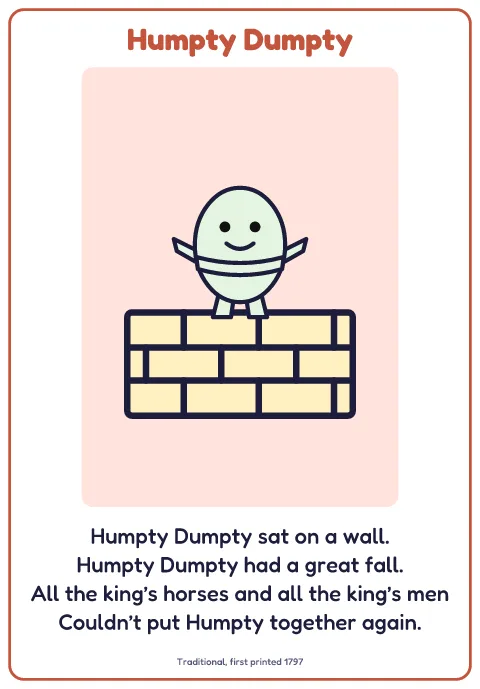 Nursery rhymes: posters, sequencing, actions, rhyming and countingCards · ages 1–6
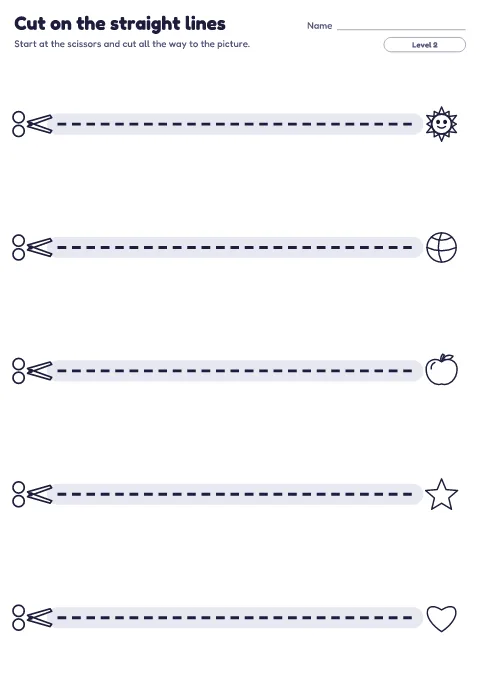 Cutting practice worksheets (5 levels)Worksheets · ages 3–6
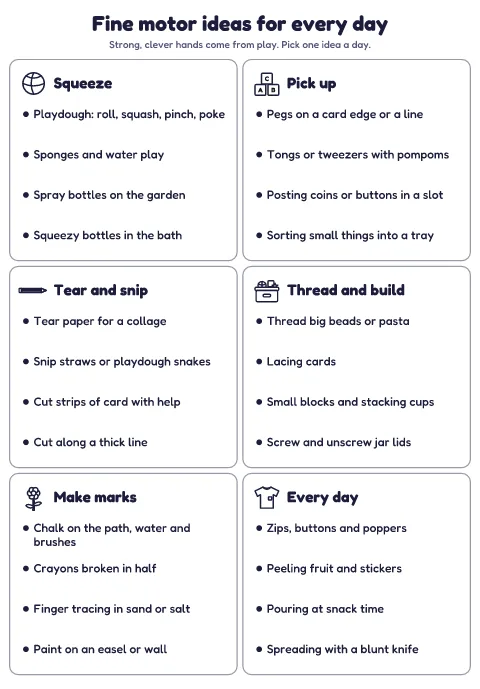 Fine motor ideas poster and guideGuides · ages 2–6
Questions
What are pre-writing patterns?
Lines and shapes that make up letters and numbers: lines down and across, circles, crosses, slopes, zigzags, waves, loops, squares and triangles. Practising them prepares the hand for writing.
Which tracing lines should a preschooler start with?
Lines down and lines across, in the big version. Then circles and crosses. Diagonal lines and shapes with corners are usually the last to become easy.
Big or smaller lines?
Big lines for children using crayons or still learning to hold a pencil; smaller lines for children who stay in the big lanes easily and are close to writing letters.
Are these free?
Yes, free for your own class, setting or family. Please don’t resell them or upload them elsewhere.